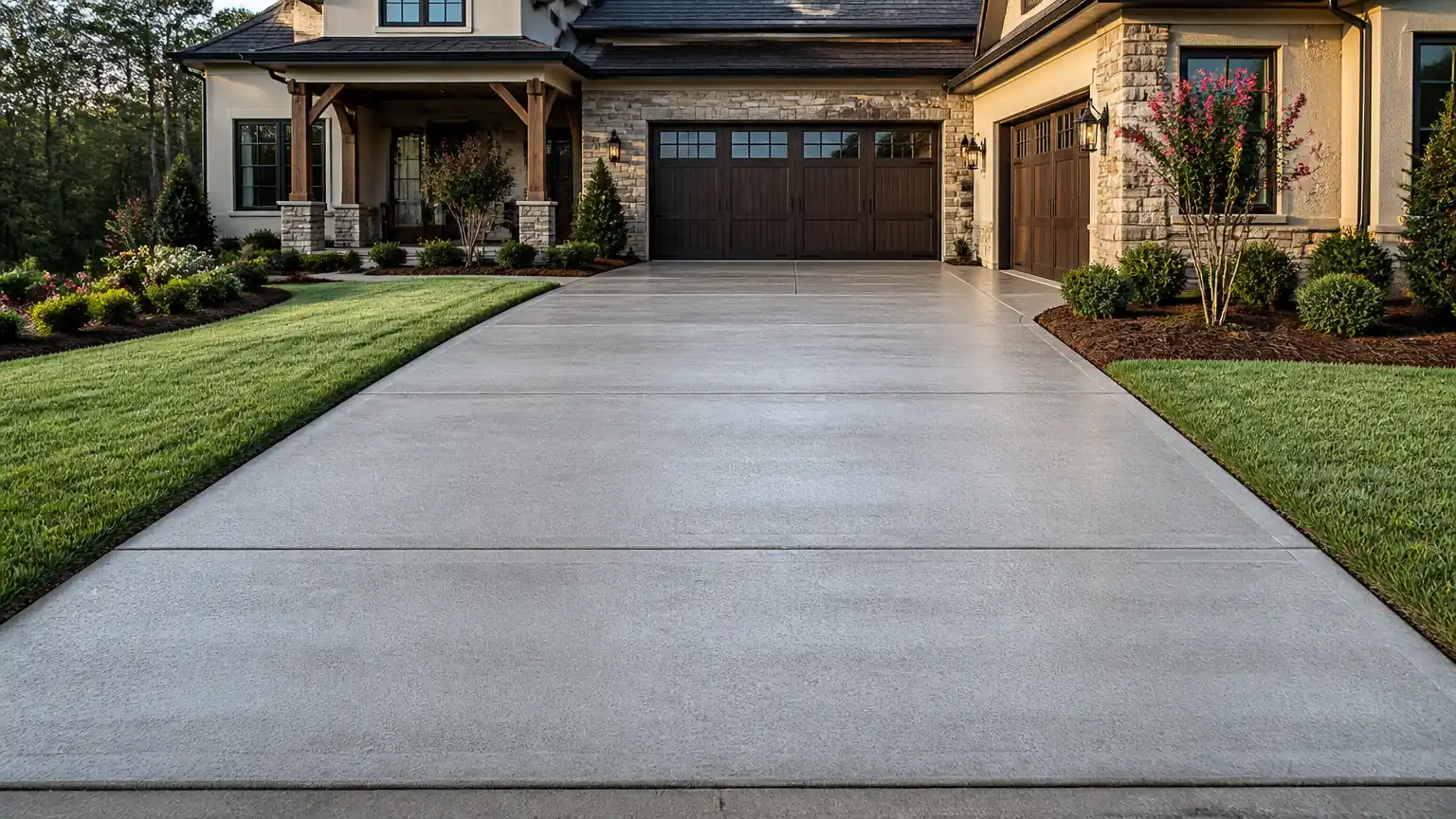
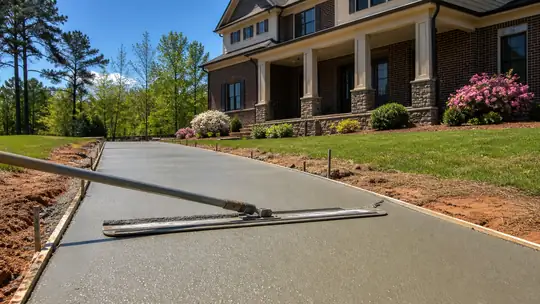
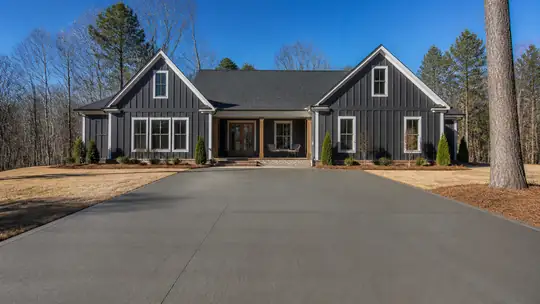
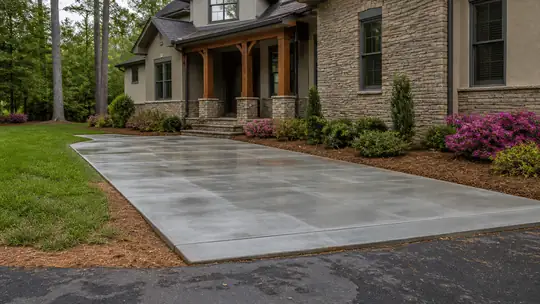
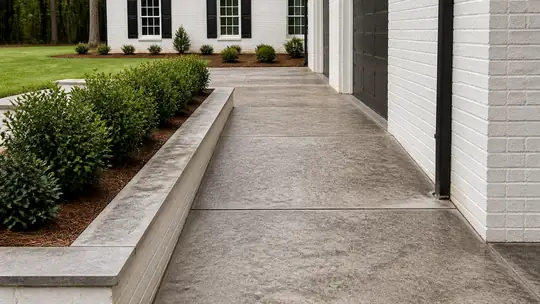
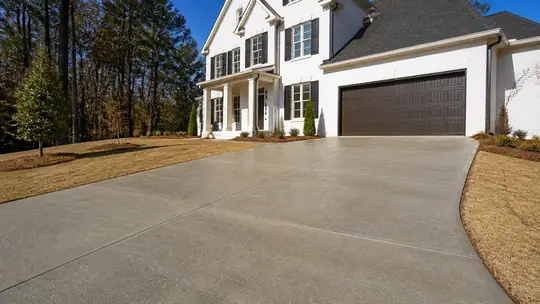
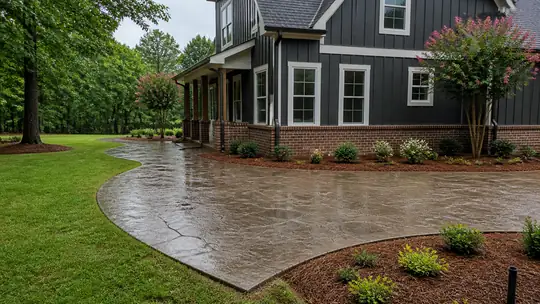
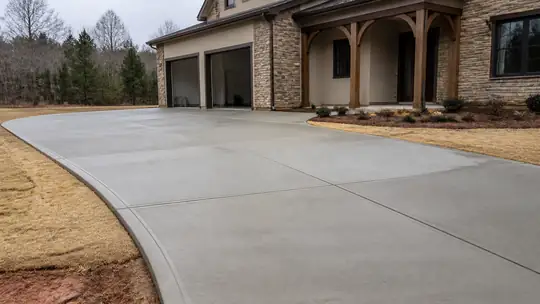
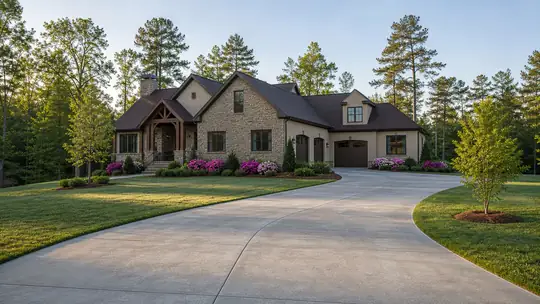
The best thing we can stand behind is the work itself, done so there is little to argue about later. A driveway or patio that was graded, reinforced and cured properly does not need much defending. Most of our effort goes into the parts of an installation nobody sees once the surface is poured: the base, the steel, the joints, the cure. Those details decide whether residential concrete stays flat and tight for decades or starts heaving after a few years. Any of them is a fair question to ask us. Nothing about how we build is a secret.
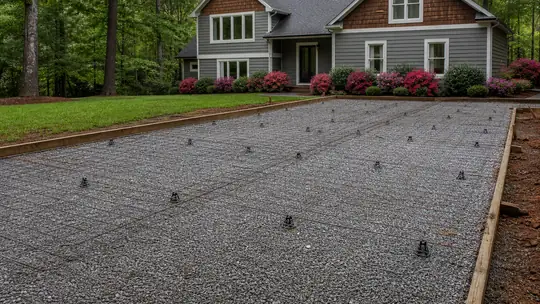
It starts below grade. The ground here can change from one block to the next, so every site is graded and tested on its own before we set a single form. From there we size the base, the reinforcement and the slab thickness to what that ground and that load actually need, whether the project is a residential driveway or a commercial floor carrying racking and equipment.
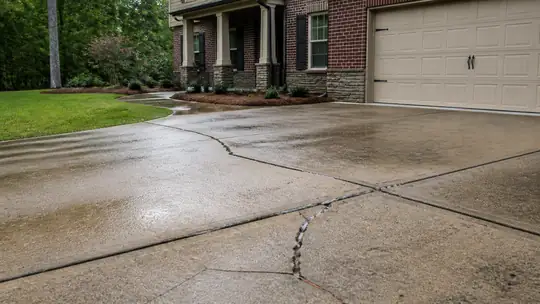
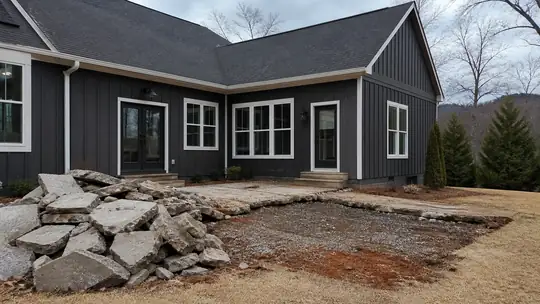
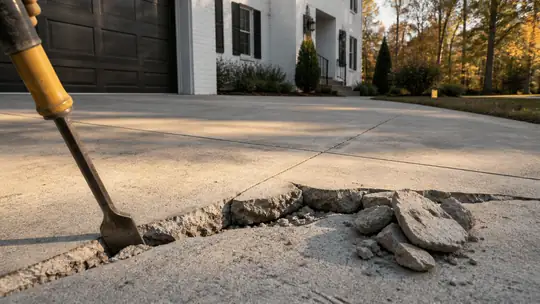
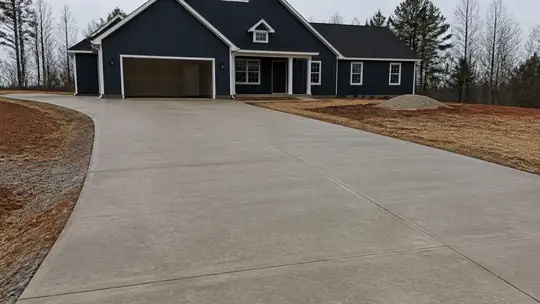
Concrete cracks, and anyone who says otherwise is selling something. The job is to decide where it cracks, which is what control joints do when they are cut at the right depth and spacing. A straight line inside a joint is normal. The failures that matter are structural: a section that sank because the base washed out, a slab lifted by roots, a patio poured too thin over loose fill. A lot of older flatwork has reached the age where those problems show, and there are no quick solutions for a slab sitting on a bad base.
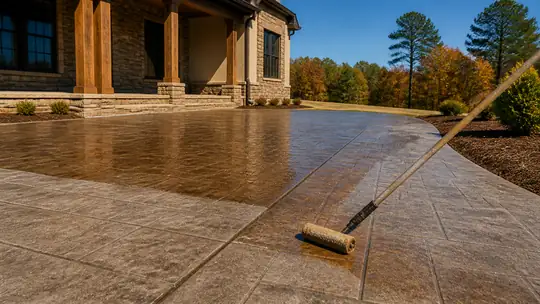
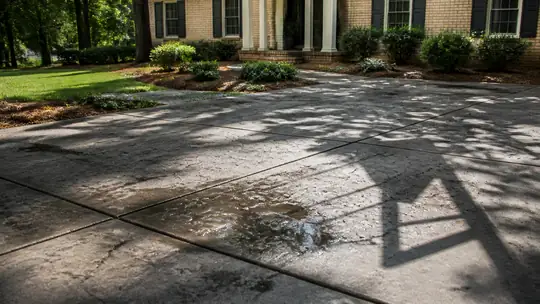
Getting it right costs time more than anything else. Proper subgrade prep, enough steel and a slow, even cure add days to a job. Skipping them is how a new surface becomes a repair within a few years, and tearing out and repouring is never the cheaper path. Our estimates spell out what goes under the slab as plainly as what goes on top, so you can see where the money goes. Stamped and decorative work follows the same rule. A finish only lasts as long as the base beneath it, and that part we refuse to rush.