+1 270-208-9064
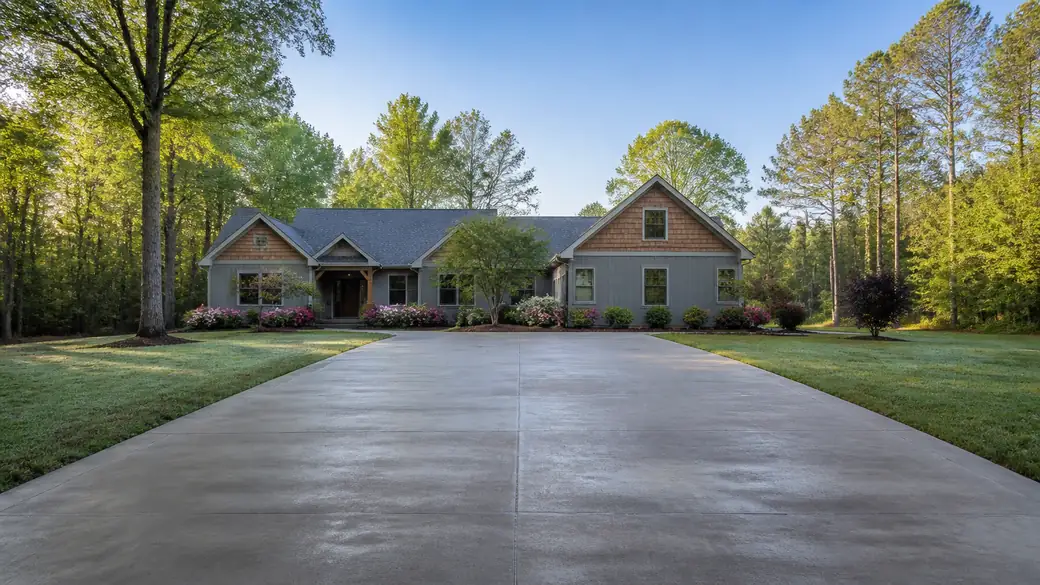
concrete flooring installation completed by a local contractor at a grey split-level home in Bowling Green, KY, at blue hour.

Concrete Flooring Installation in Bowling Green, KY

Concrete flooring is a slab poured to be used, not covered up: a garage floor, a basement, a workshop, the ground floor of an addition. We install residential and commercial floors across Bowling Green and the rest of Warren County, and we treat each one as a structural surface first and a finished one second. With the median home here built in 1991, much of our work is on slabs that have been in place a long time, and some of them need replacing rather than patching.

The work starts under the floor, not on it. Warren County is hilly, with 224 feet of local relief within a few miles, and the ground can change from one block to the next. Baxter soil, which is well drained, is the dominant type here, but it varies across the county. So we grade and test every site on its own before a single form goes up. Only then do we set the base, place the reinforcement and pour.

Most failed floors fail for ordinary reasons. The base was never properly compacted, the reinforcement sat on the ground instead of inside the slab, or the concrete was finished too early and left to dry too fast. Cracks, dusting and low spots that hold water nearly always trace back to steps like these. Getting it right mostly takes patience: time spent on preparation, and time for the slab to cure before anyone drives on it or builds over it. Call us for a free estimate.

Call +1 270-208-9064

Get a Free Estimate

What Is Included in Concrete Flooring Installation

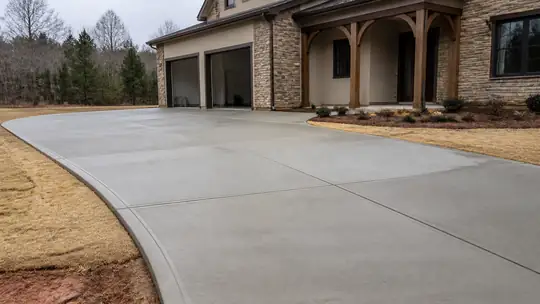
concrete slab installation completed by a local contractor at a buff-brick ranch home in Bowling Green, KY, after a rain shower.

Concrete Slab Installation Cost

Every quote covers the whole job, not only the pour: excavation, a compacted gravel base, forms, reinforcement, the concrete, finishing, curing and cleanup. We price from measurements taken on the property, because Warren County is hilly and slope changes how much base a slab needs. Call us for a free estimate.
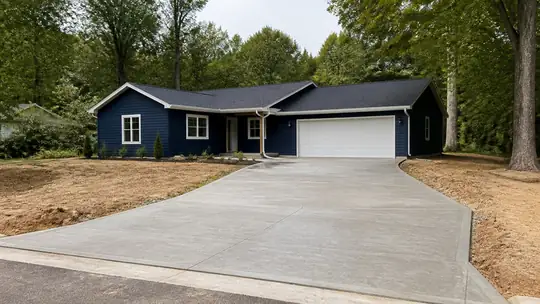
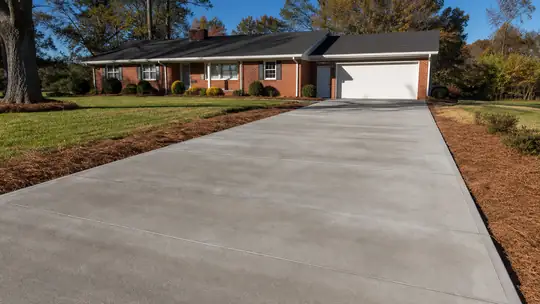
concrete driveway installation completed by a local contractor at a tan-brick colonial in Bowling Green, KY, in clear late-morning sun.

Concrete Driveway Installation

Driveways carry vehicle weight, so we pour them thicker than a patio and set rebar on chairs so it sits mid-slab instead of in the gravel. Control joints are cut the same day to guide cracking. We slope the surface to shed water, give it a broom finish for grip, and handle the permit.

Concrete Flooring Installation

Inside a garage, shop or basement, the floor starts below the concrete: compacted stone, then a vapor barrier so ground moisture stays out of the finish. We place wire mesh or fiber, power-trowel the surface, and cut joints before the slab cracks on its own. Sealed, stained or polished finishes come after curing.

concrete slab repair completed by a local contractor at a painted-white-brick two-story home in Bowling Green, KY, in late afternoon light.

Concrete Slab Repair

Most cracked slabs failed underneath: a washed-out base, roots, or water off a downspout. We find the cause before we fix the surface. Hairline cracks get routed and sealed. Sunken or broken sections get cut out, the base rebuilt and compacted, and new concrete doweled into the old slab so the two move together.

Our Warranty and Guarantee

A floor holds up because of what goes under it, so that is where we spend our care. Before any concrete goes down, we test the site on its own terms. Baxter soil is the dominant type across Warren County and it drains well, but it changes from one property to the next, and we never assume. We compact the base, set reinforcement where the slab actually needs it, and cut control joints so the concrete has somewhere to move. Then we let it cure properly instead of rushing the next trade onto a green surface. That preparation is what we stand behind on every slab.

Concrete also does a few things no contractor can stop. Fine shrinkage cracks can appear in the first year, usually near the control joints, and they are cosmetic. A crack that keeps widening, a slab that drops, or a surface that starts to flake is a different matter. Each of those points back to the base, the mix or the cure. If you see any of that on a floor we poured, we want to hear about it. Before you sign, ask us exactly what we put in writing for your project. Read those terms as closely as you read the estimate. They should be plain enough to follow on your own.

Top Decorative Concrete Styles for Bowling Green Homes

Stamped concrete is where most conversations start. We press patterns into the fresh surface while it is still workable, so a patio or driveway can read as slate, flagstone or brick without loose joints to reset every few seasons. Stains and overlays suit interior floors and older slabs, and with the median home here built in 1991, we see plenty of both. Exposed aggregate shows the stone in the mix and grips well underfoot. Polished concrete fits basements and garages that need a hard, clean floor.

Every job starts on the site, not in a catalog. We grade and test the ground first, because Warren County is hilly and no two lots sit quite the same. Then we set forms, place the reinforcement and pour. Stamping has a short window: the crew works the mats while the slab is at the right stiffness, then details the edges by hand. Color goes in the mix, on the surface, or both. Sealer comes last, once the concrete has cured enough to take it.

Most decorative failures trace back to the base or the timing, not the pattern. A stamped patio poured over poorly compacted fill will crack along lines no texture can hide. Stamp too late and the pattern comes out shallow; too early and it smears. Color that looks right on a sample board can read differently outdoors, so we look at samples on your property, in daylight, before choosing. Getting it right means a slower start. It also means never tearing out a slab that looked fine on paper.

What Decides the Price of Concrete Flooring Installation

Most of the price of a concrete floor is set before any concrete arrives. It depends on what is already there, how the materials get to the pour, and how much the slab has to carry. You can check nearly all of it yourself with a walk around the property.

What changes the priceWhich wayWhy
An old slab, tile or wood floor that has to come out firstCosts moreBreaking it up, loading it and hauling it off takes labor and a disposal trip before new work starts.
A ready-mix truck can back up within chute reach of the pourCosts lessConcrete goes straight from the chute into the forms. If it can't, we pump it or wheel it in, and both add crew and hours.
A thicker slab for vehicles, equipment or heavy shelvingCosts moreMore depth means more concrete and more base to prepare under it.
Rebar grid instead of wire mesh or fiberCosts moreTying and setting steel takes time, though a floor under structural load often calls for it.
A firm, level gravel base already in placeCosts lessLess digging, less fill and less compaction before the forms go down.
A floor drain, or a surface pitched toward a doorCosts moreSloping the slab takes careful forming and screeding, and a drain adds plumbing under it.
A vapor barrier under an interior floorCosts moreIt adds material and a step, and it slows ground moisture from coming up into whatever goes on top.
A stamped, stained or polished surfaceCosts moreDecorative finishes add materials, tools and finishing time beyond a plain troweled slab.

Compare competing bids on the details, not the bottom line. Each one should state the slab thickness, the reinforcement, the base depth, where the control joints go, and whether demolition, hauling and the permit are included. A bid that leaves those out isn't cheaper. It is vaguer, and the gap usually shows up later.

Common Concrete Flooring Installation Questions From Bowling Green Owners

What does warehouse concrete flooring cost in Bowling Green?

Warehouse floors get priced from the building itself, not from a chart. What moves the number is slab thickness, the loads the floor has to carry (racking legs, forklift traffic, pallet jacks), the reinforcement those loads call for, the joint layout, and how much grading the site needs before any concrete arrives. Two buildings of the same size can land far apart. Call for a free estimate, and bring whatever you know about the equipment that will run on it.

How much does commercial concrete flooring installation typically cost in Bowling Green?

It depends on the job more than on the category. A small office slab with a clear seal is a very different project from a retail floor that gets ground, polished and dyed, or a shop floor built for heavy vehicles. Access matters too. Working around an open business, in phases or after hours, takes more planning than pouring inside an empty shell. We price each commercial job from a look at the site, and the estimate is free.

Is stained concrete a good flooring option for kitchens, living areas, and garages in Bowling Green?

Yes, for most homes. Stain soaks into the surface instead of sitting on top of it, so it doesn't peel, and a good sealer keeps kitchen spills and garage oil from setting in. It is hard underfoot and cool to the touch, which is why plenty of owners put rugs down in living areas. Garages are the easy case. Kitchens and living rooms depend on the existing slab, because stain shows every crack and patch beneath it.

What types of concrete flooring does Bowling Green Precision Concrete install for commercial properties?

For storefronts, offices and showrooms, polished concrete is usually the right fit: the slab is ground in stages and densified until it holds a shine without a coating. We also install sealed and stained floors, epoxy-coated floors for shops and kitchens that see chemicals or constant washing, and plain structural slabs for warehouses and storage buildings, with reinforcement and joint spacing set by the loads. Lobbies and entryways can take decorative finishes where appearance counts.

How does the crew minimize downtime and maintain commercial site safety during active business operations in Bowling Green?

A business that stays open needs a plan before it needs a mixer. We sit down with the owner or manager first and split the floor into sections, so part of the building keeps working while another part is poured or ground. Loud or dusty work can move to evenings and weekends. Work areas get barriers and signs. Walkways stay marked, cords and hoses stay out of foot traffic, and grinding runs with dust extraction.

What type of foundation is best for Bowling Green homes?

No single foundation suits every Bowling Green lot. Warren County is hilly, with 224 ft of local relief within a few miles, and the ground changes from one block to the next. Baxter soil, which drains well, is the most common type, but it isn't everywhere. So we grade and test each site on its own first. Only then do we choose between a slab, a crawlspace or a basement, based on what that particular ground shows us.

Get a Free Estimate

Get a Free Estimate

Tap to call +1 270-208-9064