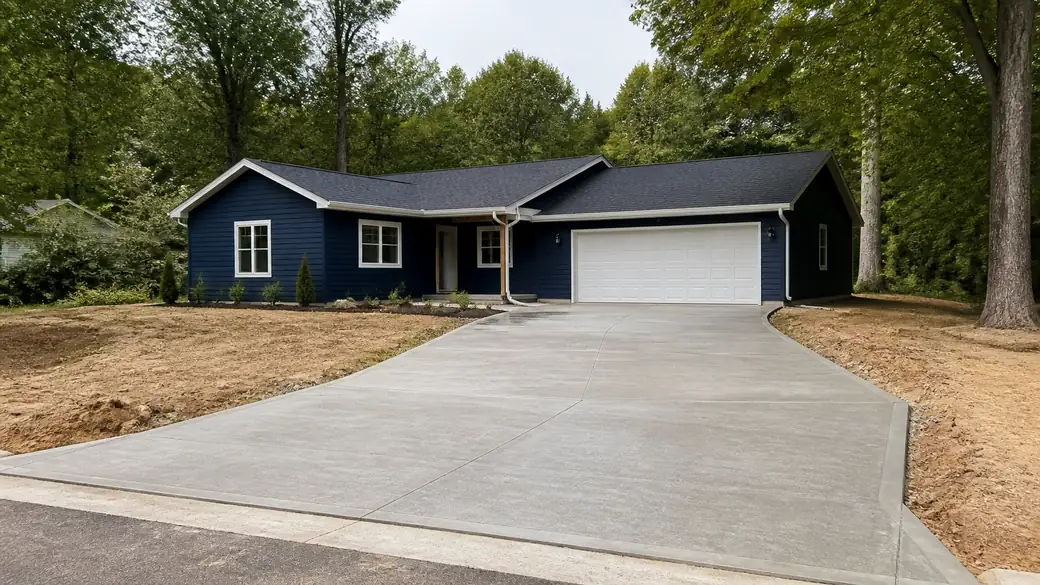
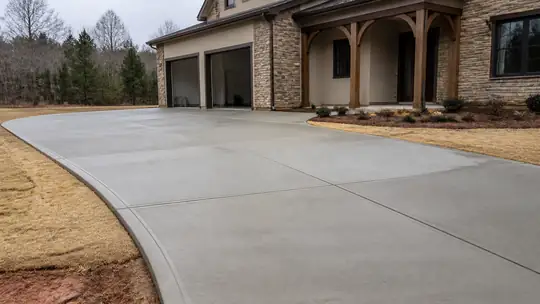
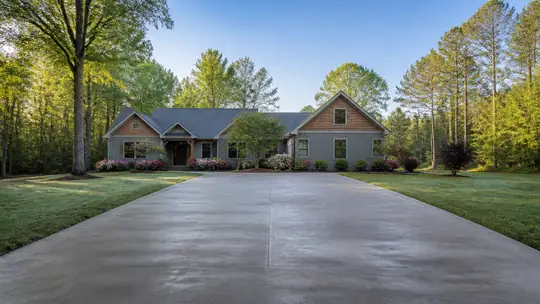
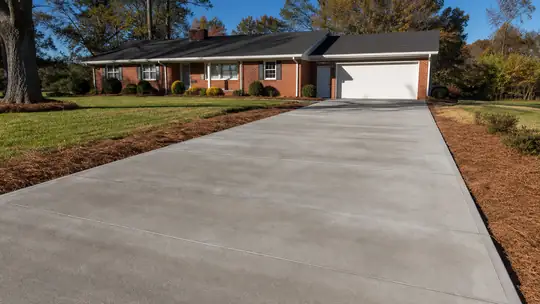
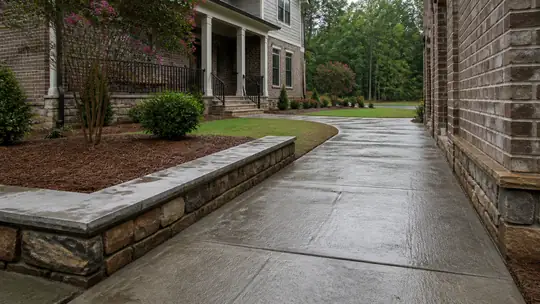
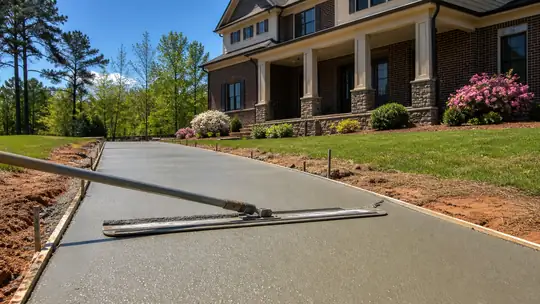
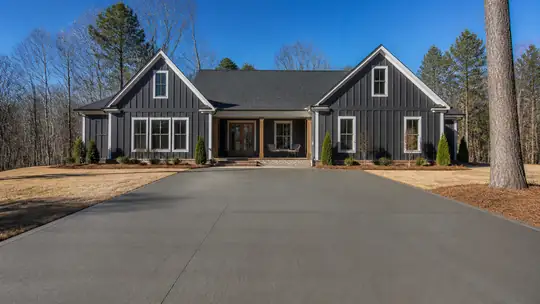
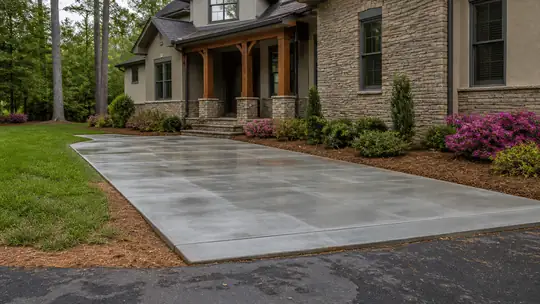
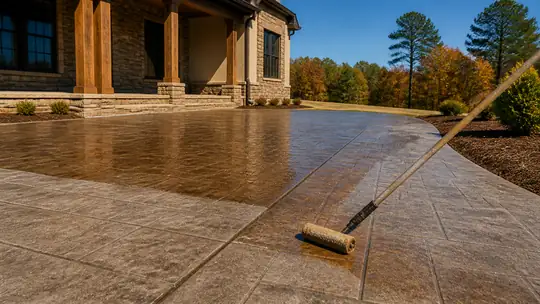
A driveway is a system, and the slab is only the part you see. Under the surface sits a compacted base, then the reinforcement, then the concrete itself, and each layer only works as well as the one beneath it. We match the mix and the reinforcement to how the driveway will actually be used, whether that means a family car and a lawn mower or a work truck pulling a trailer. For residential driveways we set steel rebar or welded wire inside the slab. Decorative and stamped finishes go on the same structural base.
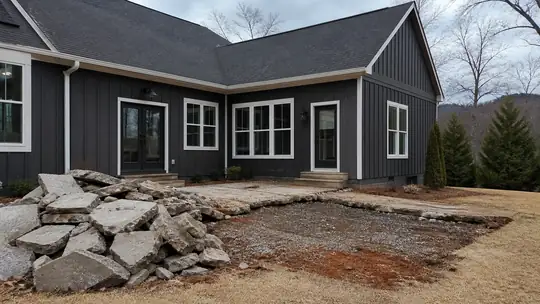
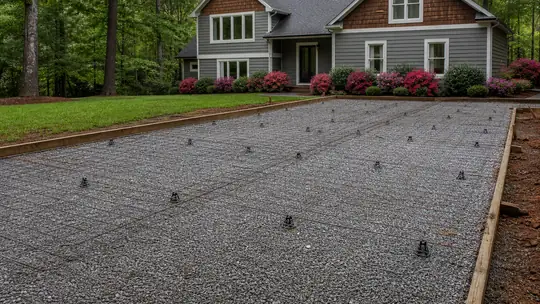
Work starts below grade. Baxter soil, which drains well, is the dominant type in Warren County, but it varies across the county, so we test every site individually before any concrete is ordered. That result decides how deep we dig, what base material goes in and how hard we compact it. Forms go up next. Reinforcement sits on chairs so it ends up inside the slab rather than lying on the dirt, and we lay out control joints before the pour so the concrete cracks where we choose, not where it pleases.
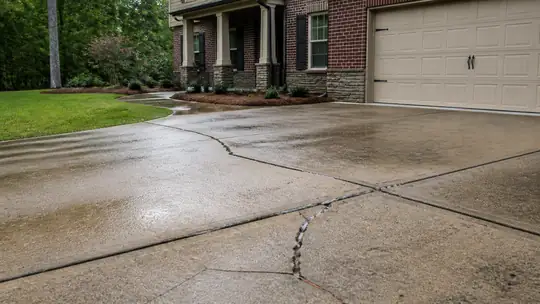
Most failed driveways fail from the bottom up. A base that was never properly compacted settles, and the slab above it sinks or breaks. Wire mesh left flat on the ground adds nothing. Joints cut too late, or spaced too far apart, let the concrete crack on its own schedule. Water added at the truck to make the mix easier to spread leaves a weak surface that flakes and dusts. None of these problems show on pour day. They show up later, and by then the slab is down and the fix is a tear-out.
Getting it right costs time more than anything else. It means waiting on the site test instead of guessing, bringing in base material when the ground calls for it, and keeping traffic off the concrete while it cures. On a stamped driveway it means working the pattern while the surface is still ready to take it, not after. We would rather spend longer on preparation than leave a Plano homeowner with a slab that should have lasted. Call us for a free estimate.