+1 270-208-9064
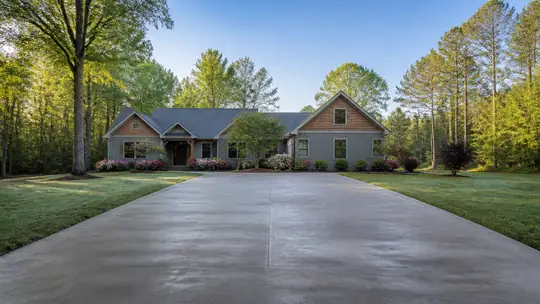
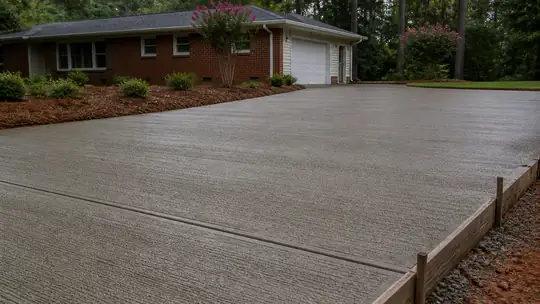
concrete slab installation completed by a local contractor at a buff-brick ranch home in Bowling Green, KY, after a rain shower.

Concrete Slab Installation in Auburn, Kentucky

A concrete slab is the flat, load-bearing surface everything else sits on: a garage floor, a shed pad, a patio, the floor of a workshop or a small commercial building. We install slabs across Auburn for residential and commercial property, and the approach holds whatever ends up on top. Get the base right. Put the reinforcement where the load will be. Finish the surface for how it will actually be used. A slab under a pickup needs different thickness and steel than one under a patio table, so we size every slab to the weight it will carry and the way water needs to leave it.

The real work starts below grade. We strip the topsoil and anything organic, then look hard at what is left before a single form goes in. Baxter soil, the well-drained type most common in Warren County, gives a good start, but it varies across the county, so every site is tested individually before work begins. From there we set forms, compact a gravel base in lifts, and lay rebar or wire mesh on chairs so it sits in the middle of the slab rather than on the dirt. Then we pour, screed, float and finish. Control joints go in before the concrete has a chance to crack on its own terms.

Most slab failures trace back to things nobody sees once the concrete is down. A soft spot left in the subgrade. Mesh trodden flat into the gravel during the pour. Joints spaced too far apart, or cut too late. A grade that sends water toward the house instead of away from it. None of these show on the day of the pour. They show up later as cracks, settling and edges that break away, and by then the fix means tearing out and starting over. Getting it right costs care at the start, not shortcuts at the end. Call us for a free estimate on your slab.

Call +1 270-208-9064

Get a Free Estimate

What We Do in Auburn

Concrete Slab Installation Cost

We price a slab after we have walked the site, measured it and checked the ground it sits on. The estimate breaks out excavation, base stone, forming, reinforcement, concrete and finish as separate lines, so you can see where the money goes. Call for a free estimate on your Auburn property.

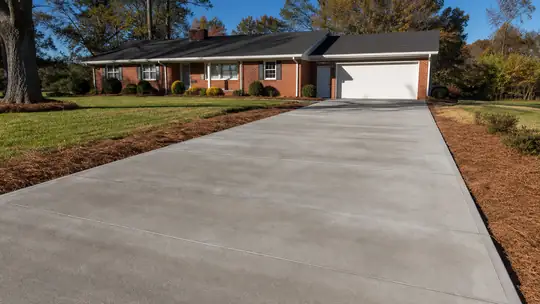
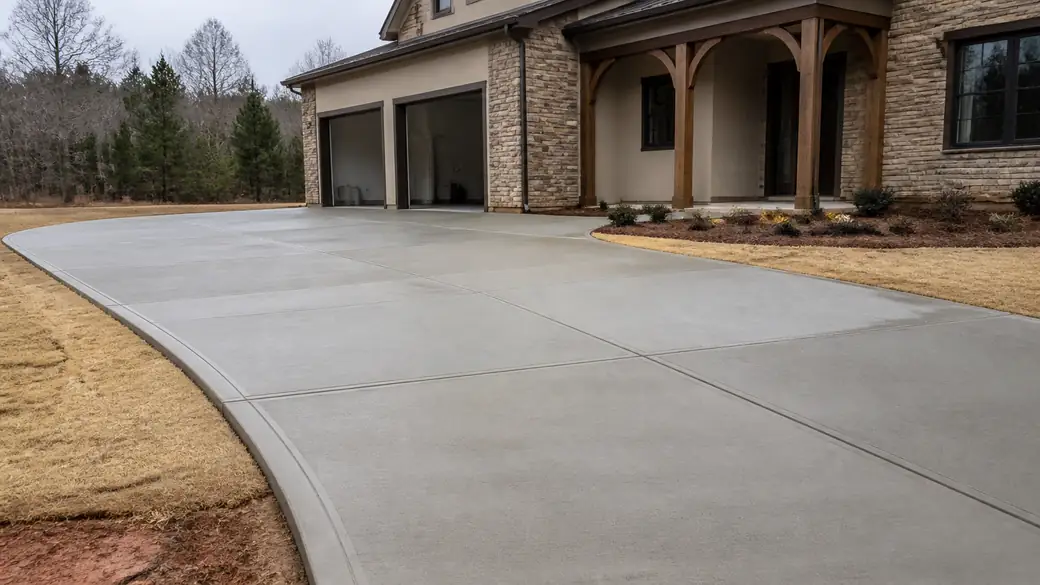
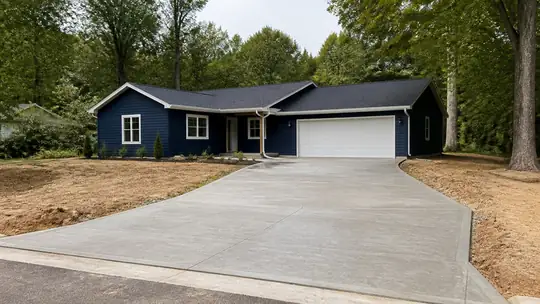
concrete driveway installation completed by a local contractor at a tan-brick colonial in Bowling Green, KY, in clear late-morning sun.

Concrete Driveway Installation

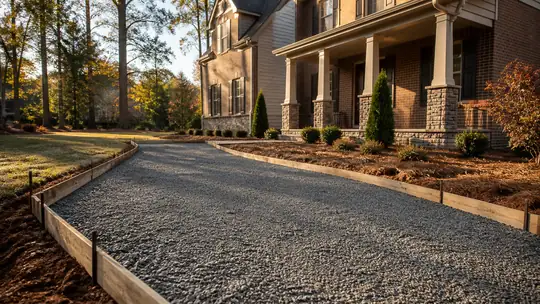
Most driveway failures start underneath. We strip the topsoil, compact a crushed stone base, and set rebar on chairs so it stays in the middle of the slab instead of lying in the dirt. Control joints go in the same day, spaced so cracks follow the lines we chose. Broom finish, or stamped.

concrete flooring installation completed by a local contractor at a grey split-level home in Bowling Green, KY, at blue hour.

Concrete Flooring Installation

Garage, shop and basement floors need to be flat and dry more than they need to be pretty. We lay a vapor barrier under interior slabs, reinforce with wire mesh or fiber, and power trowel the surface smooth. Sealers wait until the concrete cures, since sealing green concrete traps moisture and peels.

concrete slab repair completed by a local contractor at a painted-white-brick two-story home in Bowling Green, KY, in late afternoon light.

Concrete Slab Repair

Not every cracked slab needs tearing out. A hairline shrinkage crack can be routed and sealed. A slab that has settled or heaved, with one side proud of the other, usually means the base underneath has moved, and patching the top will not hold. We tell you which you have before quoting.

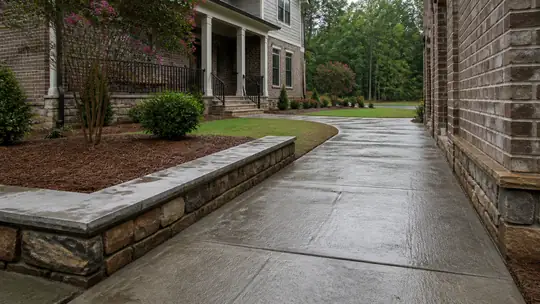
concrete sidewalk installation completed by a local contractor at a charcoal farmhouse-modern home in Bowling Green, KY, under an overcast sky.

Concrete Sidewalk Installation

Walks look simple, and that is why they get rushed. We set forms to a cross slope so water sheds rather than pooling, cut joints close enough to keep cracks in them, and tool the edges so they do not chip. An expansion joint separates the walk from the driveway and steps.

Why Choose Bowling Green Precision Concrete

A slab is only as good as what sits under it, and that is where we spend most of our attention. Baxter soil is the dominant type in Warren County and it drains well, but it varies across the county, so we test every site individually before any work starts. That test tells us how much base the slab needs, how the reinforcement should be laid out, and whether the property is hiding a problem under the grass. Skipping it saves an afternoon. It can cost a homeowner the whole slab a few years later.

Most slab failures trace back to a short list of habits: a thin or loosely compacted base, reinforcement that ends up lying in the dirt, control joints cut too late or too shallow, and concrete that dries out before it has properly cured. None of those show on the day of the pour. They show when a crack runs across a driveway or the corner of a patio starts to drop. We compact the base in lifts, set reinforcement on chairs so it stays in the middle of the slab, cut joints on time, and keep the surface curing instead of walking away once it looks finished.

What you get from us is a straight account of your property. If the ground needs more work than you expected, we say so before the forms go in, not after. If a stamped or decorative finish is the wrong choice for a surface that takes heavy traffic, we tell you that too, and explain what will hold up better. Residential or commercial, a small pad behind the garage or a full driveway, the standard is the same. Call for a free estimate, walk the site with us, and ask anything you want about how your slab will be built.

How a Concrete Job Runs in Auburn

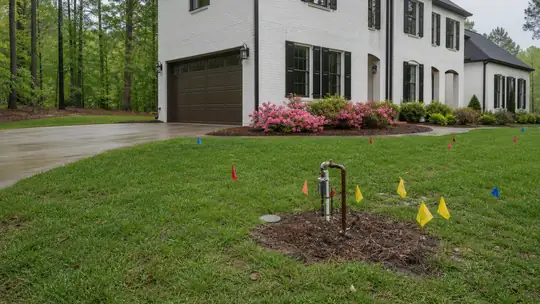
Utility flags mark buried lines before digging starts. at a painted-white-brick two-story home in Bowling Green, KY, in late afternoon light.

Step 1: Site Assessment

We start on the ground itself. Warren County's dominant soil is Baxter, which drains well, but it varies across the county, so every site gets tested before we plan anything. We check grade, where water runs off the property, what the slab has to carry, and anything buried that the excavation could hit.

Crushed stone base is raked level inside driveway forms. at a brick-and-siding two-story home in Bowling Green, KY, in early morning light.

Step 2: Site Preparation

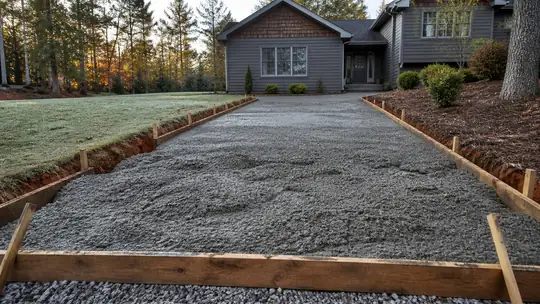
Most slab failures start here, not in the concrete. We strip topsoil and organic material down to firm subgrade, compact it, then lay a crushed stone base and compact that in lifts. Soft spots get dug out and replaced. The grade is set so water drains away from buildings, not toward them.

A worker ties rebar into a grid before a residential pour. at a stacked-stone and stucco home in Bowling Green, KY, in early morning light.

Step 3: Forming & Reinforcement

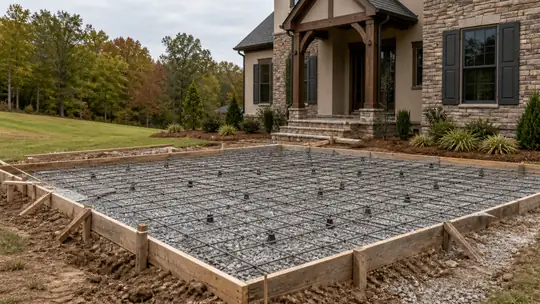
Forms go up in straight lumber, staked tight and checked for level and pitch, because the finished surface can only be as true as the forms. Rebar sits on chairs so it ends up in the middle of the slab, where it does its work. Rebar lying on the gravel does nothing structural.

A ready-mix truck discharges concrete into a driveway form. at a grey split-level home in Bowling Green, KY, under low winter sun.

Step 4: Pouring

Pour day is about keeping the concrete workable. We order the mix for the job, check it as the truck arrives, and don't add water on site to ease spreading, since extra water weakens the surface. Concrete gets placed close to where it belongs, then screeded flat and consolidated to close voids.

A broom drags across a driveway creating a slip-resistant texture. at a red-brick ranch home in Bowling Green, KY, under an overcast sky.

Step 5: Finishing

Timing matters most here. We wait for bleed water to leave the surface before floating, because working it in too early leaves a weak top layer that scales and dusts. Then comes edging, control joints cut to a planned pattern, and the finish you picked: broom, smooth trowel, stamped or exposed aggregate.

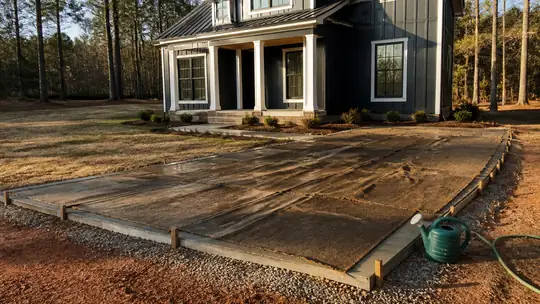
Damp burlap covers a small slab section during curing. at a charcoal farmhouse-modern home in Bowling Green, KY, after a rain shower.

Step 6: Curing

Concrete gains strength slowly, and only while it holds moisture. Right after finishing we apply a curing compound or cover the slab so the surface doesn't dry faster than the core, which causes shrinkage cracks and a chalky top. Foot traffic comes first. Vehicles wait until the slab has built strength.

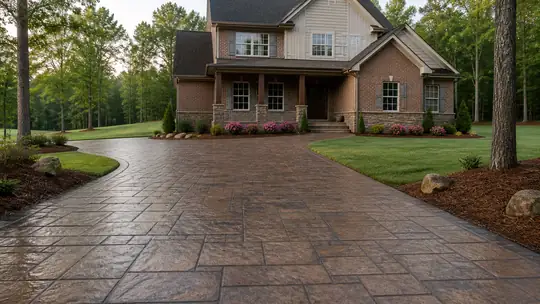
A finished stamped surface shows a glossy sealed sheen. at a brick-and-siding two-story home in Bowling Green, KY, under an overcast sky.

Step 7: Sealing

Sealer goes on only after the slab has cured, never over damp concrete, or it clouds and peels. We use a penetrating sealer on broom-finished slabs and a film-forming sealer on stamped or decorative work to hold the color. Sealers wear, so plan on resealing when water stops beading on the surface.

Concrete Systems and Materials for Auburn

A slab is more than the concrete you see. Under it sits a compacted base, and inside it sits reinforcement, and the right choice for each depends on what the slab has to carry. In Auburn that usually means residential work: driveways, patios, garage floors and shop pads, with commercial slabs built for heavier loads. We choose between steel rebar, welded wire and fiber reinforcement by the project, not by habit. Finishes run from a plain broom surface to stamped and decorative concrete for patios.

Our installation starts below grade. We strip the topsoil, grade the site, and compact a stone base in lifts so the slab rests on something that will not move. Forms go in next, set to a slope that sends water off the surface instead of letting it sit. Reinforcement is raised on chairs so it ends up inside the slab, where it does its work, rather than lying in the dirt underneath. Then we place, screed, float and finish while the concrete is still workable.

Most slab failures start from the ground up. A soft or thin base lets the slab settle unevenly, and cracks follow. Mesh left flat on the ground adds nothing. Water added at the truck makes concrete easier to spread and weaker once it sets. Control joints cut too late, or spaced too far apart, let the slab crack where it chooses instead of where we planned. None of this shows on the day of the pour. It shows later, and it is hard to fix without tearing the slab out.

Getting it right takes time spent before any concrete arrives. Baxter soil, which is well drained, is the dominant type in Warren County, but it varies across the county, so we test every site individually before work starts. What we find there shapes the base, the reinforcement and the mix. Curing gets the same attention: we keep the surface from drying out too fast, because that is when much of its strength develops. The hours spent up front are what keep a slab flat and whole.
What Decides the Price of Concrete in Auburn

Most of what moves a slab price in Auburn is already sitting on your property, and you can check a good deal of it yourself before anyone comes out to measure. These are the things we look at first.

What changes the priceWhich wayWhy
An old slab, patio or gravel pad in the waycosts moreIt has to be broken out, loaded and hauled off before we can set a single form.
How close a mixer truck can getcosts less with a clear pathA truck that backs straight up to the forms pours fast. Fences, tight side yards or soft lawn mean a pump or wheelbarrows, and more hands.
Slab thicknesscosts more as it goes upA garage floor carrying a vehicle needs more depth than a walkway. Every added inch is more concrete across the whole surface.
Reinforcement the load calls forcosts more with rebarTied rebar takes steel and labor. Fiber or wire mesh suits lighter-duty slabs where rebar would be overkill.
Which way the ground fallscosts more if it slopes toward the houseWater has to drain away from the structure, so a bad grade gets cut, filled and compacted before the pour.
What the soil is doing underneathvaries by siteBaxter soil is well drained and common across Warren County, but it changes from lot to lot. We test every site, and soft spots need extra base.
Roots, stumps and buried linescosts moreUtilities get located and worked around. Roots and stumps come out so they don't heave the slab later.

Comparing bids is simple once you know where to look. Put them side by side and check the thickness, the reinforcement, the depth of the gravel base, and whether removal and haul-off are included. A bid that leaves any of those out is quoting a different slab.

Get a Free Estimate

Get a Free Estimate

Tap to call +1 270-208-9064