+1 270-208-9064
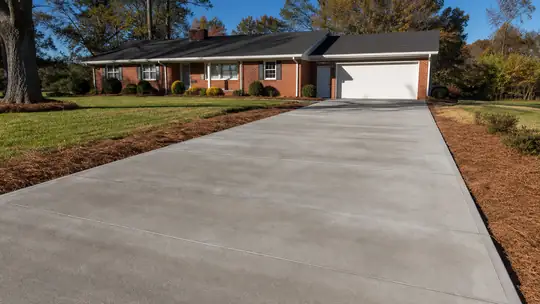
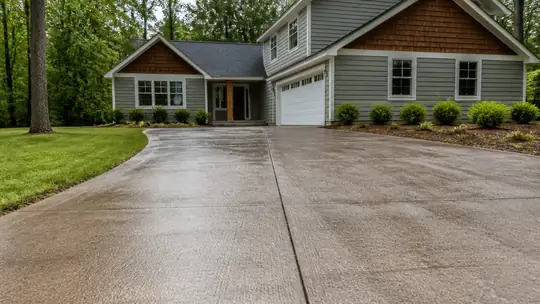
concrete slab installation completed by a local contractor at a buff-brick ranch home in Bowling Green, KY, after a rain shower.

Concrete Slab Installation in Brownsville, Kentucky

A concrete slab is the flat, load-bearing surface that everything else sits on: a garage floor, a shed pad, a patio, the base under a home addition. We pour residential and light commercial slabs in Brownsville, and we treat each one as a structural job, not a finishing job. The top is what people see. What decides whether it stays flat and whole is underneath, in the ground, the base, and the reinforcement set before any concrete arrives.

The work starts with the ground. Soil changes from one property to the next, so every site is tested individually before we set a single form. From there we grade, compact a stone base, and place steel or mesh to suit the load the slab will carry. Forms go in square and to the right height. Then we pour, strike, and finish the surface, cut control joints where the concrete wants to crack anyway, and give it time to cure.

Most slab failures trace back to shortcuts nobody sees. A soft spot left in the subgrade. A base that was never compacted, reinforcement lying on the dirt instead of sitting inside the concrete, joints cut too late or not at all. Each one saves an hour on pour day and turns into a cracked, uneven slab a few years on. Getting it right mostly takes patience with the dull preparation. If you have a slab in mind, call us for a free estimate.

Call +1 270-208-9064

Get a Free Estimate

What We Do in Brownsville

Concrete Slab Installation Cost

Every slab is priced from the site, not a chart. Square footage matters, but so do the excavation, the base stone, how much reinforcement the load calls for, and whether a truck can reach the forms. Call for a free estimate: a number worth trusting comes from the ground itself, not a guess over the phone.
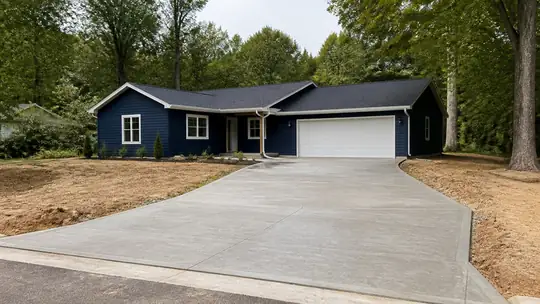
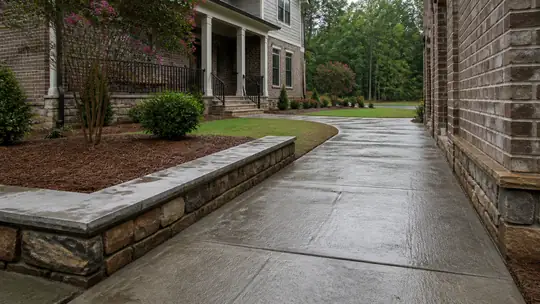
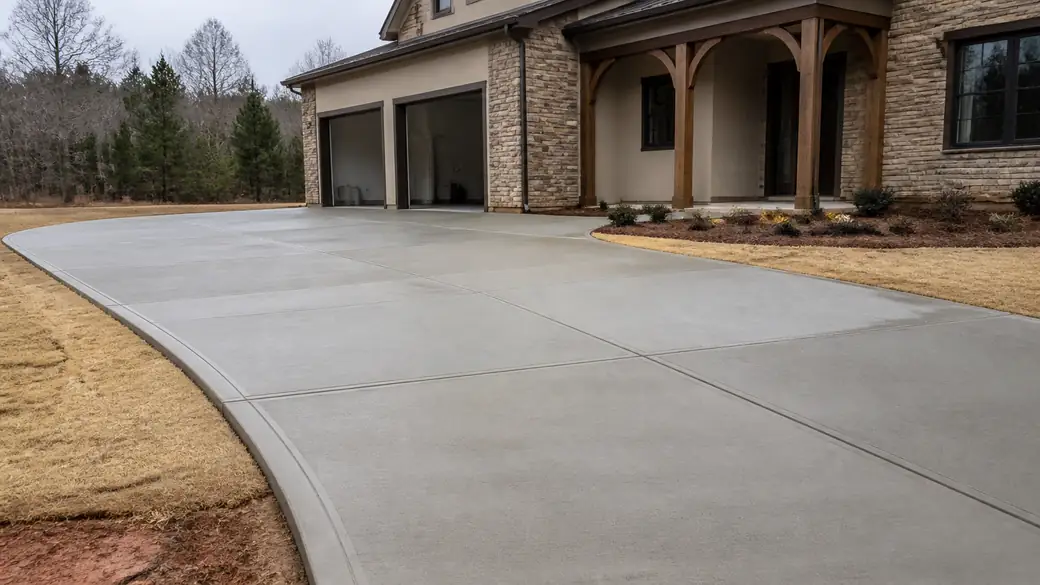
concrete driveway installation completed by a local contractor at a tan-brick colonial in Bowling Green, KY, in clear late-morning sun.

Concrete Driveway Installation

A driveway carries more weight than a patio, so we pour it thicker and set rebar on chairs so it sits in the middle of the slab, not on the dirt. Control joints go in at the right spacing, or the driveway picks its own crack lines. Broom finish for grip, stamped if you want pattern.

concrete flooring installation completed by a local contractor at a grey split-level home in Bowling Green, KY, at blue hour.

Concrete Flooring Installation

Garage, shop and basement floors need a flat, dense surface more than a pretty one. We compact the base, lay a vapor barrier where moisture can come up from below, and power trowel the finish smooth. Saw cuts go in as soon as the slab can take a blade, before shrinkage cracks start on their own.

concrete slab repair completed by a local contractor at a painted-white-brick two-story home in Bowling Green, KY, in late afternoon light.

Concrete Slab Repair

Some cracks are cosmetic. Others mean the ground moved underneath. Baxter soil (well drained) is Warren County's dominant type, but it varies across the county, so every site is tested before work starts. Hairline cracks get routed and sealed; a sunken or heaving section gets cut out, rebased and repoured.

concrete sidewalk installation completed by a local contractor at a charcoal farmhouse-modern home in Bowling Green, KY, under an overcast sky.

Concrete Sidewalk Installation

Walks fail at the edges and where roots push up. We dig out soft spots, set the forms to pitch water off toward the yard, and tool the joints at even spacing so any cracking stays in the joint. Finish is a light broom for footing when wet, with a clean tooled edge along both sides.

How a Concrete Job Runs in Brownsville

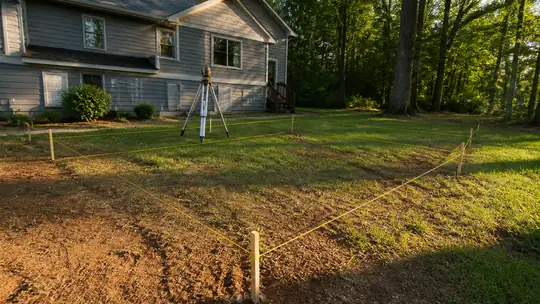
A contractor checks slope and drainage before work begins. at a grey split-level home in Bowling Green, KY, in clear late-morning sun.

Step 1: Site Assessment

Before any price or plan, we walk the property and test the ground where the slab will sit. Baxter soil is the dominant type in Warren County and it drains well, but it varies across the county, so every site gets tested individually. We also check grade, drainage, access for the truck, and anything buried.

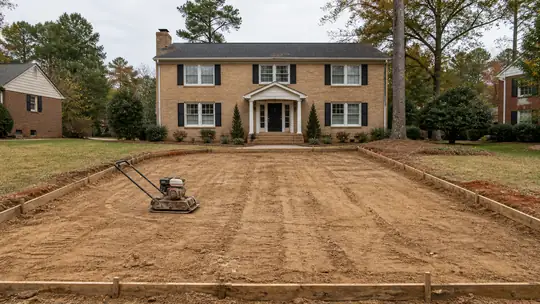
A plate compactor tamps down soil in a small excavated area. at a tan-brick colonial in Bowling Green, KY, at blue hour.

Step 2: Site Preparation

Sod and topsoil come off first, down to firm ground. Soft spots get dug out and replaced rather than covered over, because a slab only rests as well as what is under it. We spread the gravel base in lifts, compacting each one, and set the grade so water runs away from the house.

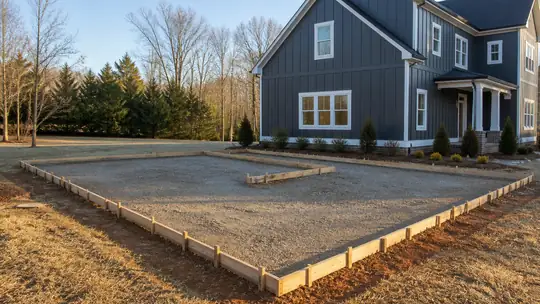
Wooden forms outline a patio slab before the pour. at a charcoal farmhouse-modern home in Bowling Green, KY, in late afternoon light.

Step 3: Forming & Reinforcement

Forms go in straight and staked tight, since a form that bows under the weight of wet concrete leaves a wavy edge for good. Inside them we set rebar or welded wire mesh on chairs, so the steel sits in the middle of the slab instead of lying on the gravel, where it does nothing.

A screed board levels fresh concrete on a small patio. at a painted-white-brick two-story home in Bowling Green, KY, at blue hour.

Step 4: Pouring

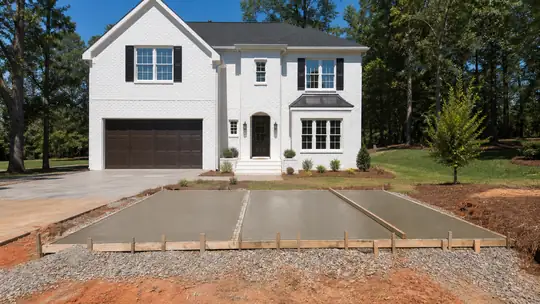
Concrete arrives ready-mixed, and from then on the clock matters. We place it close to where it belongs rather than dragging it across the slab, work it into the corners, and consolidate around the steel. Adding water at the chute makes it easier to spread and weaker once hard, so we don't.

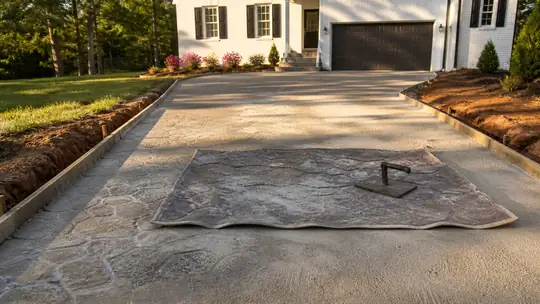
Stamping mats are pressed into a patio surface to imprint a pattern. at a painted-white-brick two-story home in Bowling Green, KY, after a rain shower.

Step 5: Finishing

Screeding brings the surface to grade, then a bull float pushes the stone down and draws cream up. We wait for the bleed water to leave before troweling; working it in early is how surfaces flake later. Control joints get cut or tooled in. The top is left broomed, troweled smooth or stamped.

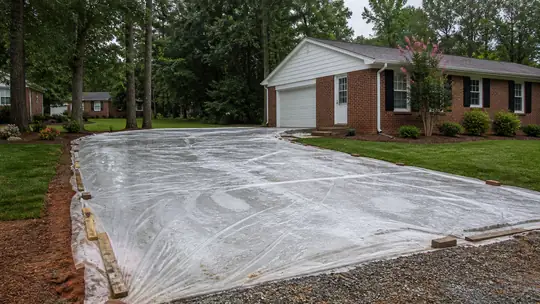
Plastic sheeting covers a curing driveway slab. at a red-brick ranch home in Bowling Green, KY, in late afternoon light.

Step 6: Curing

Strength comes from the slab keeping its water, not from drying out. After finishing we keep the slab damp or covered, or apply a curing compound, and keep traffic off it. A slab that dries too fast on the surface cracks and dusts. Walking on it comes first. Tires wait longer.

A sprayer applies sealer across a driveway. at a grey split-level home in Bowling Green, KY, in early morning light.

Step 7: Sealing

Once the slab has cured, a sealer closes the pores against water, oil and stains. Decorative and stamped surfaces need it most, since it holds the color and sharpens the pattern. We use a penetrating sealer on plain broom finishes and a film-forming acrylic on decorative work. Both wear, and a fresh coat keeps them working.

Concrete Systems and Materials for Brownsville

A slab is only as good as what sits under it and what goes into it. For most residential work around Brownsville, that means a compacted gravel base, a mix suited to the job, and steel reinforcement held at the right height inside the pour. Driveways get rebar or wire mesh, depending on the load the surface will carry. Patios and walkways usually need less, though we still place reinforcement in every slab we pour. Decorative work, stamped or colored, sits on the same structural base: the finish goes on top of sound concrete, never instead of it.

Soil comes first. Baxter soil, which drains well, is the dominant type in Warren County, but it varies across the county, so we test every site individually before work starts. What we find there decides how deep we dig, how much base we bring in, and how thick the slab needs to be. Forms go in next, set to the grade the water needs to follow away from the house. Then the pour, the finish, the control joints cut at planned spacing, and a cure that is left alone long enough to do its job.

Most cracked slabs we see were not poured wrong on the day. They failed underneath: a thin base, fill that was never compacted, reinforcement lying flat on the ground where it does nothing. Joints cut too far apart or too late let the concrete choose where it cracks. Water left standing against a surface works at it for years. Getting these right is not exotic work. It means using the correct materials in the correct amounts, and not skipping the steps nobody sees once the slab is finished. That is the part of a project we care most about.

What Decides the Price of Concrete in Brownsville

Most of the number on a concrete quote is set before any concrete is poured. It comes from what we find on your property: what has to come out, how a truck reaches the work, and what the ground under the slab needs. You can check most of these yourself before anyone comes out to measure.

What changes the priceWhich wayWhy
An old slab, asphalt or gravel already in placecosts moreIt has to be broken out and hauled off, and the base regraded, before forms go in.
A clear path for the ready-mix truck to reach the formscosts lessWhen the chute reaches, we pour straight from the truck. A pump or wheelbarrows add labor and equipment.
Tree roots or stumps under the work areacosts moreRoots come out and the hole gets backfilled and compacted, or the slab settles over them later.
A thicker slabcosts moreA driveway that carries a truck needs more depth than a patio, and every added inch is more concrete.
Rebar instead of wire meshcosts moreStructural reinforcement takes more material and more time to tie and set on chairs.
Water pooling where the slab will sitcosts moreWe may need to regrade, add a drain or build in slope so water runs off the surface instead of under it.
A stamped or decorative finishcosts morePattern, color and sealer add materials and a longer finishing window on pour day.
What the soil test showseither wayBaxter soil is well drained and common in Warren County, but it varies. Testing every site tells us how much base prep the slab actually needs.

When you line up competing bids, compare them on the same points: slab thickness, type of reinforcement, depth of the gravel base, and whether removal and haul-off are included. A lower number usually means one of those is thinner or missing. Ask each contractor to put all four in writing.

Frequently Asked Questions About Concrete in Brownsville

Do I need permits for foundation work in Brownsville?

Yes, plan on it. Foundation work is structural, and it is the kind of project that normally goes through a permit and an inspection before any concrete is poured. The exact requirements depend on the property and on who has jurisdiction over it, so we confirm them before construction starts instead of guessing. That check also puts the inspection points into the schedule, which keeps the pour from sitting idle while paperwork catches up.

How much does it cost to install a 4-footconcrete retaining wall in Brownsville?

It depends on the wall, and we would rather measure it than guess. Length matters most, followed by how the footing has to be built, how much reinforcement the wall needs and how water will drain behind it. A four-foot wall holds back real weight, so this is structural work. Soil varies across Warren County, and every site is tested individually before work starts. Call for a free estimate that prices your wall, not an average one.

What's the difference between acid stain and water-based stain?

Acid stain reacts chemically with the lime in cured concrete, so the color becomes part of the surface itself. The result is mottled and uneven in a way many people like, within a narrow range of earth tones: browns, tans, muted greens. Water-based stain does not react. It soaks into the surface and offers a wider range of colors, more even coverage and more predictable results. Both need a sealer afterward. Both show every flaw in the slab underneath.

Should a damaged Brownsville patio be repaired or replaced?

That turns on what is failing: the surface or the slab. Hairline cracks, flaking and worn finish on a patio that still sits level can usually be repaired and resurfaced. A patio that has sunk, tilted toward the house or broken into pieces that move independently has a problem underneath, and patching the top will not hold. We look at how the slab sits before recommending either, because replacing a sound patio wastes your money.

Can commercial driveways in Brownsville be repaired while staying open to traffic?

Yes, in most cases. We split the work into sections so part of the driveway stays open while the rest is broken out, repaired and left to cure. Traffic gets routed around the work with cones and clear signage, and each section stays closed until the concrete is strong enough to carry vehicles. Curing time paces the job, so a phased repair runs longer than closing the whole entrance. For a business that cannot close, that is usually a fair trade.

Is Bowling Green Precision Concrete licensed, insured, and bonded?

Ask us for the documents and read them before you sign, the same as you would with any contractor working on your property. License, insurance and bonding details should be in writing, with current dates and a company name that matches the one on your contract. Checking takes a few minutes. It protects you on every project, large or small, and it is a fair question to put to anyone you are about to hire.

Get a Free Estimate

Get a Free Estimate

Tap to call +1 270-208-9064