+1 270-208-9064
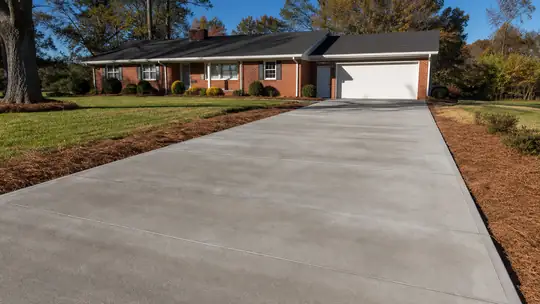
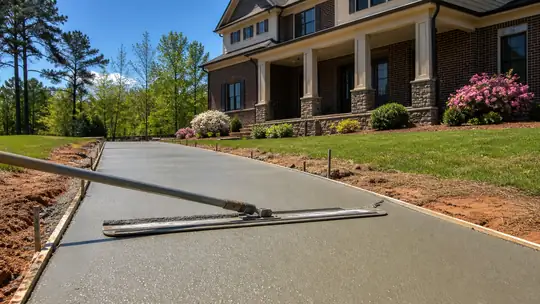
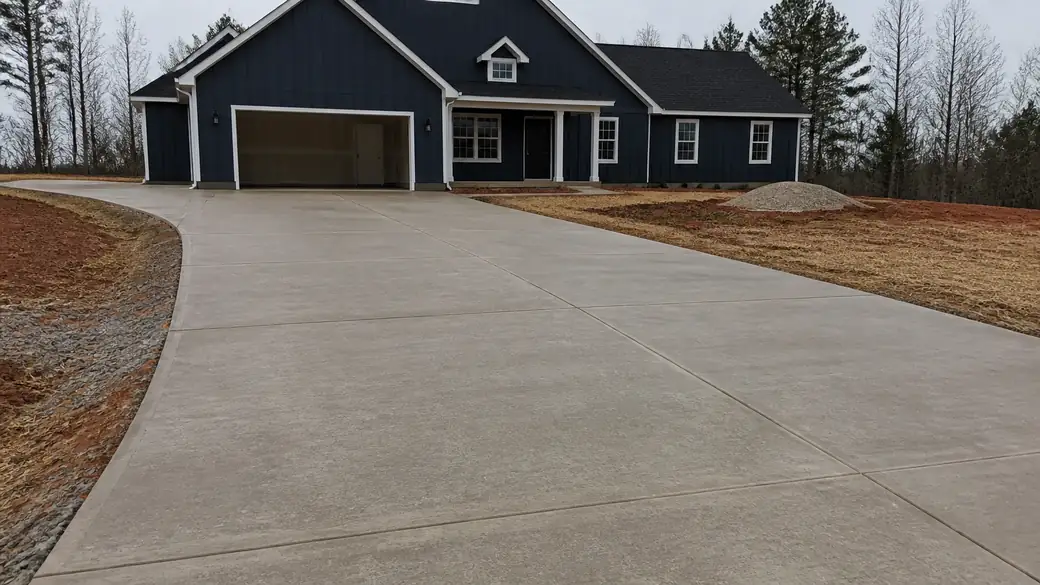
concrete installation completed by a local contractor at a brick-and-siding two-story home in Bowling Green, KY, under bright midday cloud.

Concrete Installation in Bowling Green, KY

We pour residential and light commercial concrete across Bowling Green and the rest of Warren County: driveways, patios, walkways, garage floors and the structural slabs that sit under sheds and additions. The median home here was built in 1991, which means plenty of properties still have their first driveway or patio, and replacing a slab that has cracked, settled or started to lift is steady work for us. Some owners want a plain broom finish back. Others use the chance to go stamped or decorative. Either way the installation follows the same sequence of forms, base, reinforcement, pour and finish, and none of it gets rushed.

The ground decides more than most people expect. Warren County has 224 feet of local relief within a few miles, and it changes from block to block, so a driveway on a slope drains, carries weight and moves differently from a patio on a flat lot. Baxter soil, which drains well, is the most common type in the county, but it varies from one part of the county to another. That is why every site gets graded and tested on its own before any concrete arrives. The base depth, the reinforcement and the slab thickness come from what that ground shows us. Call for a free estimate.

Call +1 270-208-9064

Get a Free Estimate

What Is Included in Concrete Installation

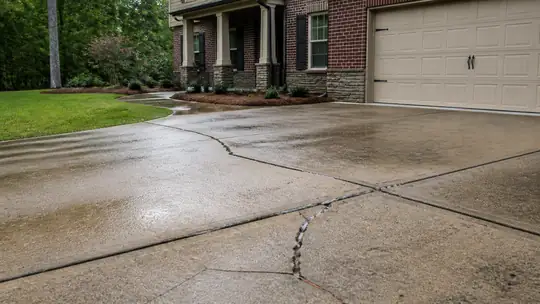
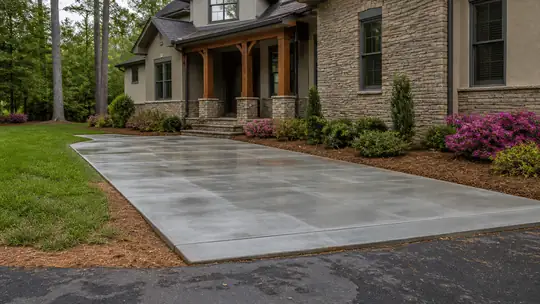
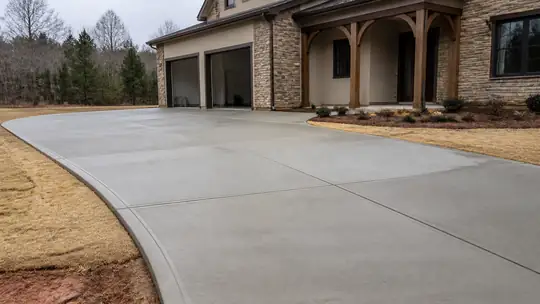
concrete slab installation completed by a local contractor at a buff-brick ranch home in Bowling Green, KY, after a rain shower.

Concrete Slab Installation Cost

What you pay for covers the whole job, not just the pour: excavation, a compacted gravel base, forms, rebar or wire mesh, the concrete itself, finishing and curing. On hilly Warren County lots, grading can be a real share of the work, so we test and grade each site before quoting. Call for a free estimate.
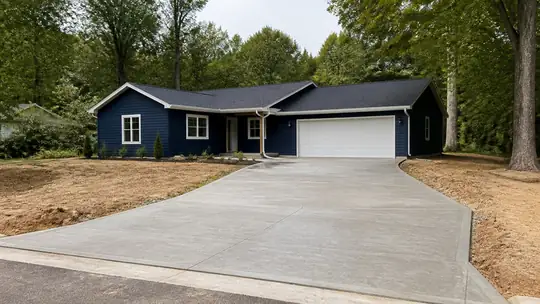
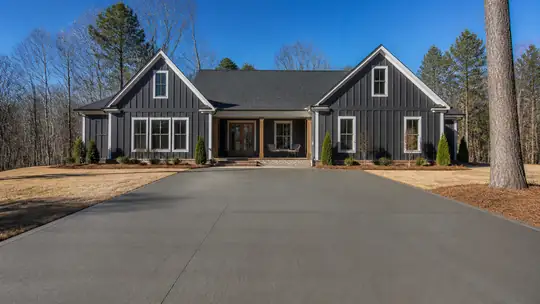
concrete driveway installation completed by a local contractor at a tan-brick colonial in Bowling Green, KY, in clear late-morning sun.

Concrete Driveway Installation

A driveway takes more abuse than any other slab around the house: vehicle weight, turning tires, and water running off the roof and street. We cut out soft spots, compact the base, set rebar, and slope the surface so water leaves it. Control joints get cut at the right spacing, which decides where it cracks.

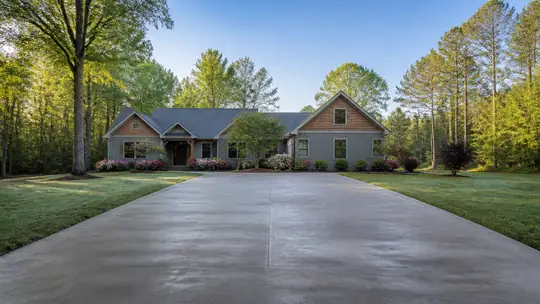
concrete flooring installation completed by a local contractor at a grey split-level home in Bowling Green, KY, at blue hour.

Concrete Flooring Installation

Garage, basement and shop floors start with a vapor barrier over compacted fill, then reinforcement and a steel-troweled finish. We plan drains and floor slope before the pour, since fixing them later means cutting concrete. Left bare, a floor dusts and stains, so we seal it or leave it ready for epoxy or polish.

concrete slab repair completed by a local contractor at a painted-white-brick two-story home in Bowling Green, KY, in late afternoon light.

Concrete Slab Repair

Not every cracked slab needs tearing out. We look at why it failed first: a washed-out base, missing reinforcement, or roots and water underneath. Hairline cracks get routed and sealed. Sunken sections can often be lifted and the voids filled. When the base itself has gone, patching only buys time, and we say so.

How a Concrete Installation Job Runs in Bowling Green

A worker examines an old driveway before replacement. at a brick-and-siding two-story home in Bowling Green, KY, under bright midday cloud.

Step 1: Site Assessment

We walk the property, measure the area and check where water goes after rain. Warren County is hilly, with 224 feet of local relief within a few miles, so we shoot grades on every site rather than guessing. Soil gets tested too: Baxter soil drains well, but it varies across the county.

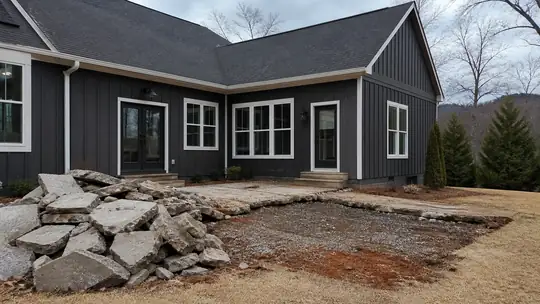
An old patio slab is broken up and hauled away. at a charcoal farmhouse-modern home in Bowling Green, KY, under bright midday cloud.

Step 2: Site Preparation

Excavation comes next. We strip sod and topsoil down to firm ground, then bring in four inches of compacted crushed stone as the base. A plate compactor goes over it in lifts. Most cracked driveways we tear out failed here, on soft fill that settled, not in the concrete itself. We handle the permit too.

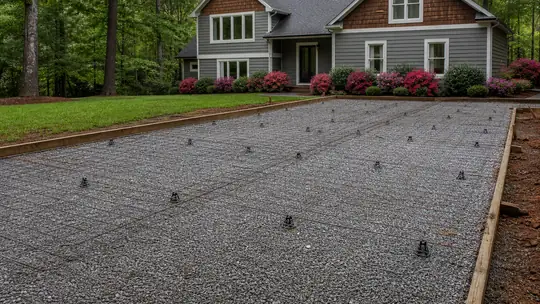
Wire mesh is unrolled across a driveway base before pouring. at a grey split-level home in Bowling Green, KY, under bright midday cloud.

Step 3: Forming & Reinforcement

Forms are straight 2x4 or 2x6 lumber, staked and set to a slight slope so water runs off the surface. Inside them goes the reinforcement: rebar on a grid, or welded wire mesh, raised on chairs so it sits mid-slab. Steel lying on the stone does nothing. Driveways get thickened edges, where slabs break first.

A bull float smooths a residential walkway surface after screeding. at a brick-and-siding two-story home in Bowling Green, KY, after a rain shower.

Step 4: Pouring

Ready-mix arrives by truck, and the clock starts. We place the concrete at a four-inch depth for patios and walks, thicker for driveways, then screed it level with a straightedge. Adding water at the chute makes it easier to spread and weaker once hard, so we don't. On hot days we pour early.

A hand trowel smooths a small patio surface to a hard finish. at a charcoal farmhouse-modern home in Bowling Green, KY, after a rain shower.

Step 5: Finishing

Once bleed water leaves the surface, finishing starts. A bull float closes the top, edgers round the borders, and a groover cuts control joints so cracks form in straight lines where we choose. Driveways and walks get a broom finish for grip. Stamped patterns go on now too, while the concrete is still workable.

A hand sprayer applies curing compound to a finished patio. at a stacked-stone and stucco home in Bowling Green, KY, under low winter sun.

Step 6: Curing

Concrete gains strength slowly, and it needs moisture to do it. We keep the slab damp or apply a curing compound so the surface doesn't dry out and dust. Foot traffic is fine after a day or two. Cars wait about a week. Full strength takes roughly a month, so heavy trucks stay off.

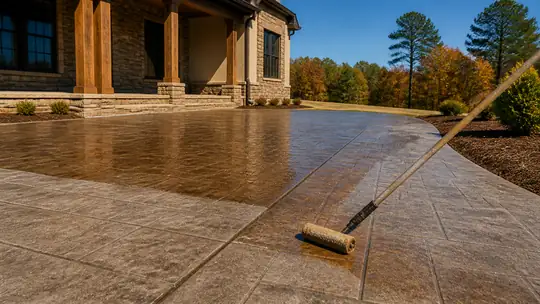
A roller applies sealer to a stamped patio surface. at a stacked-stone and stucco home in Bowling Green, KY, at blue hour.

Step 7: Sealing

After the slab cures for about a month, we apply a penetrating or acrylic sealer. It slows water getting in, which limits surface wear and stains from oil and leaves. Stamped and colored surfaces need it most, since sealer deepens the color. Resealing every few years keeps it working, and most owners handle that themselves.

Top Decorative Concrete Styles for Bowling Green Homes

Stamped concrete is the style most people ask about first, and it earns the attention. We press the pattern into the surface while the slab is still workable, so a patio can read as slate, cobblestone or weathered wood plank without the gaps between pavers where weeds take hold. Integral color runs through the whole mix, which means a chip shows the same shade underneath. Acid and water-based stains go on after the slab cures and leave a mottled, variegated finish that suits a covered porch. Exposed aggregate brings the stone up to the surface. It gives a driveway real grip underfoot.

Picking the right one depends on the house as much as on taste. The median home in Warren County was built in 1991, and a brick ranch from that era usually looks better with a clean broom finish and a stamped border than with a busy pattern running the length of the driveway. Slope matters too. This county is hilly, and a steep drive needs texture, so we steer those jobs toward aggregate or a heavier broom rather than a smooth stamp that turns slick in the rain. Decorative work sits on the same grading, base and reinforcement as any other slab, and we test each site before we pour. Call for a free estimate and bring whatever photos you have saved.

What Decides the Price of Concrete Installation

Two driveways of the same size can come in far apart on a bid, and the gap is almost always in the ground and the access, not the concrete. Warren County is hilly, and it changes from one block to the next, so we look at each property on its own before we price it. These are the things that move the number, and most of them you can check yourself.

What changes the priceWhich wayWhy
Old concrete or asphalt to tear outcosts moreBreaking it up, loading it and hauling it off all happen before any new work starts.
Slope across the sitecosts moreA pad on a grade needs cut, fill and compaction to sit level, and sometimes stepped forms.
How the truck reaches the pourcosts less when openIf the truck can back up to the forms, it pours direct. A fence, a narrow side yard or a backyard pour means a pump or wheelbarrows.
Where water sits after raincosts moreLow spots need regrading, a deeper stone base or a drain so the slab does not stay wet underneath.
Thickness and reinforcementcosts moreA driveway that carries a truck or trailer calls for a thicker slab and rebar, not just mesh.
What is buried under the workcosts moreRoots, old footings, debris and utility lines have to be found and removed or worked around.
Soft spots in the soilcosts moreBaxter soil drains well across much of the county, but it varies. Where our test finds soft ground, it comes out and compacted stone goes in.
Tying into existing concretecosts moreMeeting a garage apron or an old walk means drilling in dowels and matching heights.

When you compare bids, check that they describe the same slab. Look at the thickness, the reinforcement, the depth of the stone base, and whether tear-out, grading and the permit are in the number or left out of it. A low bid usually skips one of those.

Common Concrete Installation Questions From Bowling Green Owners

Does Bowling Green Precision Concrete handle commercial concrete projects?

Yes. We pour commercial work across Bowling Green alongside our residential jobs: shop floors, warehouse slabs, sidewalks, dumpster pads, parking areas and loading approaches. The difference on a commercial project is mostly load and traffic. A slab that sees forklifts or delivery trucks needs a thicker section, heavier reinforcement and tighter joint spacing than a patio does. We size all of that to how the property will actually be used, then build it that way.

Do you handle concrete permits for commercial projects in Bowling Green?

Yes, we handle the permit. Commercial work usually carries more paperwork than a residential driveway: drawings, inspections at set points in the construction, and sign-off before anyone drives on the finished surface. We pull what the job needs, schedule the inspections and build the pour schedule around them. That leaves you free to keep running the business while the paperwork side of the project moves along with the concrete.

What is the best finish for commercial concrete floors in Bowling Green, KY?

It depends on what happens on the floor. For a showroom, office or retail space, a ground and polished finish holds up to foot traffic, reflects light and cleans with a mop. Shops and warehouses usually do better with a hard-troweled surface and a penetrating sealer, which resists tire marks and spills without getting slick. Kitchens and wash bays want some texture underfoot. We walk the space with you and match the finish to the work.

How long does stained concrete installation take to complete?

Longer than most people expect, and most of that time is waiting. A new slab has to cure before stain will take evenly, so we pour, finish and then leave it alone for several weeks. The staining itself goes quickly: cleaning, applying color in coats, neutralizing if it's an acid stain, then sealing. On an existing slab we skip the cure and start with cleaning and repairs, which shortens the job considerably.

How long does concrete slab installation take?

The pour is the short part. Before it, we grade the site, test the base, set forms and place reinforcement. That prep changes from job to job, because Warren County is hilly and ground conditions vary from block to block, so every site gets graded and tested on its own. Once the concrete is placed and finished, it needs time before it carries weight: foot traffic comes first, vehicles later. Your site sets the schedule.

Will repaired areas match the existing concrete deck color and finish in Bowling Green?

No, not exactly, and any contractor who promises a perfect match is guessing. Existing concrete has aged and taken on its own color from sun, water and use. We get close by matching the mix, the aggregate and the finish texture, then tinting or staining the repair to blend in. Where a patch would still stand out, we sometimes suggest resurfacing the whole deck so it reads as one surface again.

Get a Free Estimate

Get a Free Estimate

Tap to call +1 270-208-9064