+1 270-208-9064
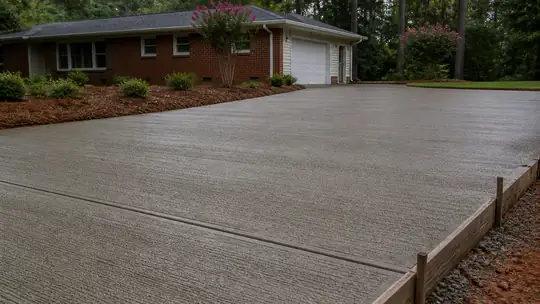
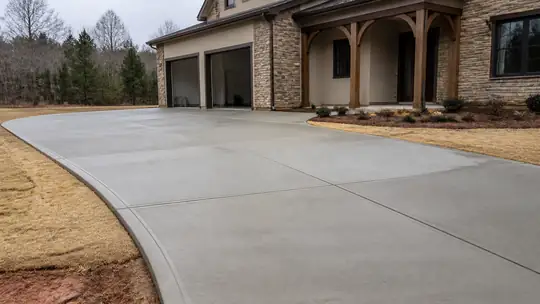
concrete driveway installation completed by a local contractor at a tan-brick colonial in Bowling Green, KY, in clear late-morning sun.

Concrete Driveway Installation in Bowling Green, KY

A concrete driveway is a slab that has to carry a car every day, shed water away from the house, and sit on ground that does not move under it. We pour residential driveways in Bowling Green, from a plain broom finish to stamped and decorative surfaces. The median home here was built in 1991, so plenty of the driveways we replace are original to the house. They have carried decades of traffic. Some have cracked into plates, some have settled toward the garage, and some were simply poured too thin for the vehicles parked on them today.

Most driveway failures start underneath. The ground here is hilly, with 224 feet of local relief within a few miles, and it changes from one block to the next. A driveway that climbs from the street has water running down it every time it rains, and a slab that sits on soft or poorly compacted base will settle and crack no matter how well the top is finished. The dominant soil is Baxter, which drains well, but it is not the same everywhere, so we test each property before we start. We grade for drainage and set the reinforcement to suit the slope and the load.

Getting it right is mostly a matter of care. The base is compacted in lifts, the forms are set to a pitch that carries water toward the street and away from the foundation, and the slab is poured to a thickness that suits what will park on it. Control joints go in where the concrete would want to crack anyway, so any cracking follows a line we chose. None of that shows once the surface is finished, which is why it is easy to skip. We don't. If your driveway is showing its age, call for a free estimate.

Call +1 270-208-9064

Get a Free Estimate

What Is Included in Concrete Driveway Installation

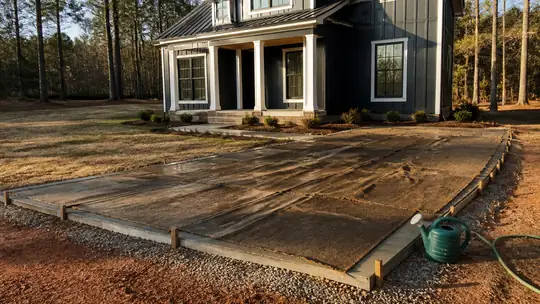
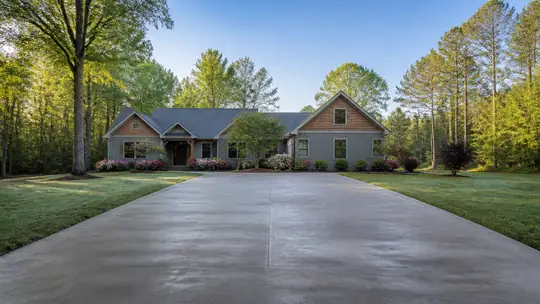
concrete slab installation completed by a local contractor at a buff-brick ranch home in Bowling Green, KY, after a rain shower.

Concrete Slab Installation Cost

Price comes down to what the site needs, and we work it out after walking the property. Tear-out of old concrete, how much grading the slope takes, slab thickness, rebar versus wire mesh, and the finish all move the number. Warren County is hilly, so some lots need more base work than others.
Concrete Driveway Installation

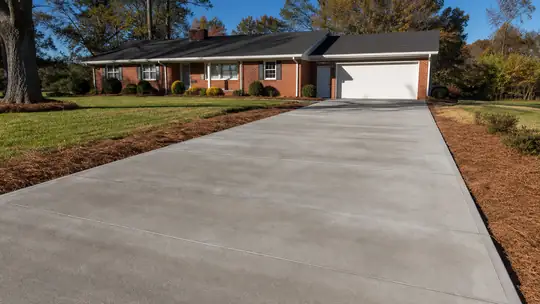
We cut out the old driveway, grade and compact a crushed stone base, then set forms and reinforcement on chairs so the steel sits mid-slab. The pour gets a broom finish for traction, with control joints cut to match the width. Most cracking we see traces back to skipped base work.

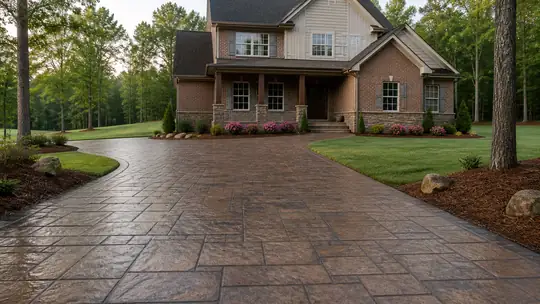
concrete flooring installation completed by a local contractor at a grey split-level home in Bowling Green, KY, at blue hour.

Concrete Flooring Installation

Garage floors, shop floors and basement slabs go down over a vapor barrier on compacted stone, with mesh or rebar depending on the load. We trowel them smooth, or leave a lighter texture where footing matters. Floors that curl or dust usually had too much water in the mix or a rushed cure.

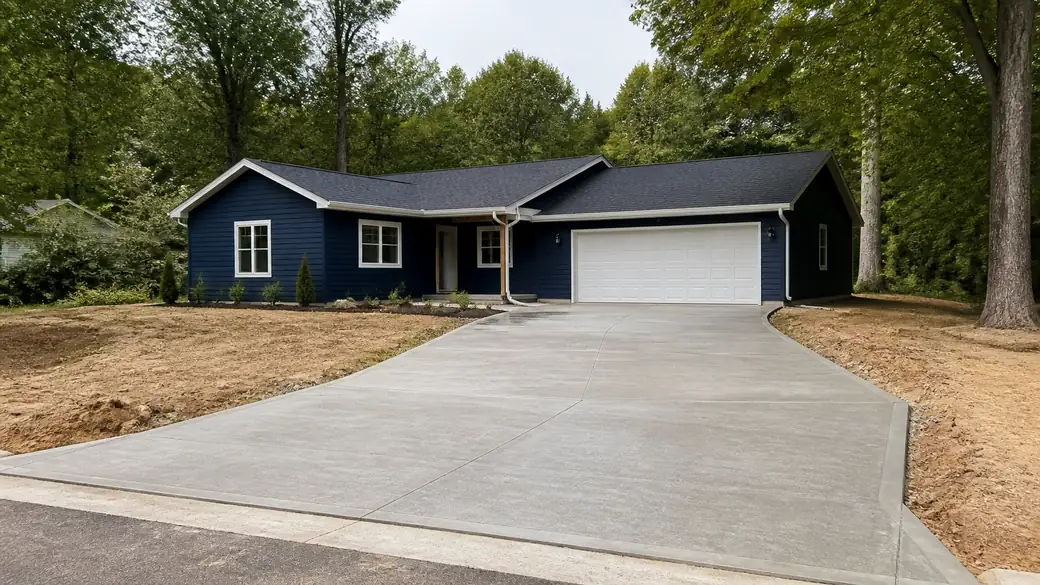
concrete slab repair completed by a local contractor at a painted-white-brick two-story home in Bowling Green, KY, in late afternoon light.

Concrete Slab Repair

Not every cracked slab needs replacing. Hairline shrinkage cracks can be routed and sealed. Sections that have settled or heaved, often from a washed-out base or tree roots, we saw out, rebuild the base and pour back with dowels tying into the old concrete. If the whole slab is failing, we say so.

How a Concrete Driveway Installation Job Runs in Bowling Green

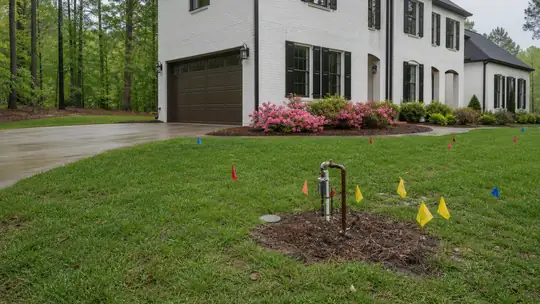
Utility flags mark buried lines before digging starts. at a painted-white-brick two-story home in Bowling Green, KY, in late afternoon light.

Step 1: Site Assessment

We walk the property with you, measure the run from garage to street, and check where water goes when it rains. Warren County is hilly, with 224 ft of local relief within a few miles, and well-drained Baxter soil dominates, but both change from lot to lot. So we test your site before deciding anything.

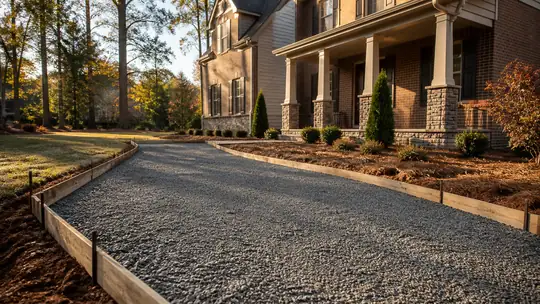
Crushed stone base is raked level inside driveway forms. at a brick-and-siding two-story home in Bowling Green, KY, in early morning light.

Step 2: Site Preparation

Old asphalt or broken concrete comes out first. We dig to firm subgrade, then grade a steady fall away from the garage so water runs off instead of sitting against the house. Crushed stone goes down next, compacted in lifts with a plate or roller. Soft spots get dug out and replaced, never covered.

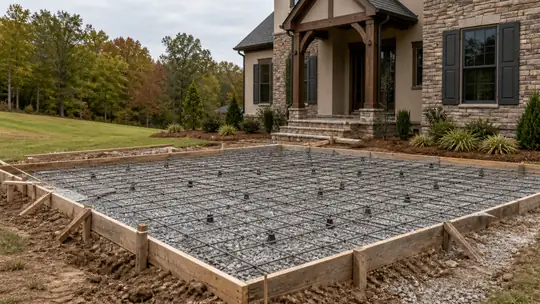
A worker ties rebar into a grid before a residential pour. at a stacked-stone and stucco home in Bowling Green, KY, in early morning light.

Step 3: Forming & Reinforcement

Forms are straight lumber or steel, staked and checked with a string line so the edges run true. Inside them we set rebar or welded wire on chairs so the steel sits mid-slab, not in the dirt where it does nothing. The apron gets a thickened edge, since that is where tires turn in.

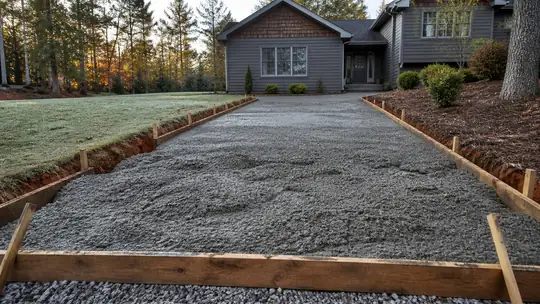
A ready-mix truck discharges concrete into a driveway form. at a grey split-level home in Bowling Green, KY, under low winter sun.

Step 4: Pouring

Ready-mix arrives from the plant and goes straight down the chute, or through a pump when the truck cannot reach. We place it in one continuous pour, working it tight against the forms and around the steel. A driveway poured in stages leaves cold joints, and cold joints are where cracks like to start.

A broom drags across a driveway creating a slip-resistant texture. at a red-brick ranch home in Bowling Green, KY, under an overcast sky.

Step 5: Finishing

Screeding strikes the surface flat, then a bull float brings up the cream. Timing matters: trowel bleed water back in and the top scales later. A broom finish gives grip on a sloped drive, which counts on hilly lots. Control joints get tooled or saw-cut so the slab cracks where we choose, not where it wants.

Damp burlap covers a small slab section during curing. at a charcoal farmhouse-modern home in Bowling Green, KY, after a rain shower.

Step 6: Curing

Concrete keeps gaining strength long after it looks dry, so we hold moisture in with a curing compound or wet blankets. A slab that dries out too fast shrinks unevenly and cracks. Foot traffic comes first, vehicles later, and we tell you when each is safe, based on the mix and the weather.

A finished stamped surface shows a glossy sealed sheen. at a brick-and-siding two-story home in Bowling Green, KY, under an overcast sky.

Step 7: Sealing

Once the slab has cured, we apply a penetrating or acrylic sealer to shut out water, oil and tire marks. Penetrating sealers leave the broom texture as it was; acrylics add a slight sheen and suit decorative work. Sealing too early traps moisture and turns cloudy, so we wait. Reseal every few years.

Top Decorative Concrete Styles for Bowling Green Homes

Stamped concrete gives you the widest range of looks. We press textured mats into the fresh surface to match slate, cobblestone, brick or wood plank, then add color through the mix and a release powder that settles into the joints so the pattern reads like the real material. Exposed aggregate is the other style we pour often: we wash back the top layer of cement paste to reveal the stone underneath, which gives a driveway real grip underfoot. A plain broom finish with a stamped or colored border is the quiet option. It suits a lot of the housing here, where the median home dates to 1991 and the house itself already carries the design.

Decorative work leaves less room for error than a plain pour, so we settle the style, color and pattern layout before the truck arrives. The base, forms and reinforcement go in the same way they would for any driveway. Once the concrete is placed and floated, the stamping crew watches the slab closely. Press the mats too early and the surface slumps around them; too late and the texture comes out shallow and patchy. We work the mats in sequence across the slab, detail the edges by hand, and cut control joints along lines that follow the pattern. After curing, we seal the surface to lock in the color.

Slope is the thing that catches people out. Warren County is hilly, though it changes from one block to the next, and a steep driveway with a deep stamp and a glossy sealer can get slick in the rain. On a grade like that we add a grit additive to the sealer or steer toward exposed aggregate. Deep textures also hold water and leaves, so they suit patios better than a long climb to the garage. Every site is graded and tested on its own before we recommend a style. The best decorative driveway is one you can still walk up safely in wet weather.

Common Concrete Driveway Installation Questions From Bowling Green Owners

How long does a concrete driveway, patio, or commercial concrete project take in Bowling Green?

It depends on size and on what sits on the ground now. A residential patio or a short walkway is usually a matter of days, weather allowing. Driveways run longer because of tear-out, grading and reinforcement. Commercial slabs take the most time, since the base, the joints and the pour sequence all have to be planned around a property that is still in use. The real schedule comes out of the site visit, not a guess over the phone.

How long does concrete driveway installation take?

The hands-on part is shorter than most people expect. Tear-out, grading, compacting the base and setting forms take up most of the working days. The pour and the finish happen in one push, because concrete does not wait for anybody. After that, the slab needs quiet time to cure and gain strength. Most of the calendar is the concrete doing its own work, and we would rather let it than rush a surface you park on every day.

How do you determine the right concrete mix and finish for general concrete driveway, patio, or walkway work in Bowling Green?

We start with the ground. Baxter soil is the dominant type in Warren County and it drains well, but it varies across the county, so every site gets tested before we order materials. The county is hilly too, and that shapes slope and runoff on a driveway. Mix and reinforcement follow from what the site shows us. Finish follows from use: broom texture where tires and feet need grip, stamped or decorative where the patio is meant to be looked at.

Do I need a permit for a concrete driveway or patio installation in Bowling Green?

Yes, in many cases, particularly where a driveway meets the street or the work changes how water leaves your property. We handle the permit as part of the job, so you are not the one filling out forms. A patio behind the house can be simpler. Still, we check rather than assume. Where an inspection is required, we schedule the work around it, and nothing gets poured before it should.

How long does a concrete driveway installation take in Bowling Green, KY?

What stretches a driveway job here is rarely the pour. It is the site. A level lot with an old slab that breaks up cleanly goes quickly. A sloped lot, where the grade has to be cut, filled and compacted before the forms go in, takes longer. So does a run of wet weather, because we do not pour on a soft base. Thick old concrete with heavy reinforcement adds time to the tear-out as well.

How long before I can drive on my new concrete driveway?

Longer than you can walk on it. Foot traffic comes first, once the surface has set hard enough not to mark. Cars wait, and heavy loads such as a delivery truck or a loaded trailer wait longer still. The right day depends on the mix and on the temperature during the cure, so we give you a date for your slab instead of a rule of thumb. Parking on it early is the easiest way to crack a new driveway.

Get a Free Estimate

Get a Free Estimate

Tap to call +1 270-208-9064