+1 270-208-9064
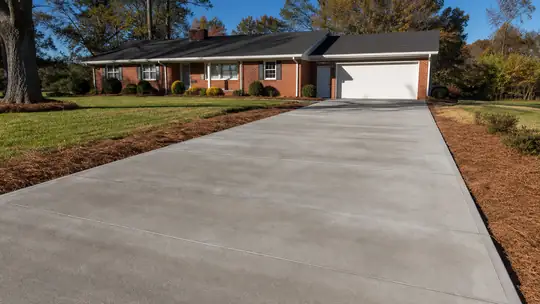
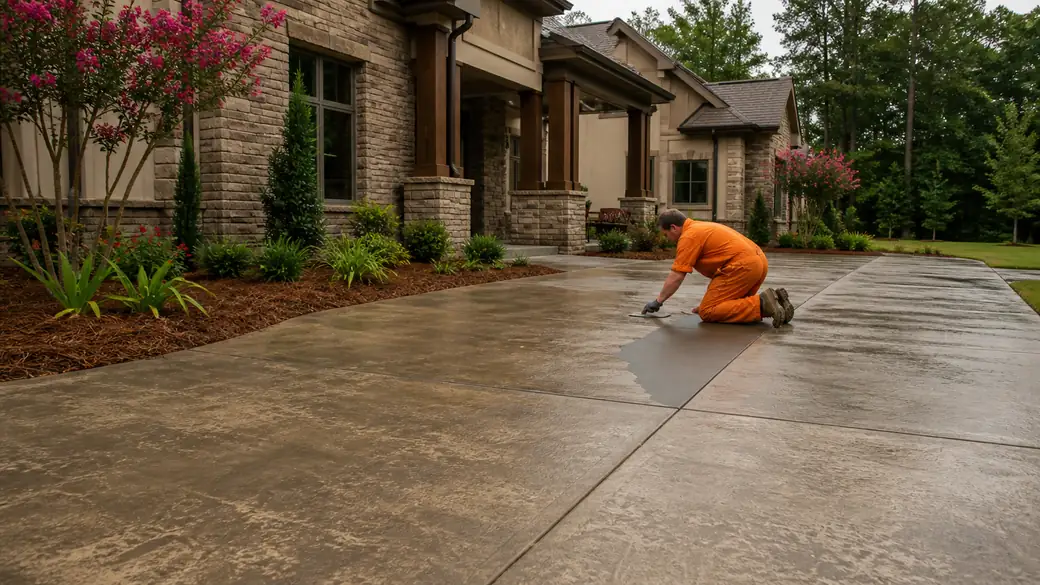
concrete repair and resurfacing completed by a local contractor at a buff-brick ranch home in Bowling Green, KY, in late afternoon light.

Concrete Repair And Resurfacing in Bowling Green, KY

Concrete repair and resurfacing is how we bring a tired driveway, patio or walkway back without tearing it out. We fill and seal cracks, patch spalled and pitted spots, level sections that have dropped, and lay a bonded overlay across the top when the slab underneath is still sound. That last condition matters. Resurfacing only makes sense on concrete that is structurally good, so we check every slab before we suggest it. If the base has failed, a fresh surface hides the problem for a season or two and then cracks along the same lines. When that is the case, we say so plainly.

The median home in Warren County was built in 1991, which means a lot of the concrete around Bowling Green has been carrying cars and weather for a long time. Most of the damage we see starts in the ground, not the mix. Hilly lots push water toward a slab edge, and a base that was never compacted well lets sections settle unevenly. Baxter soil, the county's dominant type, drains well, but it changes from one property to the next. So we test each site on its own. Fixing the cause first is what keeps a repair from coming back.

Call +1 270-208-9064

Get a Free Estimate

What Is Included in Concrete Repair And Resurfacing

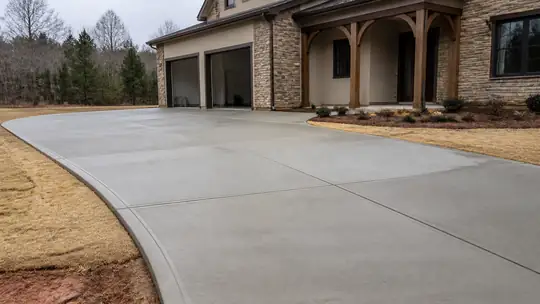
concrete slab installation completed by a local contractor at a buff-brick ranch home in Bowling Green, KY, after a rain shower.

Concrete Slab Installation Cost

Our quote covers the whole slab: excavation, a compacted gravel base, forms, rebar or wire mesh, the pour, finishing and curing. Hauling, saw cuts and cleanup are in that number too. On a hilly lot the grading can outweigh the concrete itself, so we walk the site before we put a figure on it.
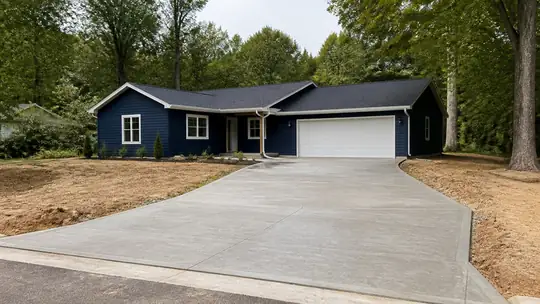
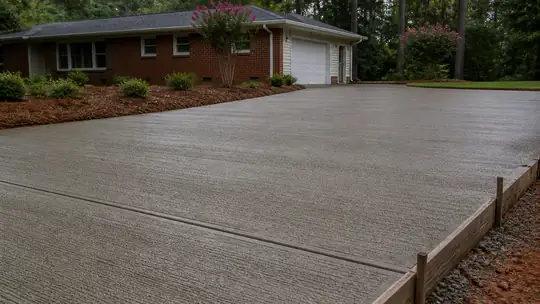
concrete driveway installation completed by a local contractor at a tan-brick colonial in Bowling Green, KY, in clear late-morning sun.

Concrete Driveway Installation

Out goes the old driveway, if there is one, and the subgrade gets cut to a firm, even bed. We lay compacted stone, set rebar on chairs so it sits mid-slab rather than on dirt, and thicken the edges where tires roll off. Control joints go in before shrinkage cracks can pick their own spot.

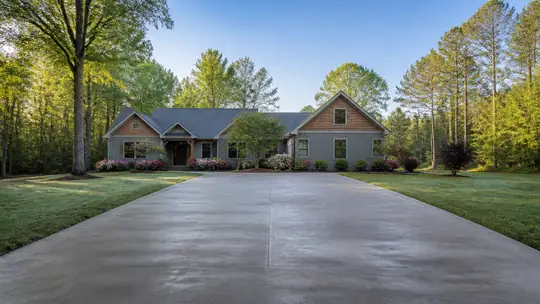
concrete flooring installation completed by a local contractor at a grey split-level home in Bowling Green, KY, at blue hour.

Concrete Flooring Installation

Garage, basement and shop floors sit on a vapor barrier so ground moisture stays out of whatever goes on top. We place reinforcement, power-trowel the surface smooth, then leave it plain, sealed, or ready for polishing. Rushing the cure is what curls edges and dusts the surface, so we give it the time it needs.

concrete slab repair completed by a local contractor at a painted-white-brick two-story home in Bowling Green, KY, in late afternoon light.

Concrete Slab Repair

Before patching anything, we find out why the slab moved. Settled sections get lifted or cut out and repoured; spalled and scaling surfaces get ground back to sound concrete and resurfaced with a polymer-modified overlay. Cracks are routed and sealed. Soil here is mostly well-drained Baxter, but it varies, so we test under each repair.

How a Concrete Repair And Resurfacing Job Runs in Bowling Green

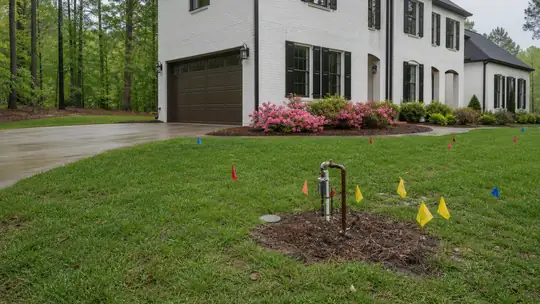
Utility flags mark buried lines before digging starts. at a painted-white-brick two-story home in Bowling Green, KY, in late afternoon light.

Step 1: Site Assessment

We walk the slab and sort every crack. Hairline shrinkage cracks can be covered by resurfacing; cracks that heave, sink or keep opening mean the base has moved. We tap the surface for hollow, delaminated spots, check where water runs on sloped lots, and test the soil under any section that has settled.

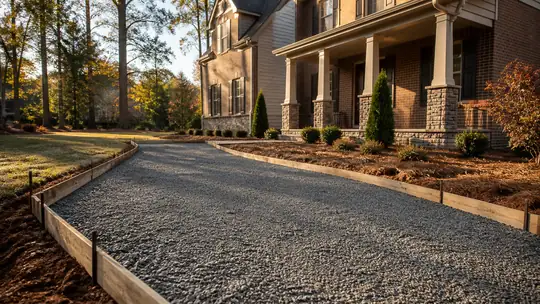
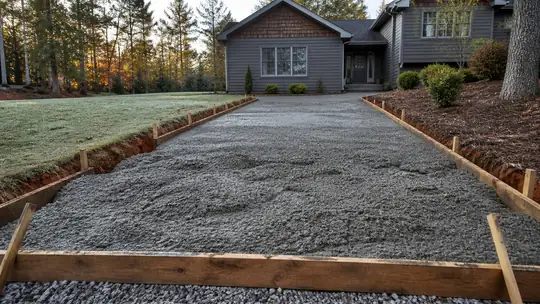
Crushed stone base is raked level inside driveway forms. at a brick-and-siding two-story home in Bowling Green, KY, in early morning light.

Step 2: Site Preparation

Sunk or broken sections get sawcut at a clean joint and hauled out, and we compact fresh crushed stone where the base went soft. Warren County's Baxter soil drains well, though it varies from site to site. Slabs we keep get ground or pressure washed down to sound, open concrete so the overlay bonds.

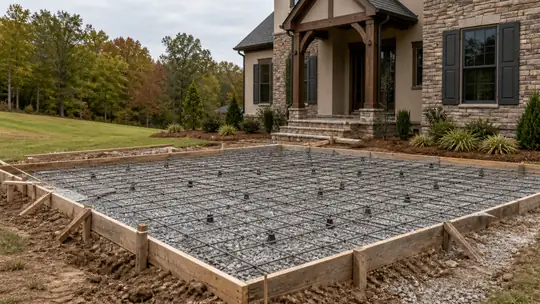
A worker ties rebar into a grid before a residential pour. at a stacked-stone and stucco home in Bowling Green, KY, in early morning light.

Step 3: Forming & Reinforcement

Forms go in at the grade of the surrounding slab, pitched so water runs away from the house. Rebar or wire mesh sits on chairs at mid-depth, not flat on the stone. We drill and epoxy dowels into the old concrete so the new section cannot drop or lift at the joint.

A ready-mix truck discharges concrete into a driveway form. at a grey split-level home in Bowling Green, KY, under low winter sun.

Step 4: Pouring

Replacement sections get ready-mix placed at a workable slump rather than watered down on site, because extra water weakens the surface and invites scaling. For resurfacing, we mix a polymer-modified overlay in small batches and spread it over a bonding slurry while the prepared slab is damp but has no standing water.

A broom drags across a driveway creating a slip-resistant texture. at a red-brick ranch home in Bowling Green, KY, under an overcast sky.

Step 5: Finishing

Finish matches what is already there. New sections get a broom texture for grip or a stamp to line up with existing decorative work, and we tool the edges and cut control joints before the concrete gets away from us. Overlays go down smooth, lightly broomed, or in a knockdown texture.

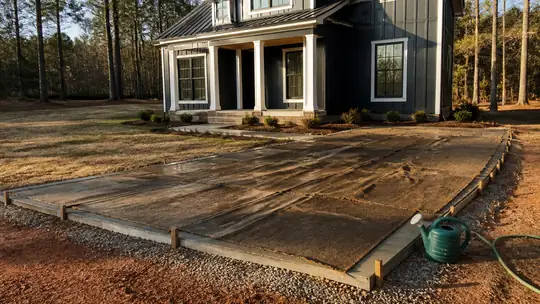
Damp burlap covers a small slab section during curing. at a charcoal farmhouse-modern home in Bowling Green, KY, after a rain shower.

Step 6: Curing

Curing is where most failed repairs actually fail. A slab that dries too fast shrinks, cracks and dusts at the surface, so we spray a curing compound or keep it covered and damp. Foot traffic can usually come back within a day or so; vehicles wait about a week, longer in cold weather.

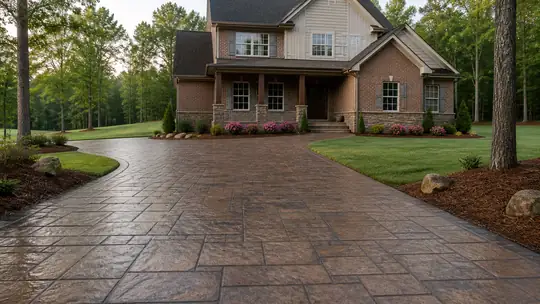
A finished stamped surface shows a glossy sealed sheen. at a brick-and-siding two-story home in Bowling Green, KY, under an overcast sky.

Step 7: Sealing

After curing, we apply a penetrating or film-forming sealer, matched to the finish. Sealer keeps water and salt out of the pores, and on stamped or colored work it holds the color. It wears, and the sign is easy to read: when water stops beading, the surface is due for another coat.

Top Decorative Concrete Styles for Bowling Green Homes

Stamped concrete does the most for the least disruption. An ashlar slate or cobblestone pattern pressed into a patio reads like stone, and a color hardener with a contrasting release agent gives it the variation real stone has. Exposed aggregate is the quieter choice: we wash back the top paste so the gravel shows through, which gives a driveway real grip underfoot. Plenty of homes here were built around 1991 and still have the original broom-finished slab out back. If that slab is sound, a decorative overlay can take a stamp, a stain or a saw-cut tile pattern without tearing anything out.

The style has to suit the ground it sits on. Warren County is hilly, and a steep driveway with a deep stamped texture holds water in the grooves and turns slick. On grades like that we lean toward exposed aggregate, or a light broom finish framed with a stamped or colored border. Overlays only last on a slab that is structurally sound, so cracks and settled sections get repaired first. Sealer matters just as much, because an unsealed stamped surface fades and lets water work into the pattern. Before we recommend a finish, we look at the slope, the drainage and the condition of the existing concrete on that property.

What Decides the Price of Concrete Repair And Resurfacing

Most of what a repair or resurfacing job costs is decided before any new material goes down. It comes from what the old slab is doing, what has to come out, and how easily we can reach the work. You can check nearly all of it yourself with a walk around the property.

What changes the priceWhich wayWhy
Cracks that have shifted or dropped on one sidecosts moreMovement means the base underneath has failed, and that gets fixed before any overlay goes on.
Sunken or heaved sectionscosts moreLifting or cutting out a settled panel is structural work, not surface work.
Sealer, paint or an old coating on the slabcosts moreA resurfacer will not bond to a sealed or painted surface, so it has to be ground or stripped first.
Rebar or mesh showing through spalled spotscosts moreExposed reinforcement has to be cleaned or replaced and covered properly, or the rust keeps pushing the concrete apart.
Water that sits on the slab or runs toward itcosts morePoor drainage is often why the slab failed. Correcting it first keeps the new surface from failing the same way.
A truck can back right up to the workcosts lessMaterials go straight in. A patio behind a fence or down a slope means hand carrying, and that is time.
A flat, solid slab with only surface wearcosts lessScaling, pitting and staining on sound concrete can usually be resurfaced without removing anything.
A stamped or colored finish instead of a plain overlaycosts moreDecorative work adds steps, tools and hours on the day.

When you compare bids, line them up item by item. Check whether surface prep (grinding, crack repair, cleaning) is written out, how thick the overlay is, what is being done about drainage, and whether removal and disposal are included. A bid that leaves out the prep is quicker to write and quicker to peel.

Common Concrete Repair And Resurfacing Questions From Bowling Green Owners

How long does concrete resurfacing take to complete?

Most of the time goes into prep and curing, not the overlay itself. We clean the slab, grind or etch the surface so the new material bonds, fill cracks and spalls, then apply the resurfacer only when conditions allow it. Foot traffic comes back well before cars do. The schedule depends on your slab, since a small patio and a sloped, cracked driveway do not move at the same pace.

How much does concrete resurfacing cost compared to replacement?

Less, in most cases, as long as the slab underneath is sound. Resurfacing skips demolition, hauling, new base and new reinforcement, which is where much of a replacement bill goes. The catch is simple: an overlay only lasts as long as the concrete it sits on. If a slab has heaved, sunk or broken through, we say so plainly and price replacement next to the repair, so you can weigh both on your own property.

What specific areas and neighborhoods do you serve outside of Bowling Green?

We work the towns around the city on the same terms we work inside it, and the full list sits elsewhere on this page. Neighborhood does not change how we approach a job. The median home in Warren County was built in 1991, so we see plenty of concrete that has been carrying loads for a long time. What decides the work is the condition of your slab, not the address it sits at.

Do you only serve Bowling Green, or do you work in surrounding areas too?

No. Bowling Green is our name, not our boundary. We take repair and resurfacing work in the surrounding towns, whether that is a cracked garage slab in Scottsville or a worn patio out in the country, and the crew, the materials and the prep are the same wherever the property is. Call for a free estimate and tell us where the job is.

How do you minimize dust, noise, and disruption on occupied Bowling Green properties during demolition ?

Water and planning handle most of it. We cut wet, run grinders with vacuum shrouds, and hang plastic over nearby doors, windows and vents before any breaking starts. Loud work stays within daytime hours. Before we set up, we agree with you where the equipment and debris go, so the parts of the property you still need stay usable. Each day ends with the site swept and the rubble contained rather than scattered.

What areas beyond Bowling Green do you serve?

Warren County and the towns around it, all held to one standard. There is no inner ring or outer ring to our coverage. Baxter soil is the most common type here, but it changes across the county, and the land is hilly in places and flat in others. So every site gets graded and tested on its own before work starts, whichever town it happens to be in.

Get a Free Estimate

Get a Free Estimate

Tap to call +1 270-208-9064