+1 270-208-9064
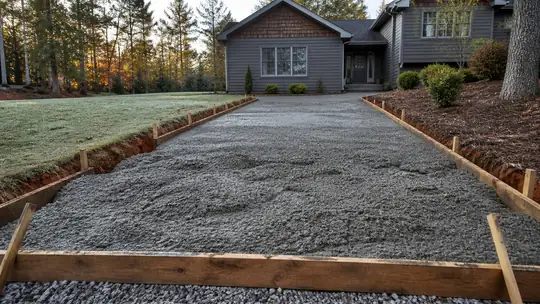
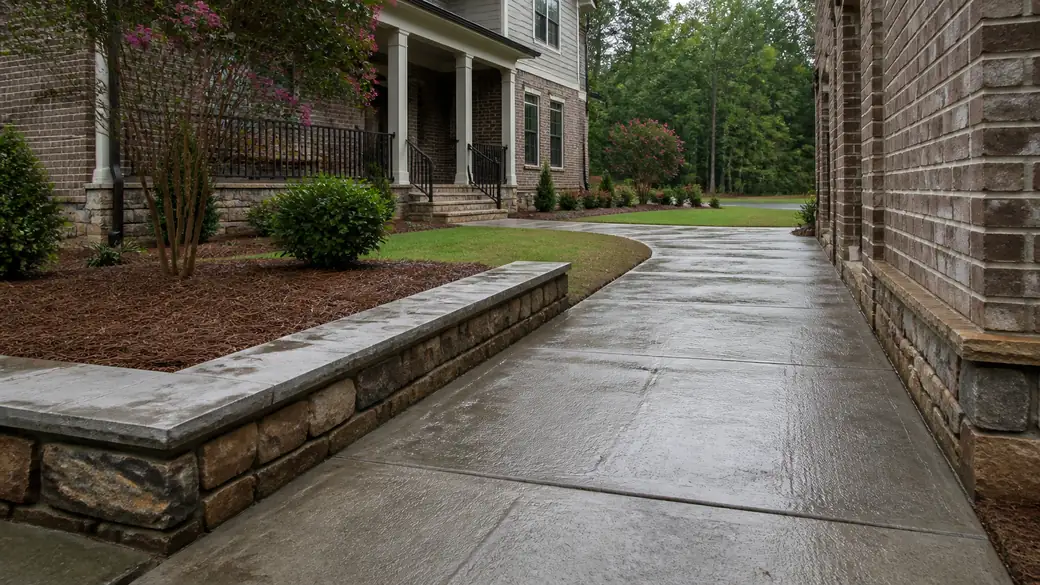
concrete sidewalk installation completed by a local contractor at a charcoal farmhouse-modern home in Bowling Green, KY, under an overcast sky.

Concrete Sidewalk Installation in Bowling Green, KY

We pour concrete sidewalks for homes and small commercial properties in Bowling Green and the towns around it: front walks, side paths to the gate, the run from the driveway to the porch steps. A sidewalk looks simple, and that is why so many of them fail early. It is a narrow slab that carries foot traffic, the odd mower or wheelbarrow, and whatever water runs off the roof and yard beside it. The median home here was built in 1991, so plenty of the walks we see are original to the house. Some have held up well. Others have heaved, settled or cracked into pieces that trip people.

Getting one right starts below the surface. The ground here is hilly, and it changes from one block to the next, so a walk that sits level on one lot can fall away hard on the next. We grade and test every site on its own before a single form goes in. Baxter soil, which drains well, is the most common type in the county, but it is not the same everywhere, and we do not pour as if it were. The rest is a compacted base, reinforcement where slope or load calls for it, control joints where cracks want to run, and a broom finish that grips in the rain.

Call +1 270-208-9064

Get a Free Estimate

What Is Included in Concrete Sidewalk Installation

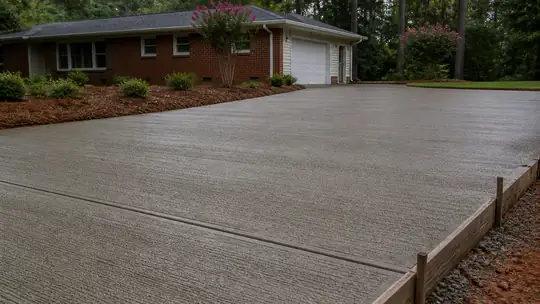
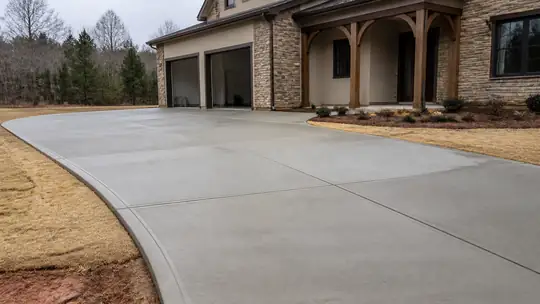
concrete slab installation completed by a local contractor at a buff-brick ranch home in Bowling Green, KY, after a rain shower.

Concrete Slab Installation Cost

Our quote covers the whole job, not just the pour. That means excavation, a compacted gravel base, forms, rebar or wire mesh, the concrete, finishing, control joints and curing. We grade and test every site first, because Warren County's hilly ground changes from block to block, and that shapes the quote.
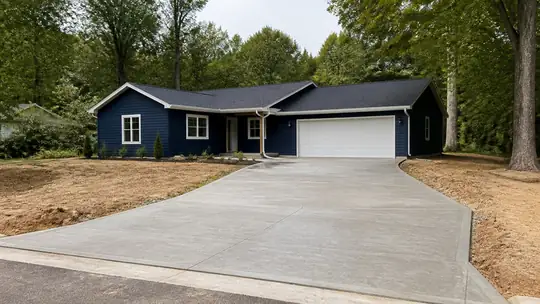
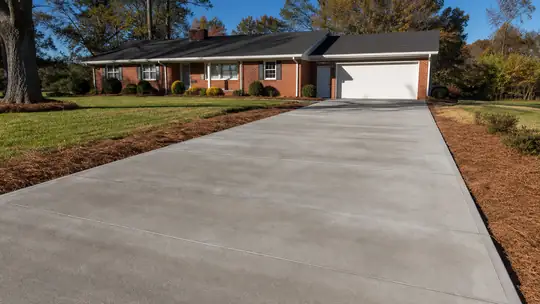
concrete driveway installation completed by a local contractor at a tan-brick colonial in Bowling Green, KY, in clear late-morning sun.

Concrete Driveway Installation

Driveways carry more weight than walks, so we pour them thicker and tie them together with rebar on chairs, not mesh left lying in the gravel. We slope the surface to shed water off the slab, cut joints before random cracks pick their own lines, and offer broom, exposed aggregate or stamped finishes.

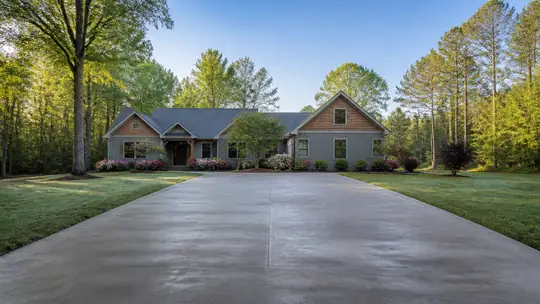
concrete flooring installation completed by a local contractor at a grey split-level home in Bowling Green, KY, at blue hour.

Concrete Flooring Installation

Interior slabs for garages, basements, shops and small commercial spaces get a vapor barrier under the pour so ground moisture stays out of whatever goes on top. We trowel the surface hard and flat, saw-cut joints the same day, and leave it ready for epoxy, polishing, a sealer or finished flooring.

concrete slab repair completed by a local contractor at a painted-white-brick two-story home in Bowling Green, KY, in late afternoon light.

Concrete Slab Repair

Sunken, cracked or heaved slabs usually point to something underneath: washed-out base, poor drainage, or roots. We find the cause before touching the surface. Sometimes that means sealing and patching. Sometimes it means cutting out the failure, rebuilding the base, dowelling new concrete into the old, and matching the finish as closely as we can.

Our Warranty and Guarantee

What we stand behind is the work itself, and the work starts below the surface. Warren County is hilly, and the Baxter soil that covers much of it still changes from one property to the next, so every site is graded and tested on its own before a form goes down. We compact the base, set the slope so water runs off the walk instead of sitting on it, and place reinforcement where the slab will carry load. Control joints go in so the concrete cracks where we decide, not where it chooses.

Concrete is honest about its mistakes. A thin base, a rushed pour or a missed joint shows up as settling, lifting or a crack running across the middle of a panel, and none of that can be hidden once the slab cures. So we would rather tell you plainly what your property needs than pour to a lower standard and hope. Half the homes in Warren County went up before 1991, and an older walk often needs its old base dug out, not topped over. Call for a free estimate, and ask us to show you how we would build yours.

How a Concrete Sidewalk Installation Job Runs in Bowling Green

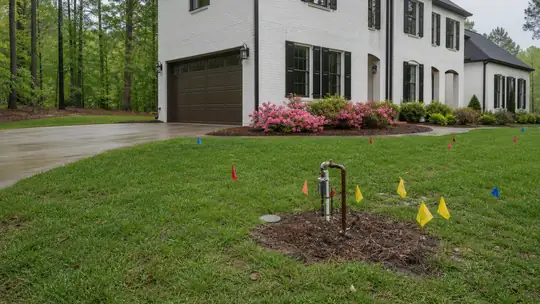
Utility flags mark buried lines before digging starts. at a painted-white-brick two-story home in Bowling Green, KY, in late afternoon light.

Step 1: Site Assessment

Warren County is hilly, and the slope can change from one lot to the next, so we walk the route with a level and a tape. We check where water runs, test the soil (Baxter soil drains well, but it varies), mark utilities, and note trees whose roots will push up a slab later.

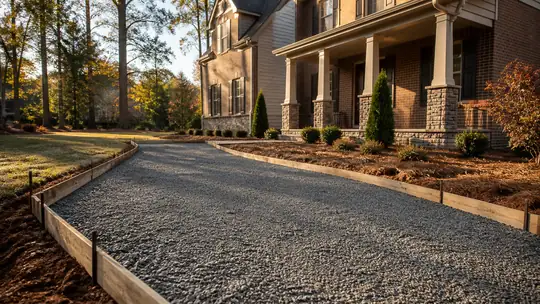
Crushed stone base is raked level inside driveway forms. at a brick-and-siding two-story home in Bowling Green, KY, in early morning light.

Step 2: Site Preparation

Digging comes next: we cut out sod and topsoil about eight inches down and haul the spoil away. Soft spots get dug out. We spread four inches of crushed stone and run a plate compactor over it, because a walk poured on loose fill settles and cracks within a few seasons.

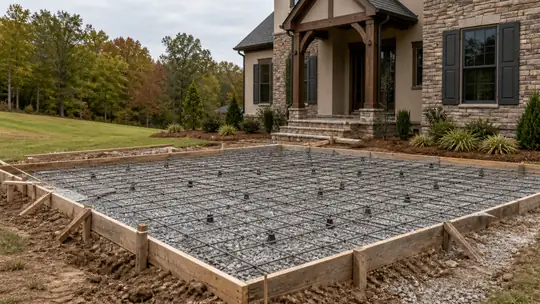
A worker ties rebar into a grid before a residential pour. at a stacked-stone and stucco home in Bowling Green, KY, in early morning light.

Step 3: Forming & Reinforcement

Straight two-by-four forms are staked on both sides, set to a slight cross slope so water sheds off the walk instead of pooling. On a hillside run we step or grade the forms to follow the ground. Wire mesh or rebar goes in on chairs, held mid-slab, where it actually does its work.

A ready-mix truck discharges concrete into a driveway form. at a grey split-level home in Bowling Green, KY, under low winter sun.

Step 4: Pouring

The truck backs up only if the ground can take it; otherwise we wheelbarrow or pump. We pour a four-inch slab, thicker where a driveway crosses the walk, and place it in one continuous run so no cold joint forms. Each section is screeded while the mix is still workable.

A broom drags across a driveway creating a slip-resistant texture. at a red-brick ranch home in Bowling Green, KY, under an overcast sky.

Step 5: Finishing

Once bleed water leaves the surface, we float it, cut control joints every four to five feet with a groover, and edge the sides. Troweling too early traps water, and the top flakes off within a year or two. A broom finish gives footing on a slope; stamped and decorative finishes suit flatter runs.

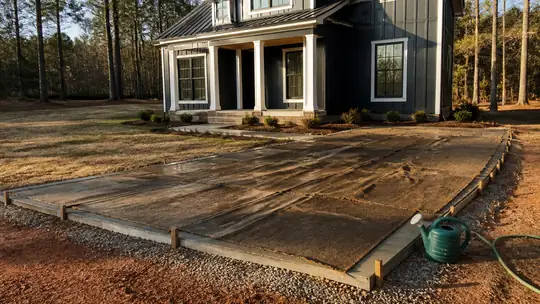
Damp burlap covers a small slab section during curing. at a charcoal farmhouse-modern home in Bowling Green, KY, after a rain shower.

Step 6: Curing

Curing is where most sidewalks are won or lost. We keep the slab damp or spray a curing compound so it does not dry too fast and craze. Foot traffic waits at least a day, and anything heavier waits about a week. Hot, windy afternoons are when we watch it closest.

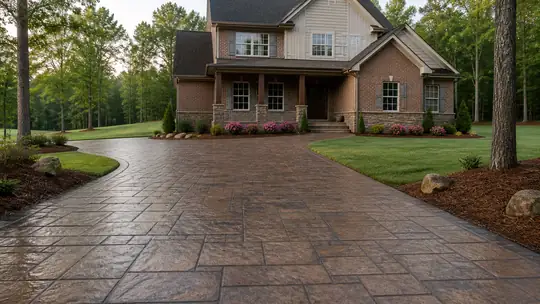
A finished stamped surface shows a glossy sealed sheen. at a brick-and-siding two-story home in Bowling Green, KY, under an overcast sky.

Step 7: Sealing

About a month after the pour, once the slab has cured, we roll on a penetrating sealer. It keeps water, oil and fertilizer from soaking in, the things that stain and pit a walk over time. Stamped and decorative work gets a film-forming sealer instead. Resealing every few years keeps the surface tight.

What Decides the Price of Concrete Sidewalk Installation

Two sidewalks of the same length can come back with very different bids, and the reason is almost always in the ground, the access, or what the walk has to carry. Most of it you can check on your own property before anyone quotes the job.

What changes the priceWhich wayWhy
An old walk, stumps or roots where the new one goescosts moreBreaking out old concrete, pulling roots and hauling it all away is labor and disposal before a single form goes in.
No clear path for the truck to reach the formscosts moreWhen the chute can't reach, concrete moves by buggy, wheelbarrow or pump, and that means more crew hours or more equipment.
Slope along or across the routecosts moreWarren County is hilly, and a walk on a grade needs more cut and fill, more form work, and sometimes steps.
A section that crosses the driveway or takes vehicle trafficcosts moreThat stretch needs a thicker slab and heavier reinforcement than a path that only sees foot traffic.
Water that pools or runs across the pathcosts moreLow spots get regraded, built up with extra base stone, or given a drain so the slab isn't sitting wet.
Firm, well-drained ground under the routecosts lessBaxter soil drains well across much of the county, and where the site test confirms it, base prep is lighter.
A broom finish instead of stamped or colored concretecosts lessDecorative surfaces add materials, tooling and time on pour day.

When you compare bids, line them up item by item: slab thickness, the type of reinforcement, how deep the base goes, whether tear-out and haul-off are included, and whether the contractor handles the permit. A lower number that leaves one of those out isn't a cheaper sidewalk. It's a different one.

Common Concrete Sidewalk Installation Questions From Bowling Green Owners

What permits are required for sidewalk installation in Bowling Green?

That depends on where the walk runs. A path from the back door to a shed is a different matter from a walk that meets the street, crosses a driveway apron or ties into an existing public sidewalk. We look at the layout on site, work out what paperwork the project calls for, and handle the permit ourselves. You tell us where you want to walk. The forms are our problem.

How long does a concrete sidewalk installation take in Bowling Green, KY?

Less time on site than most people expect, and more time waiting than they'd like. Digging out, compacting the base and setting forms goes quickly on a straight run. Curves, steps and slopes add work, and on a hilly lot the grading can take longer than the pour itself. After finishing, the concrete has to cure before it takes real traffic. The schedule for your walk comes down to what we find in the ground.

Do I need a permit for sidewalk installation in Bowling Green?

Yes, in plenty of cases, and it's better to find that out before the job than halfway through it. A walk that stays well inside your own yard is one thing. Anything that reaches toward the street is another. We sort out whether your project needs one before any forms go down, and when it does, we handle the permit. Nobody has to take a morning off work to chase it.

How long does it take to complete a concrete sidewalk installation in Bowling Green?

Complete means more than poured. After the finish work, the forms come off, the edges get backfilled with soil and the site gets cleaned up. Weather plays a part too: we don't pour into rain, and cold slows curing. Foot traffic comes back first, and anything heavier waits longer. A plain walk on level ground wraps up sooner than one with steps cut into a slope, and we tell you which kind you have.

How deep do commercial foundations need to be in Bowling Green?

There is no single answer, and a depth quoted before the ground is tested is a guess. Commercial foundation depth comes from the structural drawings, the loads the building carries and what the site will actually hold. Baxter soil is the dominant type in Warren County and it drains well, but it varies across the county. So every site gets tested on its own, and we build to the engineered design rather than a rule of thumb.

What areas beyond Bowling Green do you serve?

The towns around the city, on the same terms as the city itself. A sidewalk in Scottsville gets the same base prep, the same reinforcement and the same finish as one in Bowling Green. Hills, lot shapes and soil change from place to place, so we test and grade each property rather than carrying assumptions over from the last job. The full list of towns we cover is on this page.

Get a Free Estimate

Get a Free Estimate

Tap to call +1 270-208-9064