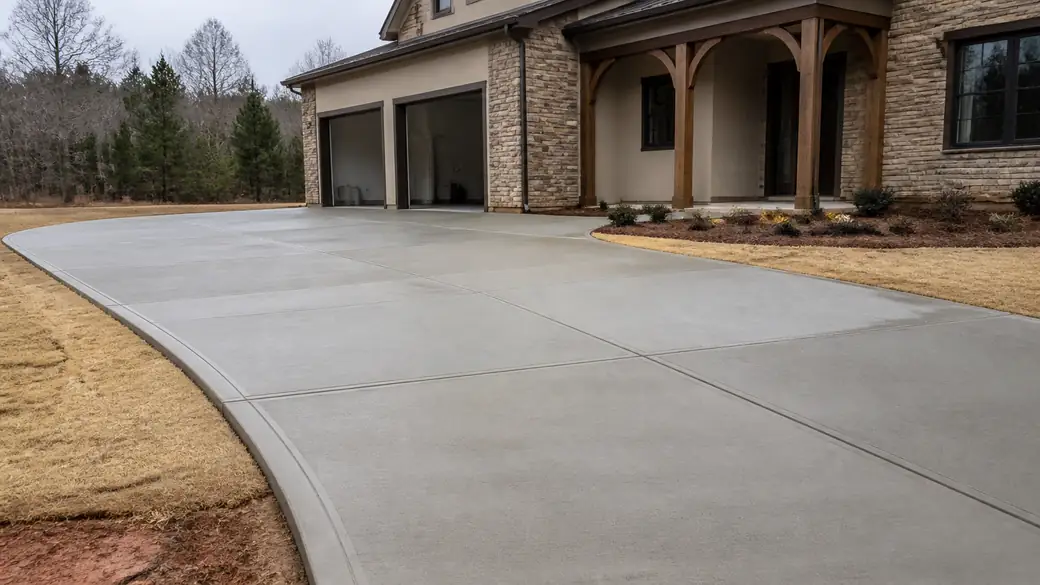
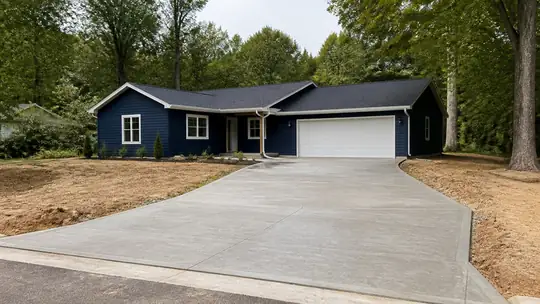
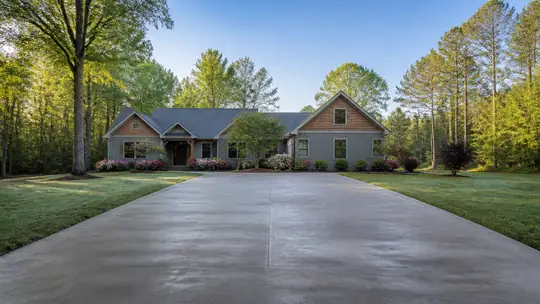
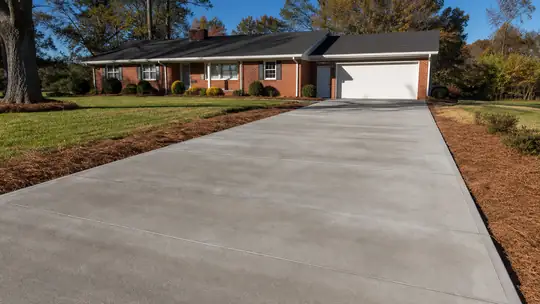
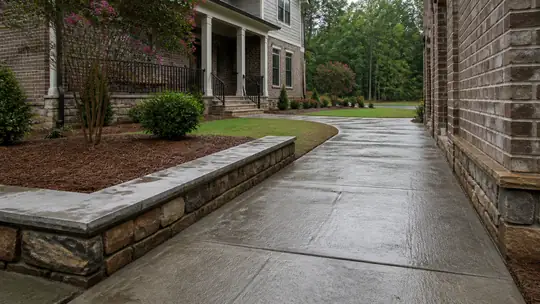
A slab is more than poured concrete. It is a system: the prepared base under it, the reinforcement inside it, the mix itself, and the joints that tell it where to crack. We choose each part for the job in front of us. A garage slab carrying a truck needs a different build than a patio that only sees chairs and a grill. Residential driveways usually get rebar or wire mesh, and decorative surfaces like stamped patios need a mix that finishes cleanly.
Work starts below grade. Baxter soil, which is well drained, is the dominant type in Warren County, but it changes from one property to the next, so we test every site before we set a single form. From there we grade, compact the base, and set the forms. Reinforcement goes up on chairs so it sits in the middle of the slab, not on the dirt. Then we pour, finish the surface, cut control joints, and let the concrete cure properly before anyone drives on it.
Most slab failures trace back to things you cannot see once the concrete is down. A base that was never compacted settles, and the slab cracks along the low spot. Reinforcement laid flat on the ground does almost nothing. Joints cut too late or spaced too far apart let the slab crack wherever it wants. Too much water in the mix makes it easier to place and weaker for its whole life. None of this shows up on day one. It shows up later.
Doing it right mostly costs time and attention, not exotic materials. It means an extra day spent on the base, a mix ordered for the load instead of whatever is cheapest, and a crew that waits for the right moment to cut joints. It also means telling you plainly when a property needs more base work than expected, before the pour rather than after. That care is what separates a slab that stays flat from one that has to be torn out. If you have a slab in mind for your Morgantown property, call us for a free estimate.