+1 270-208-9064
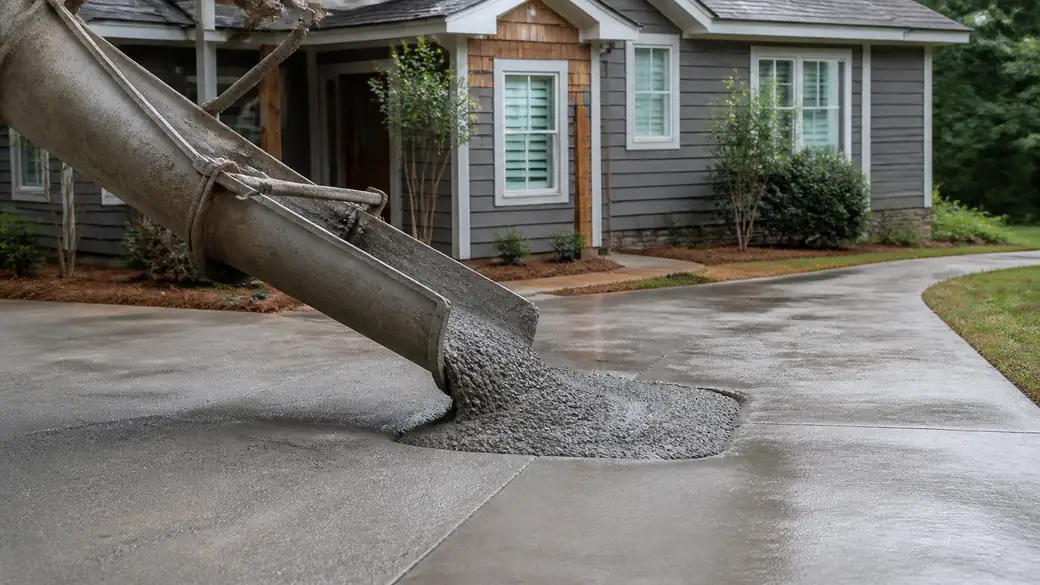
concrete foundation pouring completed by a local contractor at a buff-brick ranch home in Bowling Green, KY, under low winter sun.

Concrete Foundation Pouring in Bowling Green, KY

A foundation is the one part of a building nobody looks at again once the framing goes up, so it has to be right the day it is poured. We form and pour footings, stem walls and slab foundations for new homes, additions, garages and shops across Bowling Green and the towns around it. The median home here was built in 1991, which means plenty of additions have to tie into a foundation that has been in the ground for decades. New lots are their own job. On both, we size the concrete, the reinforcement and the forms to the structure that will sit on top.

Most foundation trouble starts before the first truck arrives. The ground here is hilly, with 224 feet of local relief within a few miles, and it changes from one block to the next. Baxter soil drains well and is the most common type, but it is not the only one, so we grade and test every site on its own before a single form goes in. That testing is what sets the footing depth, the width and the amount of steel. A foundation built on a guess is expensive to fix once a house sits on it. We handle the permit. Call for a free estimate.

Call +1 270-208-9064

Get a Free Estimate

What Is Included in Concrete Foundation Pouring

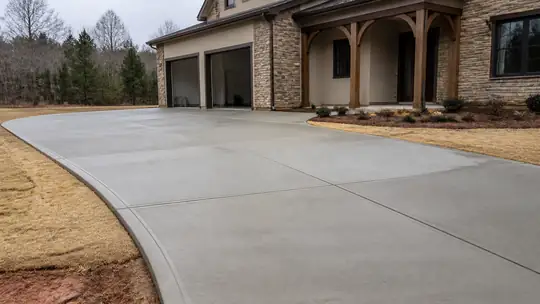
concrete slab installation completed by a local contractor at a buff-brick ranch home in Bowling Green, KY, after a rain shower.

Concrete Slab Installation Cost

What moves the cost is mostly underground. Grading on a sloped lot, the depth of compacted gravel base, slab thickness, and whether it takes rebar or wire mesh all show up in the estimate. So do access for the truck and whether we need a pump. We price it after walking the site.
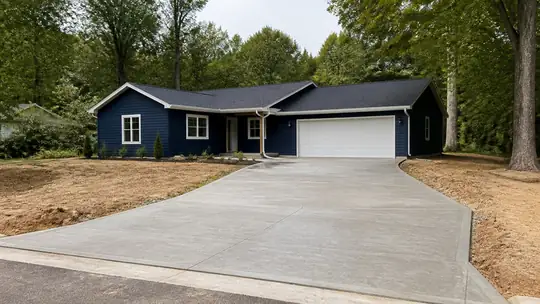
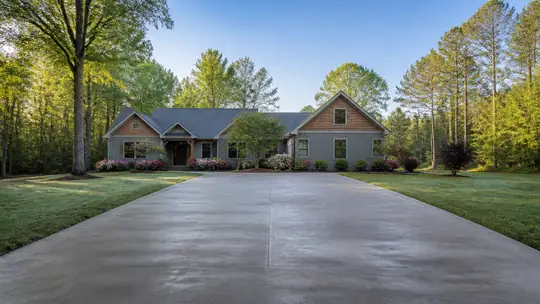
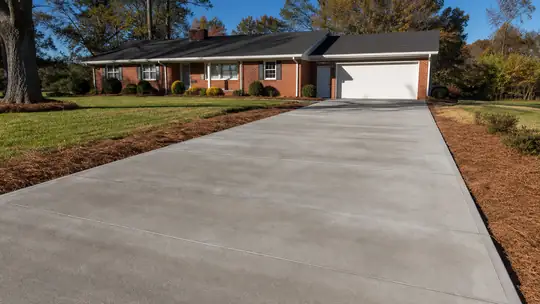
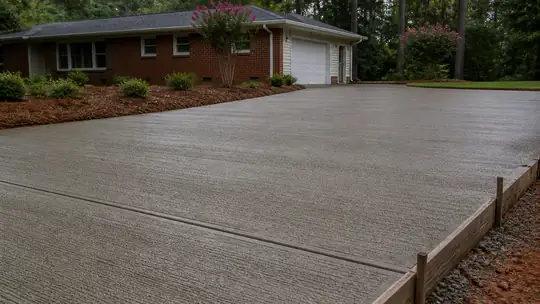
concrete driveway installation completed by a local contractor at a tan-brick colonial in Bowling Green, KY, in clear late-morning sun.

Concrete Driveway Installation

Driveways fail from the base up, so that is where we spend the time. We cut to firm ground, lay and compact crushed stone, set rebar on chairs so it sits mid-slab instead of on the dirt, and pitch the surface to shed water. Control joints get cut early, so cracks land where we put them.

concrete flooring installation completed by a local contractor at a grey split-level home in Bowling Green, KY, at blue hour.

Concrete Flooring Installation

Inside a basement, garage or shop, the slab goes down over a vapor barrier so ground moisture does not lift glued flooring later. We finish with a power trowel for a hard, tight surface, then leave it sealed, stained or ready for polishing. Curing is kept even so the edges do not curl.

concrete slab repair completed by a local contractor at a painted-white-brick two-story home in Bowling Green, KY, in late afternoon light.

Concrete Slab Repair

Cracks tell you what happened underneath. A hairline shrinkage crack gets routed and sealed. A slab that has dropped or tilted usually lost its base to washout, poor compaction or tree roots. We find the cause first, then choose between lifting, patching, or cutting out the section and pouring new.

Our Warranty and Guarantee

The best assurance we can offer on a foundation is the work you can see before concrete covers it. Warren County is hilly, with 224 feet of local relief within a few miles, and the ground changes from one block to the next. Baxter soil drains well and is the most common type here, but it varies across the county. So every site is graded and tested on its own before we set a form. Reinforcement goes where the conditions call for it, not where a template says it should. Ask to see the forms and steel before the pour.

Anything said about how a slab or foundation will hold up belongs on paper, so ask for it there. Read the estimate line by line: the thickness, the reinforcement, the materials, the prep under the pour. If a line is vague, ask what it means before you sign. Concrete cracks. A good installation controls where it cracks and keeps the structure sound around it. We would rather explain that plainly up front than let a nicer word stand in for it. Call for a free estimate and bring your questions about the foundation with you.

How a Concrete Foundation Pouring Job Runs in Bowling Green

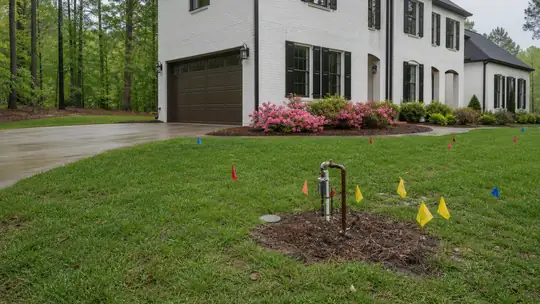
Utility flags mark buried lines before digging starts. at a painted-white-brick two-story home in Bowling Green, KY, in late afternoon light.

Step 1: Site Assessment

We walk the lot before anything gets drawn. Warren County has 224 feet of local relief within a few miles, so we shoot grades on every site rather than guess. We also test the soil. Baxter soil drains well and covers much of the county, but it changes from one property to the next.

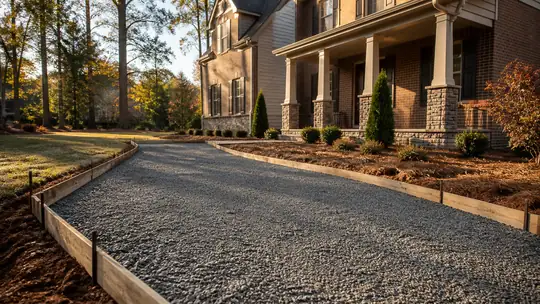
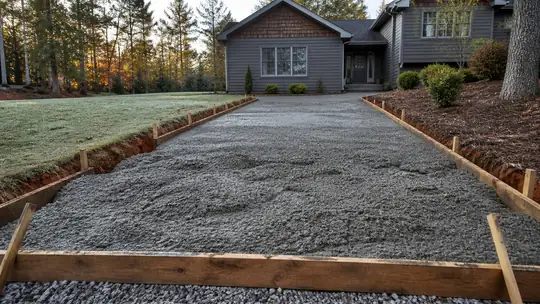
Crushed stone base is raked level inside driveway forms. at a brick-and-siding two-story home in Bowling Green, KY, in early morning light.

Step 2: Site Preparation

Excavation comes next. We dig to firm, undisturbed soil, cut out soft spots and roots, and haul them off. Then we lay and compact a gravel base in lifts so the footings sit on something that will not settle. A foundation that cracks early usually started with loose fill under it. We handle the permit.

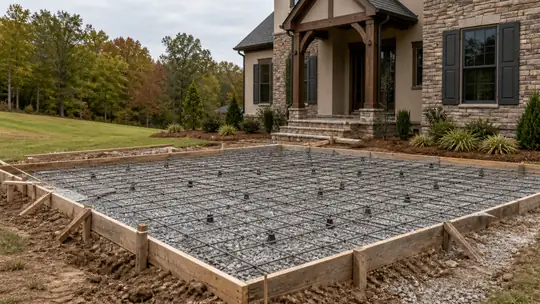
A worker ties rebar into a grid before a residential pour. at a stacked-stone and stucco home in Bowling Green, KY, in early morning light.

Step 3: Forming & Reinforcement

Forms go up level and braced, because wet concrete pushes hard against them. Inside, we set rebar on chairs so it sits in the middle of the pour instead of on the dirt. Vertical bars tie the footings to the walls. Rebar left lying on the ground does almost nothing.

A ready-mix truck discharges concrete into a driveway form. at a grey split-level home in Bowling Green, KY, under low winter sun.

Step 4: Pouring

The mix is ordered for the job, and the truck arrives to a site that is already staked, formed and inspected. We place concrete continuously, vibrate it to drive out air pockets, and never add water at the chute to make it flow easier. Extra water weakens concrete, and that weakness is permanent.

A broom drags across a driveway creating a slip-resistant texture. at a red-brick ranch home in Bowling Green, KY, under an overcast sky.

Step 5: Finishing

Once the pour is level, we screed the tops of the walls and set anchor bolts while the concrete is still workable. Slabs get floated, then troweled smooth or broom finished depending on what goes on top. Timing matters most here: finish too early and water gets trapped, too late and the surface tears.

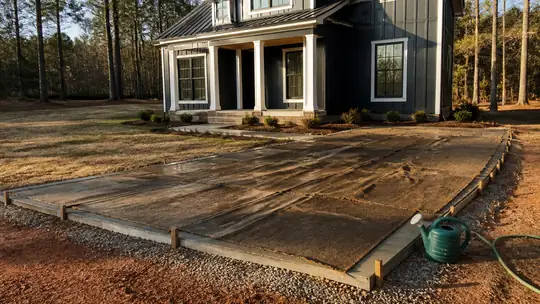
Damp burlap covers a small slab section during curing. at a charcoal farmhouse-modern home in Bowling Green, KY, after a rain shower.

Step 6: Curing

Concrete gains strength slowly, and only if it stays damp. We keep new work covered or wet, and on hot, windy days we start that sooner. Forms stay on until the walls can hold themselves. Backfilling too early is how walls bow, so we wait, even when the schedule would rather we didn't.

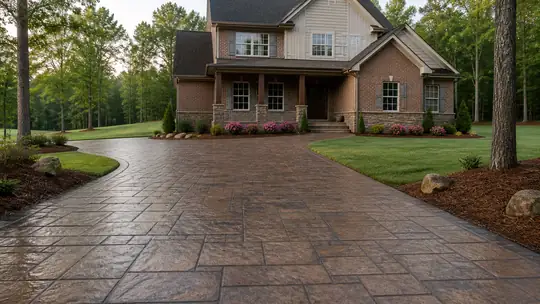
A finished stamped surface shows a glossy sealed sheen. at a brick-and-siding two-story home in Bowling Green, KY, under an overcast sky.

Step 7: Sealing

Below grade, we apply a damp-proofing or waterproofing membrane to the outside of the walls before backfill, then set drain tile at the footing so water has somewhere to go. Exposed slabs get a penetrating sealer. A wet basement is usually a drainage problem, not a concrete problem, and this step prevents it.

Top Decorative Concrete Styles for Bowling Green Homes

Stamped concrete is the style we pour most for patios and walkways around Bowling Green. We press textured mats into the surface while it is still workable, so the slab takes on the look of slate, cobblestone or wood plank, and we color it to sit well against the brick or siding already on the house. Exposed aggregate is the other common pick. We wash back the top layer to show the stone underneath, which gives a driveway real grip where it climbs toward the garage. Stained concrete suits a covered porch. A plain broom finish framed by a stamped border looks finished without the full pattern.

A decorative finish is only as good as the slab under it. Warren County is hilly, with 224 feet of local relief within a few miles, and its dominant soil is well-drained Baxter, though both change from one lot to the next. So every site is graded and tested on its own before we set forms. The median home here was built in 1991, which means a new patio has to meet an older foundation, door threshold and downspout without trapping water against the house. We cut control joints into the pattern so any cracking follows the lines, and we seal the surface once it cures. Call us for a free estimate.

Common Concrete Foundation Pouring Questions From Bowling Green Owners

What permits do I need for concrete foundation pouring in Bowling Green?

A new foundation needs a building permit, and footings are usually inspected before any concrete goes in. We handle the permit. That means drawing up the footprint, the footing depth and the reinforcement plan, submitting it, and scheduling inspections at the points where they fall. You sign what needs an owner's signature. We keep the paperwork moving while the site gets ready, so the permit never becomes the reason a pour waits.

How much does concrete foundation pouring cost in Bowling Green?

It depends on the house more than the town. A foundation is priced on how much concrete it takes, how deep the footings go, how much steel goes in, and how much digging and grading the lot needs first. Two houses of the same size can land far apart. We walk the property, measure it, and price that specific job. Call for a free estimate: a number built from your lot beats any average.

What's the cost of foundation pouring in Bowling Green?

Site work is where the numbers move most. Warren County is hilly, with 224 feet of local relief within a few miles, and a sloped lot can mean stepped footings, more excavation and more formwork than a flat one. Baxter soil, which drains well, is the dominant type, but it changes across the county. So we grade and test every site on its own before work starts, and what we find shapes the price.

How much does concrete foundation pouring cost?

No honest contractor can give one figure without seeing the site. Cost follows volume: a full basement takes far more concrete and forming than a crawlspace, and a crawlspace takes more than a slab-on-grade. Access matters too. If the truck can't reach the forms, we bring in a pump. Reinforcement, drainage and waterproofing add to it. Those are the pieces, and every one of them gets measured on your property, not guessed.

How much does concrete formwork and pouring cost in Bowling Green, KY?

Formwork is often the bigger share of the labor, because the pour itself is quick and the forms are not. Setting them square, level and braced takes time, especially where footings step down a slope on a Bowling Green lot. Then come the pour, the finishing and the curing. We price forming and concrete together as one job, since a foundation is only as true as the forms it was poured in.

What permits are required for retaining walls in Bowling Green?

That depends mostly on the wall's height and what it holds back. A low wall edging a garden bed often needs nothing. A taller wall, or one supporting a driveway, a structure or a steep grade, can require a permit and engineered drawings. We check what your specific wall needs before any digging starts, and we handle the permit when one is required. On hilly lots this comes up a lot, so ask early.

Get a Free Estimate

Get a Free Estimate

Tap to call +1 270-208-9064