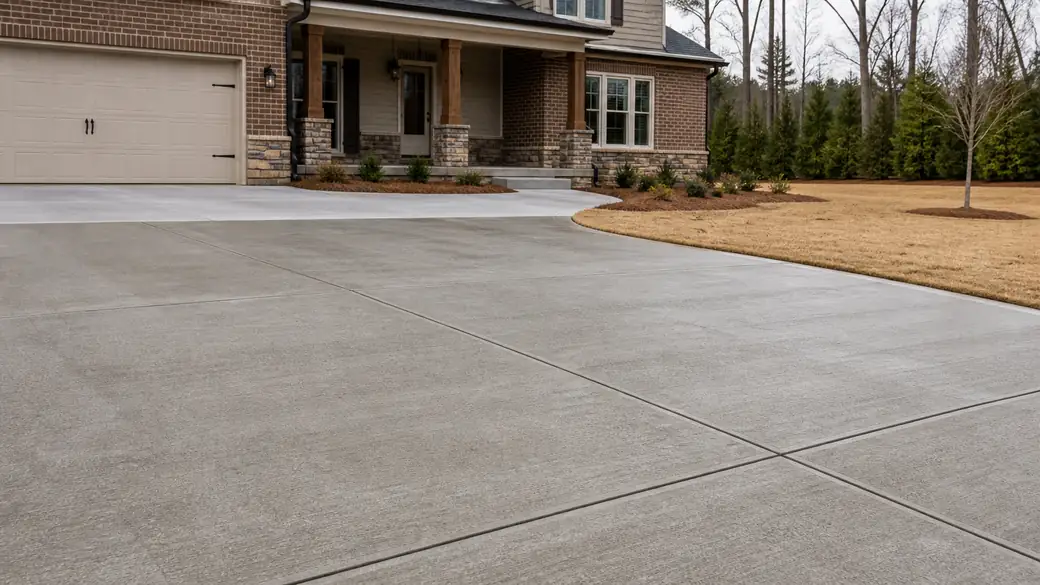
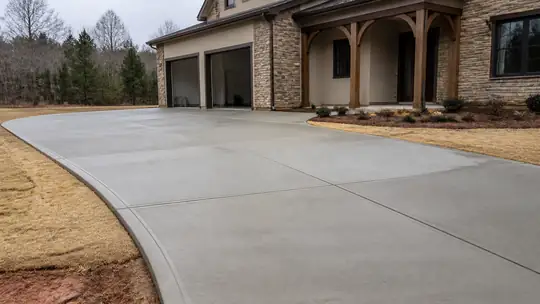
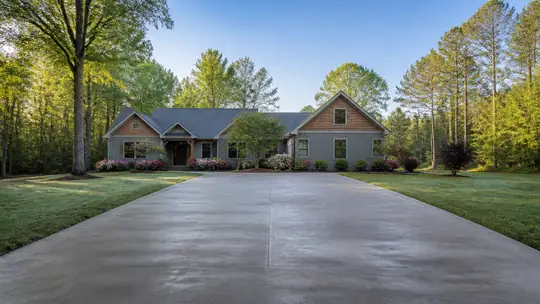
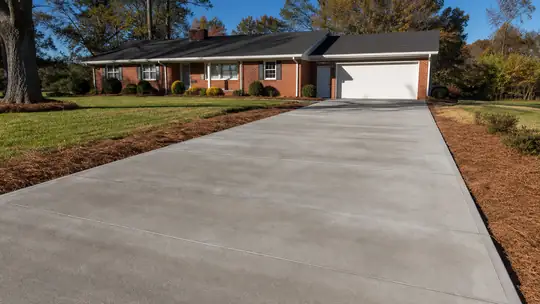
An expansion joint is a deliberate gap in a concrete slab, filled with a compressible material, that gives the surface room to move. Concrete grows and shrinks as it warms and cools, and a slab poured tight against a house, a garage floor or another slab has nowhere to go. It pushes, it buckles at the edges, and it cracks where it chooses. We install new joints in driveways, patios and walks across Bowling Green, and we replace the dried-out filler in older joints that no longer seal.
Every site gets looked at on its own. Warren County is hilly, with 224 feet of local relief within a few miles, and it varies from block to block, so we check grade and drainage before laying out a single joint. Baxter soil (well drained) is the most common type here but not the only one, so we test each site rather than assume. Then we space joints to the slab's size and thickness, set isolation joints where concrete meets the house, steps or posts, and seal them.
Joints fail for plain reasons. They get spaced too far apart, cut too shallow, or left to pack with grit and grass until they stop working. Filler that has shrunk from the edges lets water under the slab, and that is how sound concrete starts to settle. Across Warren County the median home was built in 1991, so plenty of original joints have been at this a long time. Getting it right takes proper spacing, a clean cut to depth, and a flexible sealant tooled into the joint. Call for a free estimate.