+1 270-208-9064
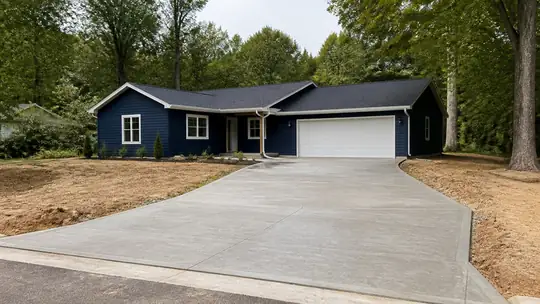
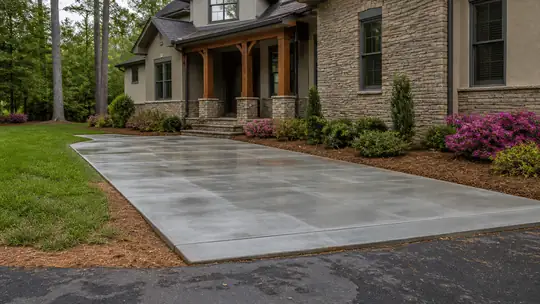
cement installation completed by a local contractor at a tan-brick colonial in Bowling Green, KY, at blue hour.

Cement Installation in Bowling Green, KY

Bowling Green Precision Concrete pours and finishes concrete for homes and commercial properties in and around Bowling Green, Kentucky. Most of our work is residential: driveways, patios, walkways, garage slabs, and the occasional stamped or decorative surface for owners who want more than plain gray. The typical house here was built around 1991, which means plenty of original driveways and patios have been carrying cars and settling for decades. Some can be saved. Others can't. We look at what's there, tell you honestly which one you have, and if it needs to come out, we tear it out and pour it new.

What sits under the slab decides how long it lasts, and nobody sees it once the job is done. The land around Bowling Green is hilly, with 224 feet of local relief within a few miles, and it changes from one block to the next. Baxter soil is the dominant type and it drains well, but that doesn't hold on every lot. So every site gets graded and tested on its own before we set a form. From there we build the base, place reinforcement to suit the load, and pour with the slope worked out so water runs off the surface instead of sitting on it.

Concrete that cracks or sinks early usually fails for ordinary reasons: a thin base, missing reinforcement, a slope that sends water back toward the house, or a pour rushed into bad conditions. Each of those is cheaper to prevent than to repair. Getting it right means the correct mix for the job, control joints cut where the slab would crack anyway, and enough curing time before anyone parks on it. We handle the permit when the project needs one. If you have a driveway, patio or slab in mind, call for a free estimate.
Call +1 270-208-9064

Get a Free Estimate

What Is Included in Cement Installation

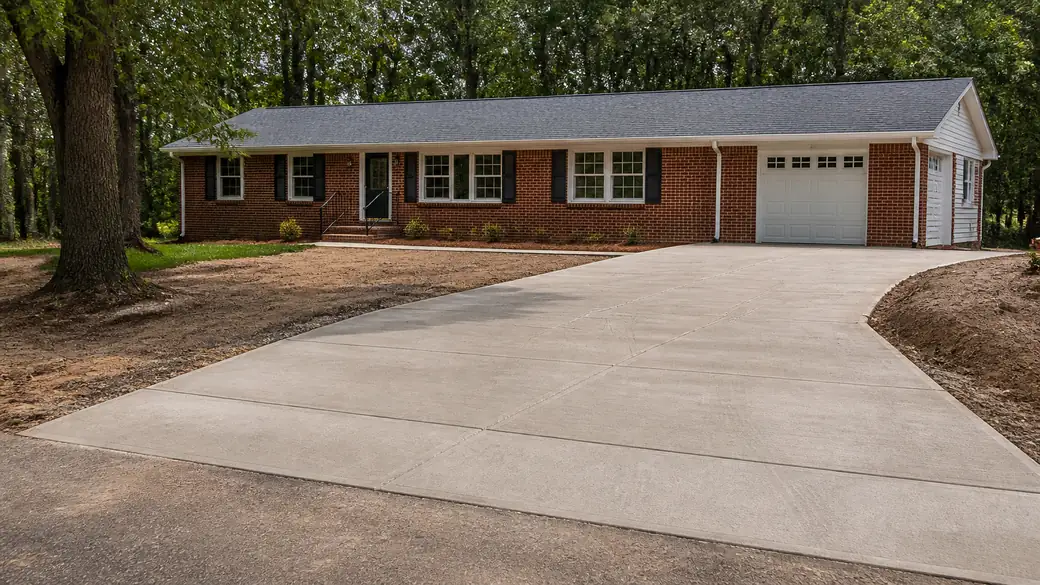
concrete slab installation completed by a local contractor at a buff-brick ranch home in Bowling Green, KY, after a rain shower.

Concrete Slab Installation Cost

What moves the number is thickness, reinforcement, access and the grading the site needs. A four-inch patio slab on flat ground is simple; a six-inch shed pad on a slope with rebar is not. Ground here is hilly and changes block to block, so no two lots price the same. Call for a free estimate.

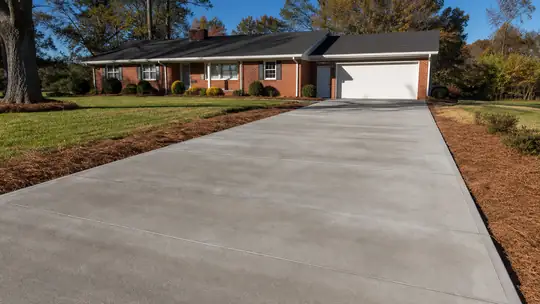
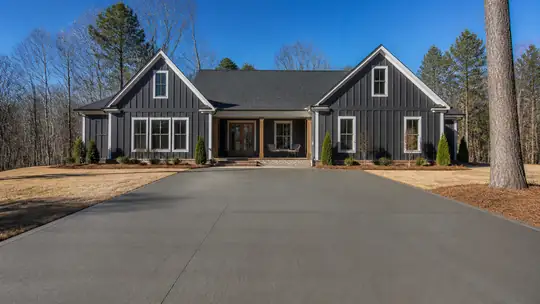
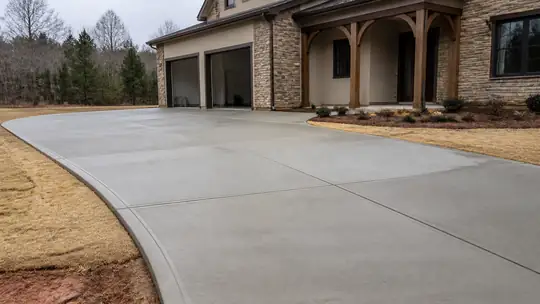
concrete driveway installation completed by a local contractor at a tan-brick colonial in Bowling Green, KY, in clear late-morning sun.

Concrete Driveway Installation

Most driveways fail at the base, not the surface. We dig out soft material, compact a gravel base, and pour five inches thick with rebar set on chairs so it sits mid-slab instead of in the dirt. Control joints are cut early, so cracks follow our lines. Broom finish is standard; stamped is an option.

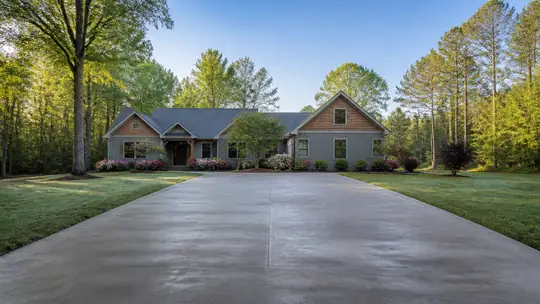
concrete flooring installation completed by a local contractor at a grey split-level home in Bowling Green, KY, at blue hour.

Concrete Flooring Installation

Interior floors for garages, basements and shops start with a vapor barrier under the slab, because moisture wicking up through bare concrete is what lifts tile and ruins flooring glue. We pour four inches over compacted stone, add wire mesh or fiber, and power-trowel a smooth finish. Sealing or grinding comes after it cures.

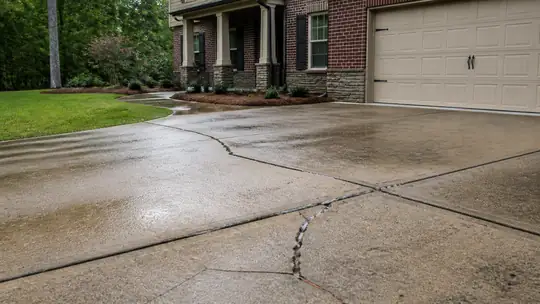
concrete slab repair completed by a local contractor at a painted-white-brick two-story home in Bowling Green, KY, in late afternoon light.

Concrete Slab Repair

Not every cracked slab needs tearing out. We find the cause first: a washed-out base, roots, or water running off a downspout. Hairline shrinkage cracks get routed and sealed. When the base has failed, we cut out the bad panel, rebuild the stone, dowel into the old concrete and pour new.

How a Cement Installation Job Runs in Bowling Green

A worker examines an old driveway before replacement. at a brick-and-siding two-story home in Bowling Green, KY, under bright midday cloud.

Step 1: Site Assessment

We walk the property with a level and a probe before we write an estimate. Warren County is hilly, with 224 feet of local relief within a few miles, so we check where water runs, how any old slab failed and what sits under it. Baxter soil drains well, but we test your site anyway.

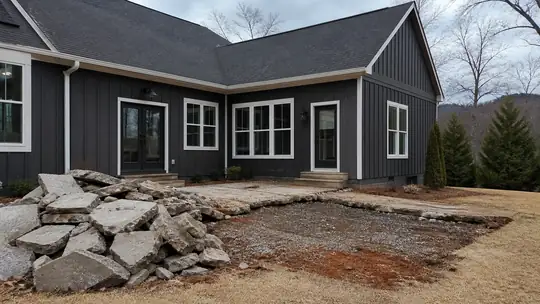
An old patio slab is broken up and hauled away. at a charcoal farmhouse-modern home in Bowling Green, KY, under bright midday cloud.

Step 2: Site Preparation

Digging out comes next. We strip topsoil and organic material down to firm ground, because roots and loose fill settle and take the slab with them. Then we bring in crushed stone, spread it in lifts and compact each one. On sloped lots, this is where the grade gets set so water drains away from the slab.

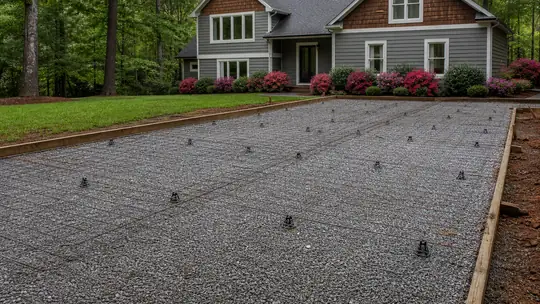
Wire mesh is unrolled across a driveway base before pouring. at a grey split-level home in Bowling Green, KY, under bright midday cloud.

Step 3: Forming & Reinforcement

With the base compacted, we set forms: straight lumber for edges, flexible board for curves, staked and checked for pitch so the finished surface sheds water. Inside go rebar or welded wire mesh on chairs, holding the steel mid-slab. Reinforcement left lying on the stone does almost nothing, and it is a common shortcut.

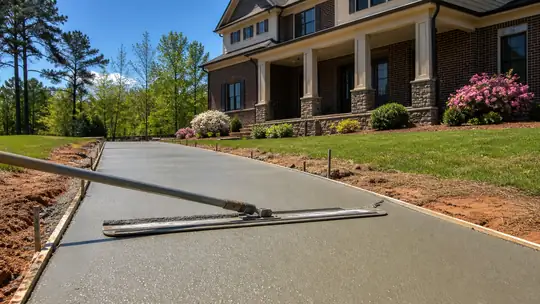
A bull float smooths a residential walkway surface after screeding. at a brick-and-siding two-story home in Bowling Green, KY, after a rain shower.

Step 4: Pouring

The truck arrives with a mix ordered for the job: stronger for a driveway that carries vehicles, and with fiber added where it helps. We place it in one continuous pour so no cold joint forms, rake it into the corners and screed it level with the forms. Nobody waters it down at the chute.

A hand trowel smooths a small patio surface to a hard finish. at a charcoal farmhouse-modern home in Bowling Green, KY, after a rain shower.

Step 5: Finishing

Once the bleed water is gone, finishing starts. We bull float, edge the borders and cut control joints so cracking follows a line we chose. A broom finish gives driveways traction. Stamped work gets release agent and mats here, and timing is everything: too early and the pattern slumps, too late and it tears.

A hand sprayer applies curing compound to a finished patio. at a stacked-stone and stucco home in Bowling Green, KY, under low winter sun.

Step 6: Curing

Curing decides whether a slab cracks early. Concrete gains strength by holding water, so we keep the surface damp or spray a curing compound right away, and cover it on hot, windy afternoons. Foot traffic stays off for the first few days and vehicles longer; we give you dates for your slab.

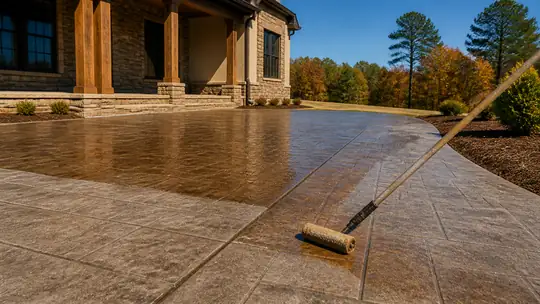
A roller applies sealer to a stamped patio surface. at a stacked-stone and stucco home in Bowling Green, KY, at blue hour.

Step 7: Sealing

After the slab has cured and dried enough to take it, we seal it. A penetrating sealer suits a plain broom-finished driveway; stamped and colored patios usually get an acrylic that deepens the color and resists oil and tire marks. Resealing when water stops beading keeps the surface from soaking up stains.

Top Decorative Concrete Styles for Bowling Green Homes

Stamped concrete is the style most owners ask about first. We press textured mats into the slab while it is still workable, so a patio or walkway reads as slate, flagstone, brick or wood plank without loose joints that shift over time. Exposed aggregate is the other workhorse: we wash back the top layer to show the stone underneath, which leaves a surface with real grip. Stained and integrally colored concrete sit at the quieter end. Plenty of homes here were built around 1991, and a warm tan field or a soft gray border often ties a new driveway to a house that has already settled into its colors.

Timing decides how decorative work turns out. Color goes in with the mix or is broadcast across the surface before stamping, and a release agent keeps the mats from pulling at the face. We stamp in a set order so the pattern runs true across the whole slab, then hand-tool the edges and steps the mats cannot reach. Reinforcement and control joints go in exactly as they would on any structural slab, because a pattern does not change what the concrete underneath has to carry. Once it cures, we seal it. The sealer deepens the color and keeps oil and leaf stains from soaking in.

Most of the trouble with decorative concrete starts before the pour. Warren County is hilly, and a sealed stamped pattern on a sloped driveway can turn slick if the texture is too shallow, so on grades we lean toward deeper patterns or exposed aggregate for footing. The ground changes too. Baxter soil drains well across much of the county, but it varies, so we grade and test every site on its own before settling on a finish. The other common mistake is a pattern that fights the house. We lay samples out on the property itself, so you see the color where it will live. Call for a free estimate.

Common Cement Installation Questions From Bowling Green Owners

What commercial cement installation services do you offer in Bowling Green?

Our commercial work covers slabs for shops and warehouses, parking areas, loading pads, sidewalks, curbs and the approaches that tie a lot into the street. We also pour footings and structural slabs for new construction, and we tear out and replace surfaces that have cracked or settled. Every project starts with the same three questions: what sits on the concrete, how much traffic crosses it, and where the water goes.

Is cement installation in Bowling Green, KY affected by the local climate or soil conditions?

Yes. Baxter soil is the dominant type in Warren County, and it drains well, but it changes across the county and sometimes from one lot to the next. The ground is hilly too, with 224 feet of local relief within a few miles. So we assume nothing. Every site is tested and graded on its own before we set forms, and the base, slope and drainage are built around what we find.

How do you ensure cement quality, strength, and code compliance on commercial projects in Bowling Green?

Most of it happens before the truck arrives. We match the mix to the load, compact and check the subgrade, and set reinforcement on chairs so it sits in the slab where it belongs instead of lying in the dirt. During the pour we watch the mix and the placement closely. Afterward, the slab cures properly before anyone loads it. We handle the permit and the inspections that go with it.

How thick should a cement slab be for a residential garage in Bowling Green, KY?

That depends on what parks on it. A garage holding two cars and a mower needs less than one holding a work truck, a boat on a trailer, or a lift. We size thickness, reinforcement and base together, because a thick slab on a poorly compacted base still cracks. On a Bowling Green lot we look at the soil and the grade first, then set the thickness to match the heaviest load you expect.

What types of cement finishes work best for outdoor commercial surfaces in Bowling Green?

Broom finish is the workhorse. The texture gives traction when it's wet, it wears well under constant foot traffic, and it's simple to patch. Exposed aggregate holds up in plazas and entries where you want more character. Stamped concrete can work outside a storefront or office, though we keep it off heavy drive lanes and choose patterns with enough texture to stay safe underfoot. A good sealer helps all of them last.

How much does a cubic yard of cement typically cost in Bowling Green?

Price per yard is only one piece of the number, and it rarely tells you what a job will cost. Mix design, delivery distance, order size and truck wait time all move it. On most projects, site prep, forming, reinforcement and finishing labor outweigh the material itself. We price the whole job once we've seen the site, so the figure reflects your property and not an average. Call for a free estimate.

Get a Free Estimate

Get a Free Estimate

Tap to call +1 270-208-9064