+1 270-208-9064
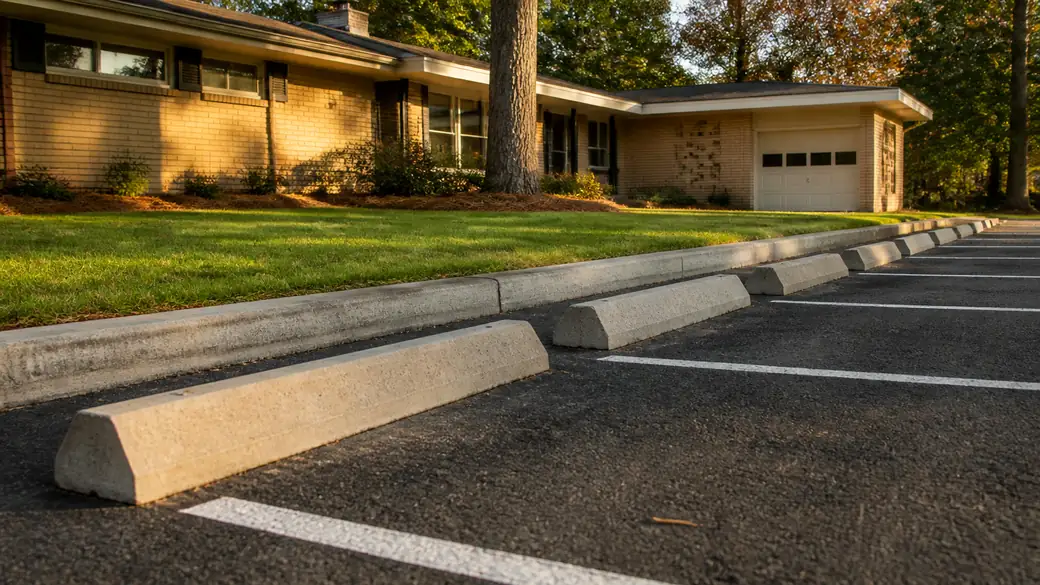
concrete parking lot construction completed by a local contractor at a tan-brick colonial in Bowling Green, KY, under low winter sun.

Concrete Parking Lot Construction in Bowling Green, KY

A concrete parking lot is a structural slab that has to carry cars, delivery trucks and the occasional dumpster lift year after year, and it only does that if the ground under it is right. We build them for commercial property owners across Bowling Green: church lots, office lots, small retail strips, shop yards. The work is plain construction. We cut the site to grade, compact a stone base, set the reinforcement and pour a slab sized for the heaviest load it will see. Joints go where the concrete wants to crack. Drainage is planned before the first form goes in, not after the first puddle.

Most of the trouble with a parking lot starts underneath it. Warren County is hilly, with 224 feet of local relief within a few miles, and it changes from block to block, so a site that looks flat can still carry more fall than you'd expect. Baxter soil is the dominant type here and it drains well, but it varies across the county. We grade and test every site on its own before work starts. That tells us how deep to dig, how much base the slab needs and where the water will go. None of that shows once the concrete is down, and all of it decides how the lot holds up. We handle the permit. Call for a free estimate.

Call +1 270-208-9064

Get a Free Estimate

What Is Included in Concrete Parking Lot Construction

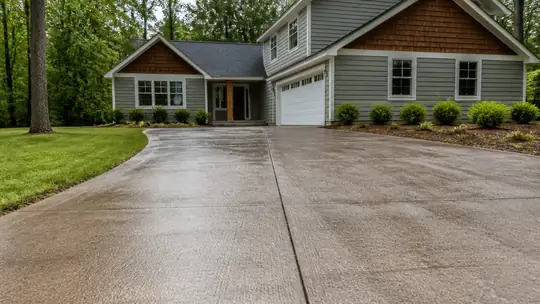
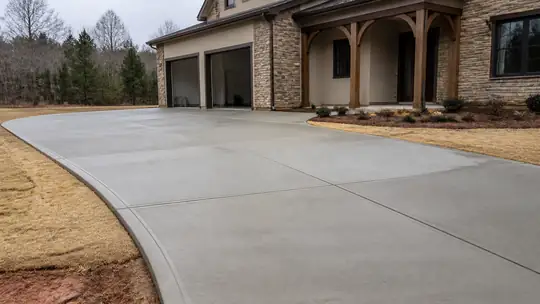
concrete slab installation completed by a local contractor at a buff-brick ranch home in Bowling Green, KY, after a rain shower.

Concrete Slab Installation Cost

Price follows the site, not a chart. A thin patio slab on level ground is a light job; a thicker slab carrying delivery trucks, with rebar on chairs and a hillside cut to level, is a bigger one. We walk the property, test the soil, and price the slab from what we find.
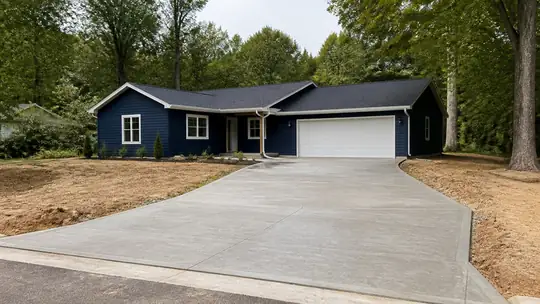
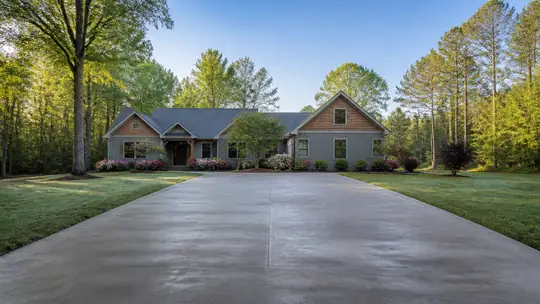
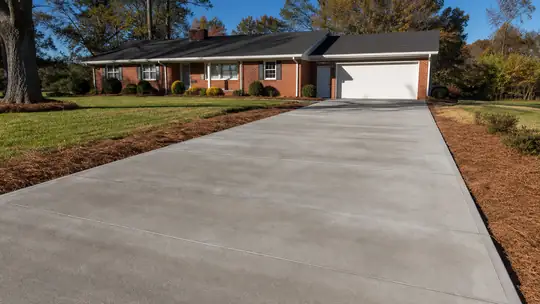
concrete driveway installation completed by a local contractor at a tan-brick colonial in Bowling Green, KY, in clear late-morning sun.

Concrete Driveway Installation

Driveways usually fail at the edges first. We cut out topsoil down to firm subgrade, lay and compact a crushed stone base, and set wire mesh or rebar so the slab holds together when it cracks. Control joints tell those cracks where to run, and a broom finish gives tires grip on a sloped drive.

concrete flooring installation completed by a local contractor at a grey split-level home in Bowling Green, KY, at blue hour.

Concrete Flooring Installation

Interior floors in garages and basements need a vapor barrier under the slab, or moisture works up and lifts coatings off. We place the barrier, reinforce, pour, and power trowel to a smooth, hard surface. The floor is kept damp while it cures, and saw cuts go in before it can crack at random.

concrete slab repair completed by a local contractor at a painted-white-brick two-story home in Bowling Green, KY, in late afternoon light.

Concrete Slab Repair

Most slab damage starts underneath. Water washes out the base, the slab loses support, and it cracks or settles. We find where the water is coming from first. Sound slabs with hairline cracks get routed and sealed; sunken or broken sections get cut out, the base rebuilt, and new concrete doweled into the old.

Our Warranty and Guarantee

What we stand behind on a parking lot is the part you cannot see once it is poured. The dominant soil around here is Baxter, which drains well, but it changes from one lot to the next, so every site is tested before we set grade. The ground is hilly, and a lot that sheds water the wrong way starts failing at its low corner. We build the base, the slab thickness, the reinforcement and the joint layout around what that particular property needs, not around a standard sheet.

Most concrete that fails early fails for ordinary reasons: a soft spot left in the subgrade, joints cut too late, too little steel where trucks turn, a slab opened to traffic before it has cured. None of those show on day one. That is why we write down what goes into every lot we pour: the mix, the thickness, the reinforcement and where each joint sits. Call for a free estimate and ask to see that plan for your property, line by line. Good work holds up to that kind of reading.

How a Concrete Parking Lot Construction Job Runs in Bowling Green

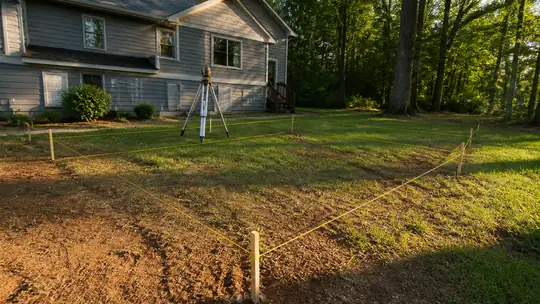
A contractor checks slope and drainage before work begins. at a grey split-level home in Bowling Green, KY, in clear late-morning sun.

Step 1: Site Assessment

We walk the lot with you, mark where delivery trucks turn and where water needs to leave, then test the ground. Baxter soil drains well across much of Warren County, but it changes from site to site. Grades vary too, with 224 feet of relief within a few miles, so we shoot elevations on yours.

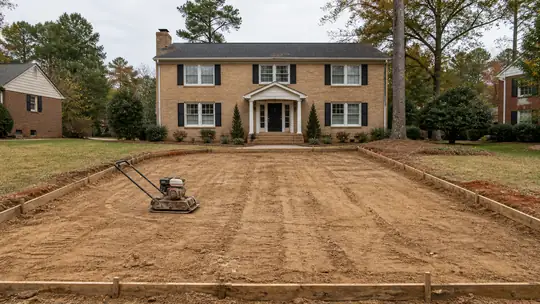
A plate compactor tamps down soil in a small excavated area. at a tan-brick colonial in Bowling Green, KY, at blue hour.

Step 2: Site Preparation

Excavators strip the topsoil and anything organic, then we cut and fill to grade. Crushed stone goes down in thin lifts, each one rolled before the next, and we proof-roll the finished base with a loaded truck. Soft spots get dug out and replaced, never paved over. We handle the permit before digging.

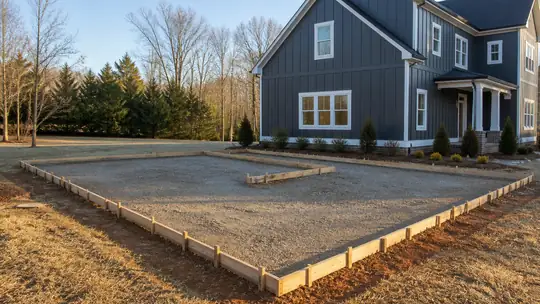
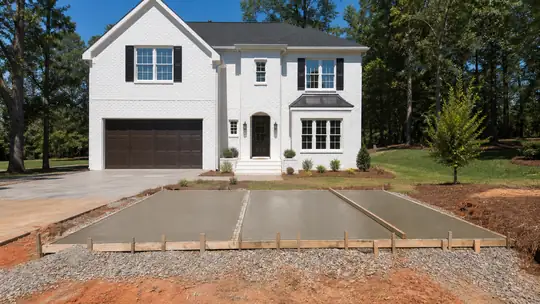
Wooden forms outline a patio slab before the pour. at a charcoal farmhouse-modern home in Bowling Green, KY, in late afternoon light.

Step 3: Forming & Reinforcement

Forms go up in lumber or steel, staked and checked with a laser so the finished surface sheds water toward the drains. Drive lanes and dumpster pads get a thicker section than parking stalls. Rebar sits on chairs at mid-depth, because steel lying on the base does almost nothing. We tie every intersection.

A screed board levels fresh concrete on a small patio. at a painted-white-brick two-story home in Bowling Green, KY, at blue hour.

Step 4: Pouring

Trucks back in on a schedule so the concrete arrives steadily and no section sits waiting to set against the next. We check each load's ticket and slump at the chute, and turn away loads watered down or held too long. Crews place, vibrate along the forms, and screed in one pass.

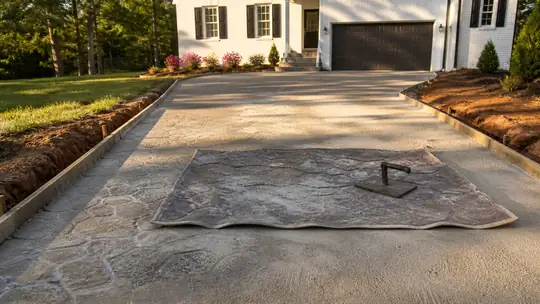
Stamping mats are pressed into a patio surface to imprint a pattern. at a painted-white-brick two-story home in Bowling Green, KY, after a rain shower.

Step 5: Finishing

Parking lots want grip, not shine. We wait for bleed water to leave the surface, because working it in makes a weak top that flakes later. Then we float, pull a broom across the traffic direction, and saw control joints within hours, before the slab chooses its own crack lines.

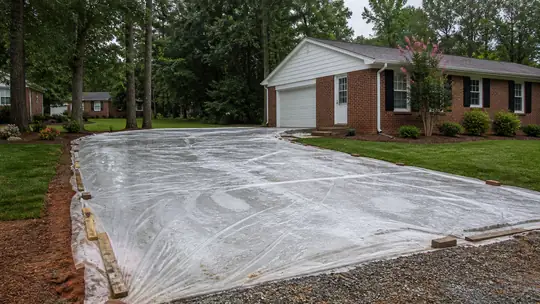
Plastic sheeting covers a curing driveway slab. at a red-brick ranch home in Bowling Green, KY, in late afternoon light.

Step 6: Curing

Fresh concrete needs water to gain strength, and it loses it fastest on hot, windy afternoons. We spray a curing compound or lay wet blankets after finishing, depending on the day. Foot traffic comes back within days. Cars and delivery trucks wait longer, because an early load cracks a slab that looked ready.

A sprayer applies sealer across a driveway. at a grey split-level home in Bowling Green, KY, in early morning light.

Step 7: Sealing

Sealer goes on only after the slab has cured and dried enough to take it, usually weeks after the pour. A penetrating silane or siloxane sealer keeps water and oil from soaking in, without making the broom finish slick. Striping follows once the sealer sets, and periodic resealing keeps the surface tight.

Top Decorative Concrete Styles for Bowling Green Homes

Stamped concrete is the style we pour most often on patios, walks and driveways. We press the pattern into the surface while the slab is still workable: ashlar slate, cobblestone, or a wood plank texture that sits well beside a deck. Exposed aggregate is the other common choice. We wash the top layer of cement paste away to show the stone underneath, which leaves a surface with real grip on a sloped walk. Some owners want something quieter. For them, a plain broom finish framed by a stamped or colored border does most of the work. Integral color and acid stain round out the options, and both can be tuned to sit alongside existing brick or stone.

The median home here was built in 1991, and a lot of those houses have brick and trim that a new patio has to look right against. Color gets chosen at the property, in daylight, next to the house, not from a printed chart. Warren County is hilly, so a decorative slab still has to shed water like a plain one. We grade and test every site before forming, place reinforcement to suit the load, and cut control joints where the pattern can hide them. Decorative work goes wrong when joints are an afterthought. Once it cures, we seal it, because stamped texture holds dirt without a good coat.

Common Concrete Parking Lot Construction Questions From Bowling Green Owners

What size parking lot requires permits in Bowling Green?

It depends less on square footage than on what the lot does. A new commercial lot, a lot that changes how water leaves the property, or one that adds a curb cut onto a public street is the kind of work that goes through review, while a small residential pad often is not. The rules shift with the use and the site plan, so we check before we price anything. We handle the permit.

What does commercial parking lot construction cost in Bowling Green?

Every lot gets priced after we walk it, because the things that drive cost only show up on site. Slab thickness depends on the traffic: cars, delivery vans or loaded trucks. Reinforcement follows from that. Grading is the other big variable. The ground around here is hilly, with 224 feet of local relief within a few miles, and a lot on a slope takes more earthwork than a flat one. A free estimate starts with a call.

Do you only serve Bowling Green, or do you work in surrounding areas too?

We work across the surrounding area as well, on the same terms as jobs inside Bowling Green. A lot in Scottsville gets the same site testing, the same mix design and the same crew as any other. Soil changes from place to place. Baxter soil is the most common type locally, and it drains well, but it varies, so every site is tested on its own before we set a form or order a truck.

Do you coordinate ready-mix delivery and placement for Bowling Green job sites?

Yes. We schedule the trucks, set the order of pours and have the crew, forms and reinforcement in place before the first load arrives. Concrete does not wait for anyone, so sequencing matters more than most owners expect. On a large lot we plan truck routes around the sections already placed, so nothing drives across fresh surfaces. You deal with one contractor for the whole placement instead of juggling a supplier and a finishing crew.

Can commercial driveways in Bowling Green be repaired while staying open to traffic?

Yes, in most cases. We split the work into sections and keep a lane or entrance usable while the others are cut out, reinforced and poured. Each new section stays closed until it has cured enough to carry the load it will see. Access gets tighter for a while, and customers may have to follow cones instead of habit, but the business keeps running. A site with a single narrow entrance takes more planning.

What is the standard width for commercial sidewalks in Bowling Green?

There isn't one number that fits every property. Width comes from the approved site plan, the foot traffic the walk will carry and the accessibility rules that apply to commercial construction, which also govern slope and cross slope. A walk along a row of storefronts usually runs wider than a path to a side door. We build to what the plan calls for, and the finished walk matches what was approved.

Get a Free Estimate

Get a Free Estimate

Tap to call +1 270-208-9064