+1 270-208-9064
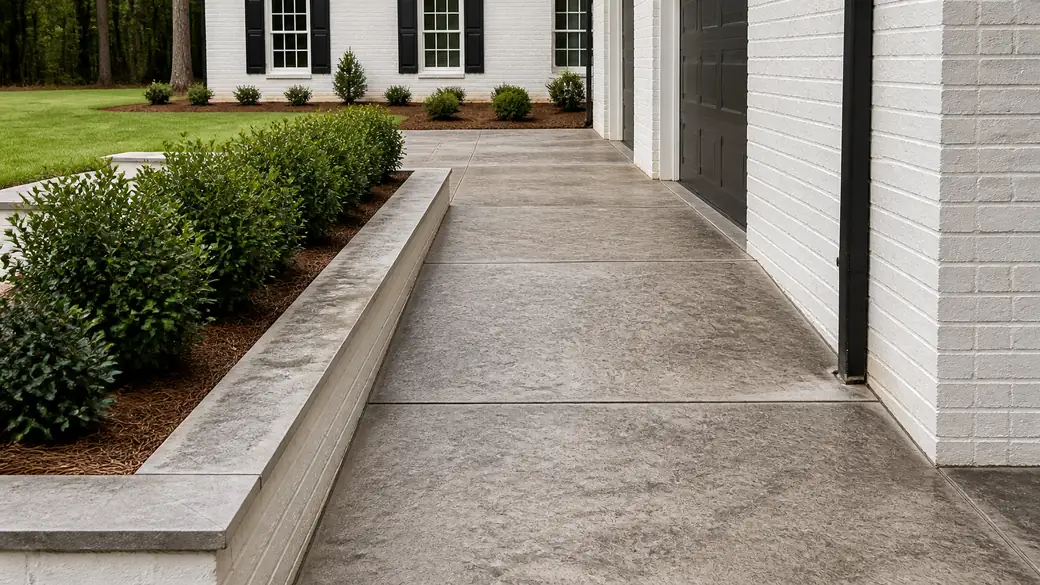
stamped concrete installation completed by a local contractor at a painted-white-brick two-story home in Bowling Green, KY, under bright midday cloud.

Stamped Concrete Installation in Bowling Green, KY

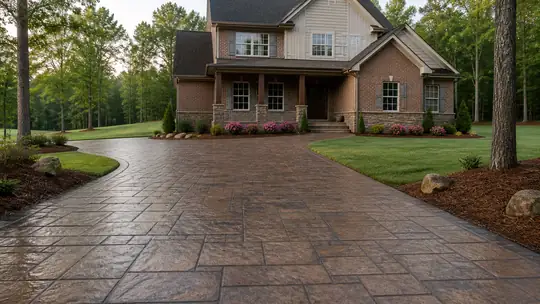
Stamped concrete is a structural slab with a pattern pressed into the surface while it is still workable. We color it and press it with mats cut to read as slate, brick, flagstone or wood plank. Underneath the pattern it is ordinary concrete, with the same reinforcement and the same compacted base, so it carries a car or a loaded grill as well as any plain slab. It suits patios, walkways, pool decks and driveway borders on residential and commercial property around Bowling Green.

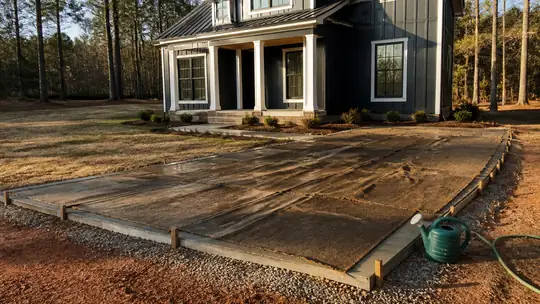
Timing decides how the job turns out. We grade and compact the base, set forms and steel, pour, float, broadcast the color, then stamp while the slab will still take an impression and hold a clean edge. Too early and the mats sink. Too late and the pattern comes out faint and patchy. We size the crew to the pour so nobody is racing the concrete, and the edges along forms and against the house get finished by hand with texture skins.

Most failures start below the surface. Warren County is hilly, with 224 feet of local relief within a few miles, so a backyard patio can sit on a slope that pushes water toward the slab or under it. Baxter soil is the dominant type here and it drains well, but it varies across the county, and one lot can behave differently from the next. We grade and test every site on its own before work starts. Cracks that show up early usually trace back to a base nobody checked.

Getting it right mostly costs time. The base gets compacted in lifts, control joints get cut where the slab would crack anyway, and sealer goes on once the concrete has cured. None of that shows in the finished pattern, which is exactly why it gets skipped. With the median home in the county built in 1991, plenty of patios and walks around here have had decades to show what was done underneath them. We build every stamped surface as if it will be judged the same way. Call us for a free estimate.
Call +1 270-208-9064

Get a Free Estimate

What Is Included in Stamped Concrete Installation

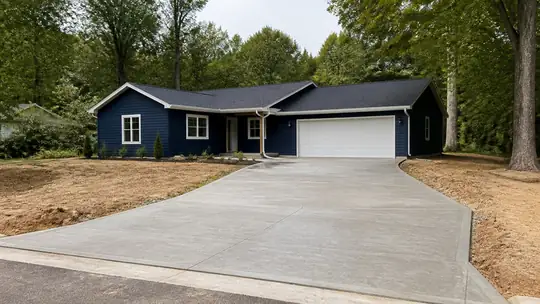
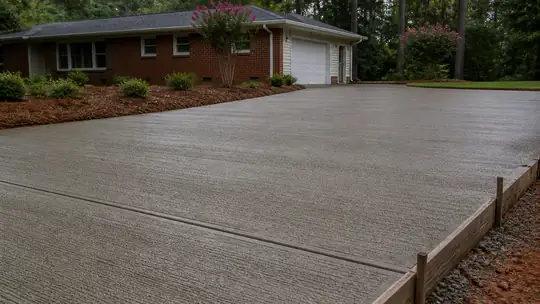
concrete slab installation completed by a local contractor at a buff-brick ranch home in Bowling Green, KY, after a rain shower.

Concrete Slab Installation Cost

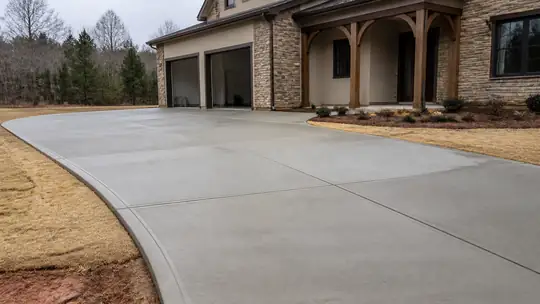
Cost comes down to what the site needs before a truck arrives. Warren County is hilly, so a sloped lot can mean more excavation and base stone than a flat one. Slab thickness, rebar or wire mesh, the stamp pattern and the number of color layers all change the price. Call for a free estimate.

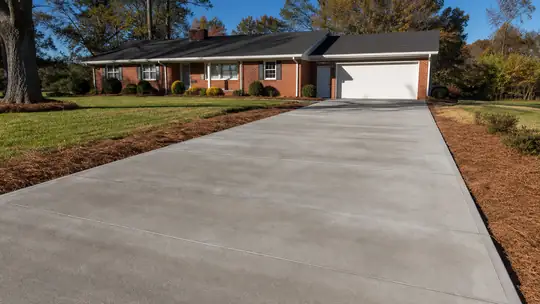
concrete driveway installation completed by a local contractor at a tan-brick colonial in Bowling Green, KY, in clear late-morning sun.

Concrete Driveway Installation

A stamped driveway carries cars, so we pour it thicker than a patio and set rebar on a grid over compacted gravel. Control joints go in early so cracking follows lines we chose instead of wandering through the pattern. Stamping happens while the surface is still plastic. A sealer then protects it against oil stains.

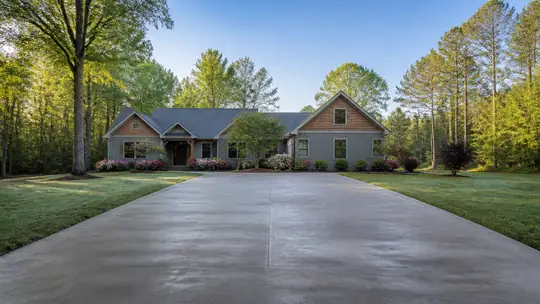
concrete flooring installation completed by a local contractor at a grey split-level home in Bowling Green, KY, at blue hour.

Concrete Flooring Installation

Inside a garage, shop or basement, a decorative floor starts with a vapor barrier under the slab so ground moisture does not lift the finish later. We float and trowel before stamping, or leave the stamp off for a stained or polished surface. Sealer laid too thick clouds and peels, so we roll it thin.

concrete slab repair completed by a local contractor at a painted-white-brick two-story home in Bowling Green, KY, in late afternoon light.

Concrete Slab Repair

Cracked or sunken slabs usually point to what is underneath: base that washed out, or fill that settled after the pour. Baxter soil, the county's dominant type, drains well, but it varies, so we dig and test before deciding. Some slabs take a patch and a stamped overlay. Others come out and get poured again.

Our Warranty and Guarantee

What stands behind a stamped slab is the work underneath it, not a sheet of paper. A pattern only holds as long as the base, the reinforcement and the joints beneath it hold, so that is where our attention goes. Warren County has 224 feet of local relief within a few miles, and the ground changes from one block to the next. We grade and test each site on its own before any forms go up. Baxter soil drains well across much of the county, but we test rather than assume your yard follows the average.

Concrete cracks. The real question is where, which is why we cut control joints along the pattern lines, where they disappear into the grout, instead of across the face of a stone. Color fades where the sealer wears thin, usually on the path from the car to the door. Water that sits against the edge of a slab finds its way underneath and starts working on the base. The median home here was built in 1991, and when an older stamped patio or driveway looks tired, the trouble almost always traces back to one of those three things. Rarely the stamp itself.

Getting it right takes attention more than anything else. Before the pour, we walk you through where the joints will fall, which areas will take the hardest wear, and what the sealer needs over the years to keep the color deep. Resealing is ordinary upkeep, and an owner who knows the schedule gets far more life out of the surface. If something in the plan doesn't make sense, ask while changes are still easy to make. Call for a free estimate, and we'll walk the property with you and talk through what your site needs.

How a Stamped Concrete Installation Job Runs in Bowling Green

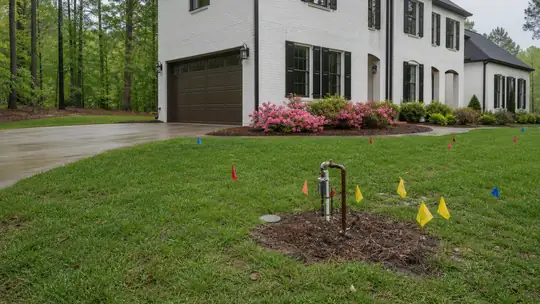
Utility flags mark buried lines before digging starts. at a painted-white-brick two-story home in Bowling Green, KY, in late afternoon light.

Step 1: Site Assessment

We walk the property with you, look at where water runs now, and settle the pattern and color. Warren County is hilly and the grade changes block to block, so we shoot levels and test the soil on your site before anything else. If the job needs a permit, we handle it.

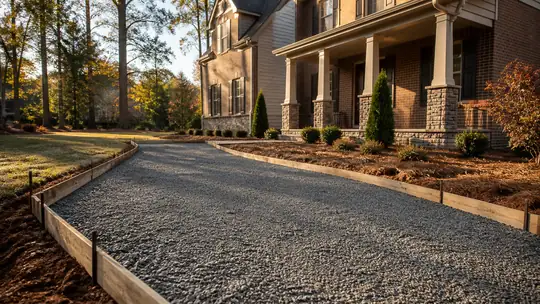
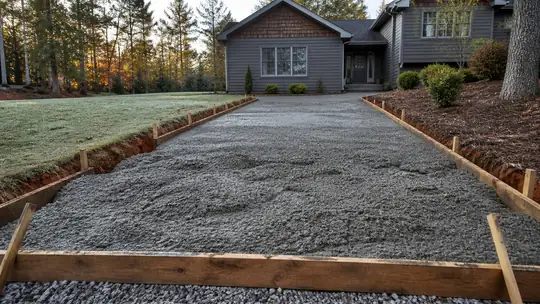
Crushed stone base is raked level inside driveway forms. at a brick-and-siding two-story home in Bowling Green, KY, in early morning light.

Step 2: Site Preparation

Excavation comes next. We strip sod and topsoil down to firm ground, cut the grade so water sheds away from the house, and lay a gravel base compacted in lifts. Baxter soil drains well across much of the county, but not everywhere, so soft spots get dug out and replaced rather than paved over.

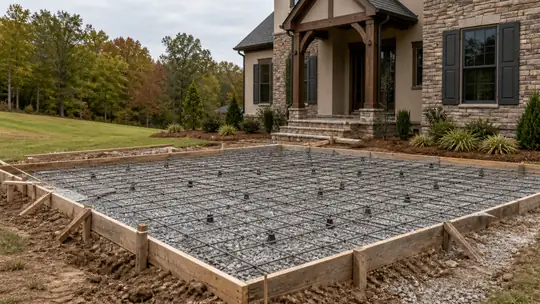
A worker ties rebar into a grid before a residential pour. at a stacked-stone and stucco home in Bowling Green, KY, in early morning light.

Step 3: Forming & Reinforcement

Forms are set to string lines with a slight fall and staked tight so they don't bow under the load. Rebar or welded wire goes in on chairs so it sits mid-slab, not on the ground where it does nothing. Control joints get planned now, placed where the pattern will hide them.

A ready-mix truck discharges concrete into a driveway form. at a grey split-level home in Bowling Green, KY, under low winter sun.

Step 4: Pouring

Ready-mix arrives with integral color already in the load, so the tint runs through the full depth of the slab. We place it, screed it flat and bull float it quickly. Stamping only works in a narrow window, so we size each pour to what the crew can stamp in time.

A broom drags across a driveway creating a slip-resistant texture. at a red-brick ranch home in Bowling Green, KY, under an overcast sky.

Step 5: Finishing

Release agent goes down first. The powder keeps the mats from sticking and leaves darker tone in the low spots, so the slate or stone pattern reads as real. We lay the mats in sequence, tamp them in and use flex skins at edges. Stamp too late and the texture comes out shallow.

Damp burlap covers a small slab section during curing. at a charcoal farmhouse-modern home in Bowling Green, KY, after a rain shower.

Step 6: Curing

Curing is the step people want to rush. We saw-cut the control joints as soon as the surface takes the blade without raveling, then let the slab gain strength slowly under a curing method that won't fight the sealer. Cars stay off until the concrete is ready, not just until it looks dry on top.

A finished stamped surface shows a glossy sealed sheen. at a brick-and-siding two-story home in Bowling Green, KY, under an overcast sky.

Step 7: Sealing

After the release powder is washed off and the slab dries, we roll on an acrylic sealer that deepens the color and protects the surface from water and stains. Too thick a coat traps moisture and turns cloudy, so we apply thin coats. Expect to reseal every few years, depending on sun and traffic.

Common Stamped Concrete Installation Questions From Bowling Green Owners

How long does stamped concrete last?

A well-built stamped slab lasts decades, and most of that is decided before any color goes on. Warren County is hilly, so we grade every site on its own and set the slope so water runs off the surface instead of sitting on it. The base gets compacted, the reinforcement goes in, and the joints are cut where the slab wants to crack. After that, a fresh coat of sealer every few years keeps the color and pattern sharp.

Do I need permits for stamped concrete patios in Bowling Green?

Yes, some patios need one, and some don't. It depends on the size of the slab, where it sits on the lot, and whether it ties into the house, a porch or a set of steps. We sort that out while we're looking at the site for the estimate. When a permit is required, we handle the permit, so you're not the one filling out forms or chasing the inspection.

What is the difference between stamped concrete and exposed aggregate?

Both start as the same poured slab. They get their finish in opposite ways. Stamped concrete is colored, then pressed with textured mats while it's still workable, so it takes on the look of slate, brick, flagstone or wood plank. Exposed aggregate is washed at the surface to uncover the stone mixed into the concrete, which leaves a pebbled, grippy texture. Stamped gives you more patterns to choose from. Aggregate reads plainer and hides dirt well.

What does stamped concrete cost in Bowling Green, KY?

That comes down to the job in front of us, which is why we price each one after seeing it. Square footage matters, but so do the pattern, how many colors go into it, how much digging and grading the site needs, and how far the truck has to reach. A simple one-color patio on flat ground and a multi-color driveway on a slope are different projects. Call for a free estimate, and the number will be based on your property.

What's the difference between stamped concrete and regular concrete?

Underneath, very little. A stamped slab in Bowling Green gets the same base, thickness and reinforcement as a plain broom-finished one, and it carries the same structural load. The difference is on top: color is added, the surface is pressed with a pattern before it sets, and the finished slab is sealed. That means more hands on the pour and a tighter working window. What you get is a driveway or patio that looks like stone instead of sidewalk.

Do you only serve Bowling Green, or do you work in surrounding areas too?

No, we work well beyond the city limits. Bowling Green Precision Concrete takes jobs across Warren County and in the towns around it, and a patio in Scottsville gets the same crew, the same prep and the same finish work as one in town. Each site is still tested and graded on its own, because soil changes across the county even where well-drained Baxter soil is the usual type. If you're unsure whether you're in range, call and ask.

Get a Free Estimate

Get a Free Estimate

Tap to call +1 270-208-9064