+1 270-208-9064
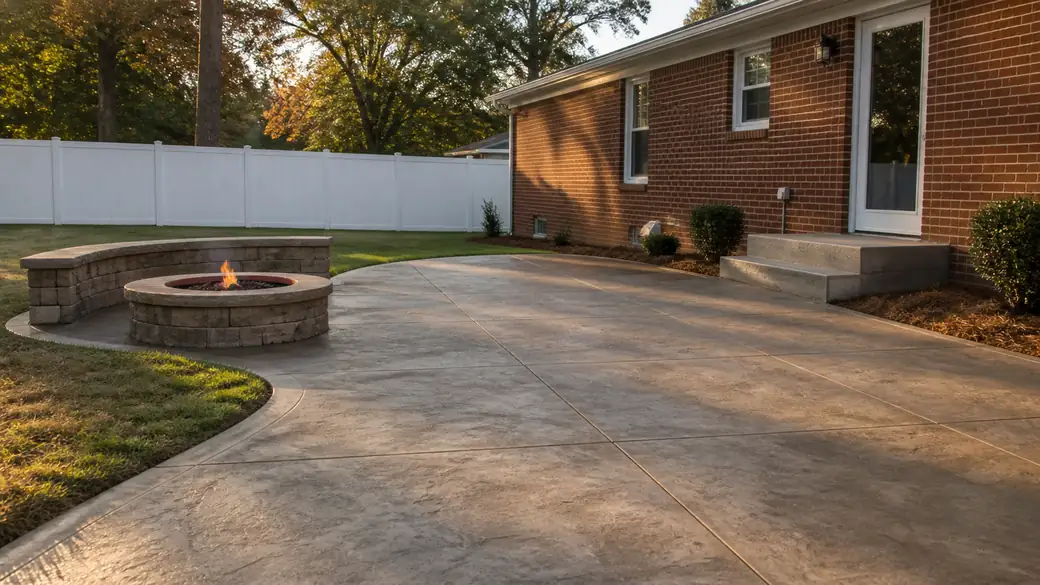
concrete patio construction completed by a local contractor at a tan-brick colonial in Bowling Green, KY, under bright midday cloud.

Concrete Patio Construction in Bowling Green, KY

A concrete patio is a slab poured at ground level beside the house, and ours are built to sit flat, shed water away from the foundation and stay put. We build plain broom-finished patios, stamped and decorative surfaces, and patios that tie into an existing driveway or walk. Around Bowling Green, the median home was built in 1991, and a patio poured beside a house that age has had decades of weather to find its weak spots. The reasons to replace one are rarely mysterious. A crack keeps widening, a corner sinks, or the slab is simply too small for how the yard gets used now.

Most patio failures start underneath. Warren County is hilly, with 224 feet of local relief within a few miles, and the ground can change from one block to the next. Baxter soil, which drains well, is the dominant type here, but it is not the only one, so we test every site on its own before a form goes down. That testing decides how much base goes in, which way the water should run and what reinforcement the slab needs. We set the grade so runoff moves away from the house and cut control joints where the concrete wants to crack anyway. Good concrete on a guessed base still fails.

Call +1 270-208-9064

Get a Free Estimate

What Is Included in Concrete Patio Construction

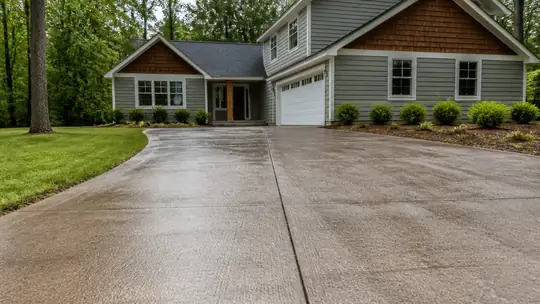
concrete slab installation completed by a local contractor at a buff-brick ranch home in Bowling Green, KY, after a rain shower.

Concrete Slab Installation Cost

What you pay for is mostly what sits under the slab. We cut out topsoil, compact a gravel base, set forms, and place rebar on chairs so it ends up mid-depth instead of lying in the dirt. On hilly lots, the grading and extra base can matter more than the concrete itself. Call for a free estimate.
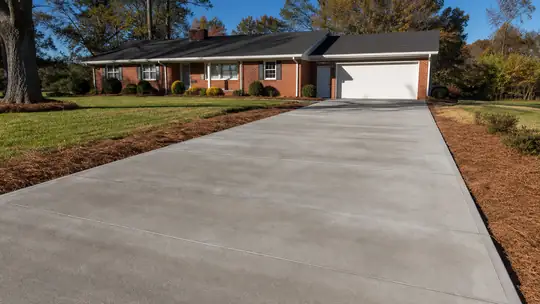
concrete driveway installation completed by a local contractor at a tan-brick colonial in Bowling Green, KY, in clear late-morning sun.

Concrete Driveway Installation

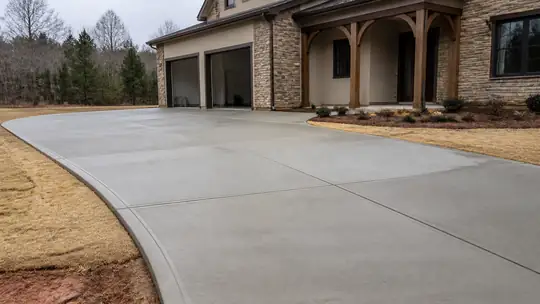
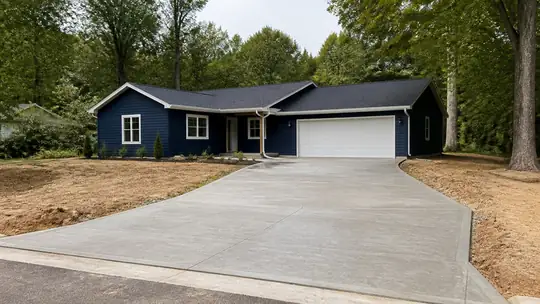
A driveway carries more weight than a patio, so we pour it thicker, add rebar, and thicken the edges where tires roll off. Control joints get sawn within hours of the pour so cracks land where we choose. The finish is a broom texture for grip, or stamped where looks matter.

concrete flooring installation completed by a local contractor at a grey split-level home in Bowling Green, KY, at blue hour.

Concrete Flooring Installation

Garage floors, basements and shop slabs need a flat, dense surface more than a pretty one. We lay a vapor barrier over compacted base, place welded wire or rebar, and power-trowel the top smooth. Moisture wicking up through a slab with no barrier ruins any flooring glued over it later, so we never skip it.

concrete slab repair completed by a local contractor at a painted-white-brick two-story home in Bowling Green, KY, in late afternoon light.

Concrete Slab Repair

Most failed slabs cracked because the base settled or washed out, not because the concrete was bad. We find the cause first. Narrow cracks get routed and sealed; a sunken section usually gets cut out, the base rebuilt and compacted, and new concrete doweled into the old slab. Patching over a hollow base never lasts.

Our Warranty and Guarantee

A patio holds up because of what sits under it, so that is where we put our effort. Warren County is hilly, with 224 feet of local relief within a few miles, and the ground changes from one block to the next. Baxter soil is the county's dominant type and drains well, but it is not under every lot. We test and grade each site on its own before any forms go down. Reinforcement, base depth and slope toward drainage are set to that yard, not copied from the last job.

Written terms are something to settle before a job starts, not something to take from a web page, so ask for them and read them. Look at what covers the slab itself, what covers the finish on a stamped or decorative surface, and for how long. Cracking is the usual worry. Control joints are there to decide where concrete cracks, and a hairline line inside a joint is the slab doing its job. A crack that wanders, lifts or holds water points back to the base, which is why we spend our time there.

How a Concrete Patio Construction Job Runs in Bowling Green

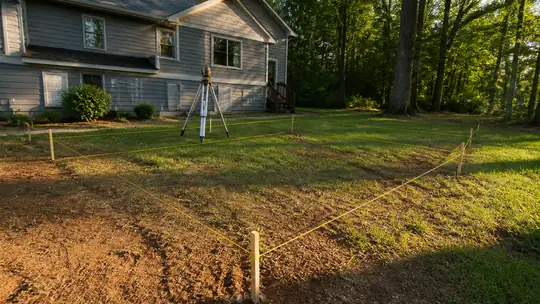
A contractor checks slope and drainage before work begins. at a grey split-level home in Bowling Green, KY, in clear late-morning sun.

Step 1: Site Assessment

We walk the yard with you, mark where the patio meets the house, and watch how water moves across it. Warren County is hilly and the ground changes block to block, even on well-drained Baxter soil, so we check grade and test soil on your site. If a permit is needed, we handle it.

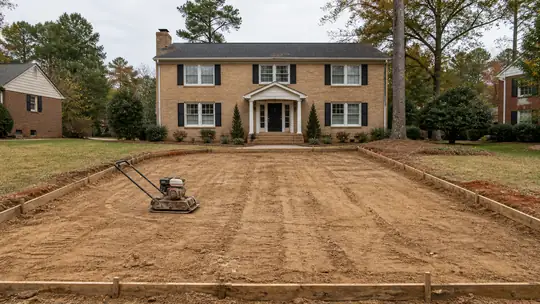
A plate compactor tamps down soil in a small excavated area. at a tan-brick colonial in Bowling Green, KY, at blue hour.

Step 2: Site Preparation

Sod and topsoil come off first, and we cut down to firm subgrade. Soft spots get dug out and replaced, not covered. Then four inches of crushed stone go in, compacted with a plate tamper in lifts. The grade is set to fall away from the house so rainwater runs off instead of toward the door.

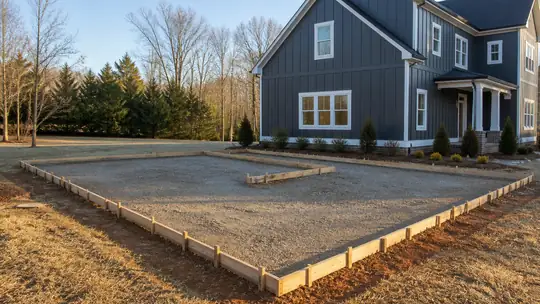
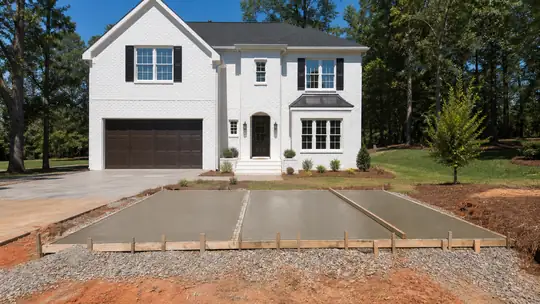
Wooden forms outline a patio slab before the pour. at a charcoal farmhouse-modern home in Bowling Green, KY, in late afternoon light.

Step 3: Forming & Reinforcement

Forms are 2x4 lumber staked every few feet, set to finished height and the slope from site prep. Inside them we lay rebar on chairs so it sits mid-slab, not on the gravel where it does nothing. Expansion joint material goes against the house foundation. A string line checks every edge.

A screed board levels fresh concrete on a small patio. at a painted-white-brick two-story home in Bowling Green, KY, at blue hour.

Step 4: Pouring

Ready-mix trucks back as close as the yard allows; on a steep or tight lot we run a pump or wheelbarrows instead of rutting the lawn. We place the concrete in one continuous pour, because a stop midway leaves a cold joint. We screed it off the forms and tamp the edges solid.

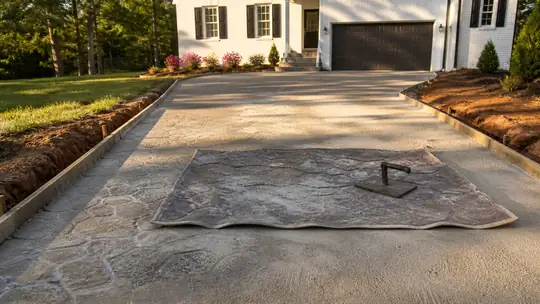
Stamping mats are pressed into a patio surface to imprint a pattern. at a painted-white-brick two-story home in Bowling Green, KY, after a rain shower.

Step 5: Finishing

Once the bleed water is gone, we bull float, edge every side, and tool control joints a quarter of the slab depth so cracks land where we chose. Broom finish is standard and grips when wet. Stamped and decorative finishes happen at this stage too, pressed in with color hardener and release agent.

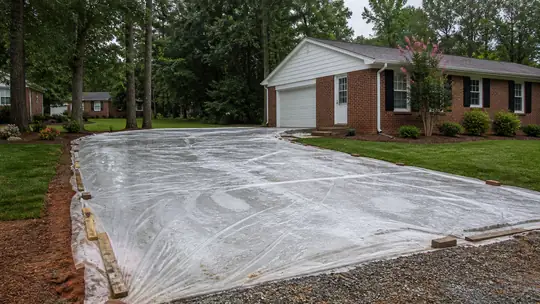
Plastic sheeting covers a curing driveway slab. at a red-brick ranch home in Bowling Green, KY, in late afternoon light.

Step 6: Curing

The first week decides how hard the surface ends up. We spray a curing compound or keep the slab covered and damp, because a top that dries faster than the core crazes and dusts. Walk on it after a day or two; heavy furniture and grills wait a week.

A sprayer applies sealer across a driveway. at a grey split-level home in Bowling Green, KY, in early morning light.

Step 7: Sealing

Sealer goes on once the slab has cured, usually around a month, since sealing too early traps moisture and leaves a cloudy film. We use a penetrating sealer on broom finishes and an acrylic on stamped work to hold the color. It resists stains from grease and leaves, and needs recoating every few years.

What Decides the Price of Concrete Patio Construction

Two patios of the same size can land far apart on price, and most of the reasons are visible from your back door. The concrete itself moves the number less than the ground, the access and the work that has to happen before we pour. Walk your yard with this table in hand.

What changes the priceWhich wayWhy
Old concrete, pavers or a buried slab where the patio goescosts moreIt has to be broken out, loaded and hauled off before we can grade.
How close a truck can back up to the pourcosts more when it can'tIf the chute won't reach, we pump or wheel the concrete in, which adds equipment and labor.
Slope across the patio areacosts more on a gradeWarren County is hilly, and a sloped yard means more cut or fill and taller forms to get a level slab.
Where water runs todaycosts more if it poolsBaxter soil drains well across much of the county, but it varies, so a low spot or a downspout aimed at the patio means regrading first.
What the patio will carrycosts more for heavy loadsA hot tub or outdoor kitchen calls for a thicker slab and more reinforcement than chairs and a grill.
Tying into a foundation, step or porchcosts moreMeeting existing concrete takes expansion joints, pinning and careful forming so the two surfaces move right.
Tree roots in the digcosts moreRoots have to be cut back and the base rebuilt so the slab doesn't heave later.
Broom finish instead of stamped or coloredcosts lessDecorative work adds materials, tools and a longer day on the finish.

When you compare bids, line them up on the same points: slab thickness, what reinforcement goes in and how it sits in the pour, base depth, and where the control joints fall. Check who removes what is there now and whether grading and drainage are written in or left vague. A lower number usually means one of those lines is missing.

Common Concrete Patio Construction Questions From Bowling Green Owners

What's the difference between acid stain and water-based stain?

Acid stain reacts chemically with the lime in cured concrete, so the color forms inside the surface rather than sitting on top of it. The result is mottled and uneven in a way a lot of people like, mostly browns, tans and muted greens. Water-based stain is a pigment that soaks in without reacting. It gives a more even, predictable color and a much wider range of shades. Both need a sealer over them.

What types of commercial projects does Bowling Green Precision Concrete handle?

Flatwork is the bulk of it: parking areas, sidewalks, loading pads, dumpster pads, entry walks and outdoor seating areas for restaurants and shops. We also pour slabs for small commercial buildings and additions, along with curbs and the aprons where a lot meets the street. Decorative work carries over too. A stamped or stained patio for a café gets the same care as a residential one. If it is flat concrete on a commercial property, ask us.

How does the crew minimize downtime and maintain commercial site safety during active business operations in Bowling Green?

We plan the pour around your hours before anything gets broken out. Large areas are split into sections, so part of a lot or entrance stays usable while the rest cures. The work zone is fenced and signed, foot traffic is rerouted with clear markings, and trucks are staged away from customers. Loud demolition and saw cutting go into the quietest part of your day wherever the job allows. Nothing is left open or unmarked overnight.

What type of foundation is best for Bowling Green homes?

There is no single answer, because the ground changes from one lot to the next. Warren County is hilly, with 224 ft of local relief within a few miles, so a flat lot and a steep one can share a street. Baxter soil, which drains well, is the dominant type, but it varies. A slab on grade suits level, well-drained ground. Sloped lots often call for stepped footings or a crawlspace. We grade and test every site before recommending either.

Are you fully licensed, insured, and bonded for commercial work in Southern Bowling Green?

No contractor's paperwork should be taken on a website's word, and that includes ours. For commercial work anywhere in Bowling Green, ask any contractor, us included, for license, insurance and bonding documents in writing before you sign. Then confirm them directly with the issuer rather than trusting a copy. Landlords and property managers often have their own requirements on top of that, so get those in writing too and compare them line by line.

Does Bowling Green Precision Concrete build retaining walls for hillside properties?

Yes. On a sloped lot, a patio often needs a wall to hold back the ground above it or to build up the low side, and we pour reinforced concrete walls for exactly that. The footing, the steel and the drainage behind the wall matter more than the face you see. Water that cannot get out pushes on a wall until it leans. We handle the permit where one is needed, and every wall is sized to its own site.

Get a Free Estimate

Get a Free Estimate

Tap to call +1 270-208-9064